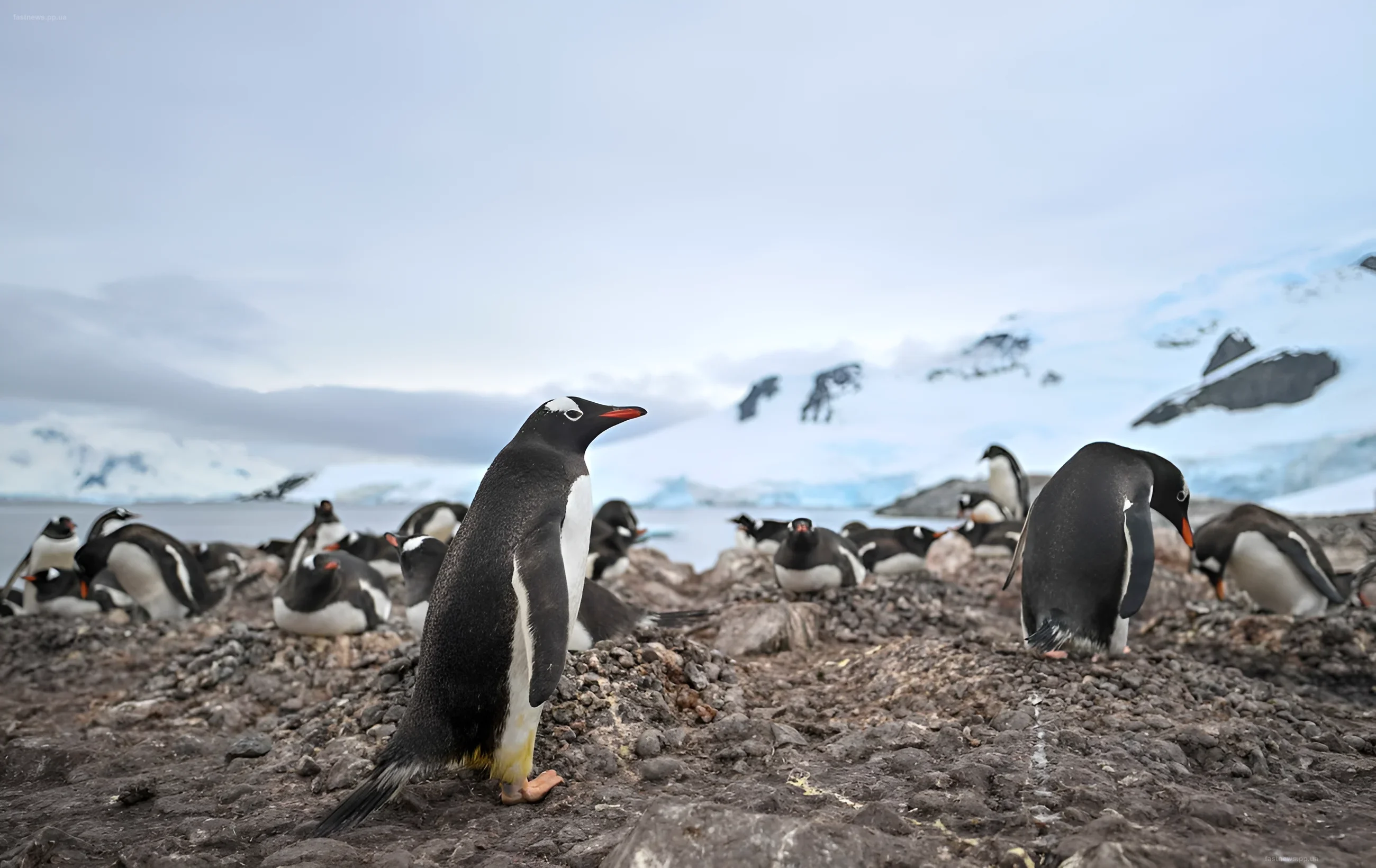
Imagine being able to sleep while still seeing everything around you. For penguins, this is not science fiction but a vital necessity. Ukrainian researchers from the National Antarctic Scientific Center (NASC) have revealed surprising secrets about how these birds rest, offering a new perspective on their endurance.
Posture — A Matter of Survival
The question of whether penguins sleep standing or lying down doesn’t have a single answer. It depends on the species and conditions. Emperor penguins, which spend their lives on floating ice, prefer to sleep standing. This is not just a habit but a way to minimize contact with the icy surface and conserve body heat. Meanwhile, chicks sleep in the most incredible, sometimes unnatural poses, which occasionally worries scientists about their health.
The Phenomenon of Microsleep
The most astonishing discovery relates to so-called microsleep. An international team of scientists recorded that penguins can enter deep slow-wave sleep for just a few seconds. Over the course of a day, they may repeat this process thousands of times, accumulating 10–11 hours of rest in total.
This is not merely dozing off. Special sensors confirmed that even within seconds, the bird’s brain manages to restore its energy. Such a mode allows parents sitting on nests to remain vigilant and protect their offspring without losing alertness.
Mysteries of the Antarctic Night
Research was conducted in colonies of Antarctic penguins during the breeding season. It is still unknown whether birds use microsleep constantly or if it is a temporary adaptation to the stress of incubation. But one thing is clear: in the harsh conditions of Antarctica, even sleep becomes a survival strategy.


