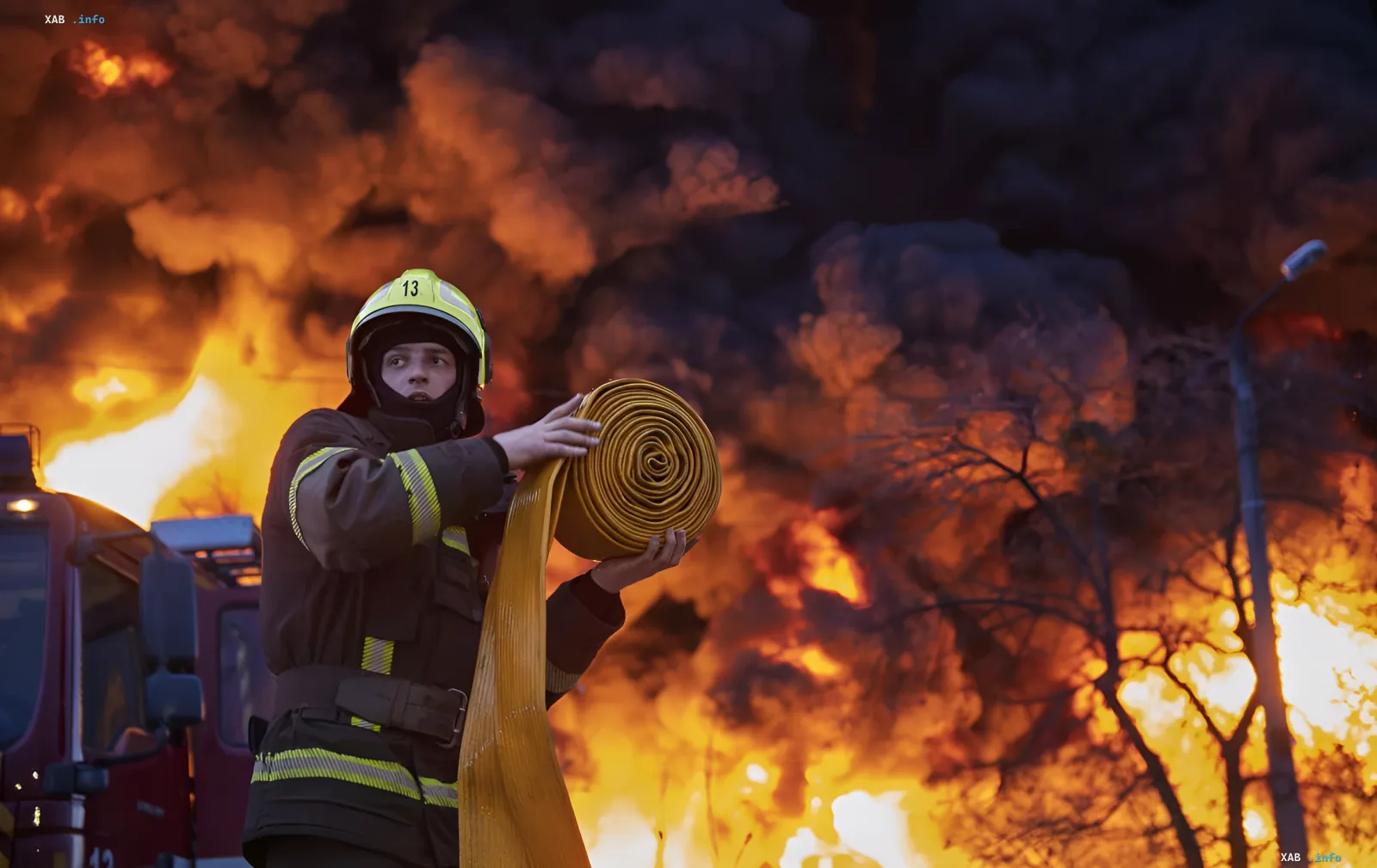
Massive fires triggered by Russian drone attacks are currently being extinguished in the Chernobyl Exclusion Zone. Despite the active efforts of rescue services, the fire has only been partially contained. The situation has raised serious concerns among specialists who are monitoring radiation levels and air quality in Kyiv and surrounding regions around the clock.
Scale of Operations and Rescue Actions
Units of the State Emergency Service (SES), specialized equipment, and enterprises from the gas management sector have been mobilized to combat the fire. Forces from the combined SES unit of the Kyiv region have also been deployed to the Exclusion Zone. According to the State Agency of Ukraine for the Management of the Exclusion Zone, operations are being conducted 24/7.
On June 29, rescuers managed to fully extinguish a fire in one of the nature conservation research divisions. However, work continues on other sections to localize hotspots and prevent the spread of the fire. The situation is being monitored via video surveillance systems and the defense forces of Ukraine.
Radiation Control and Air Quality
A key aspect of the current operation is monitoring the radiation situation. According to the agency, radiation monitoring is being conducted continuously by an automated system. Currently, no exceedance of control levels for gamma radiation equivalent dose rate has been recorded.
However, the threat lies in atmospheric pollution caused by combustion products. Specialists from the Ukrainian Hydrometeorological Institute of the SES and the National Academy of Sciences of Ukraine are analyzing satellite data, which confirms a deterioration in the ecological situation. On June 27–28, smoke from the fires already reached Kyiv, as well as the Vyshhorod, Bucha, and Brovary districts.
Satellite Data and Forecasts
The Sentinel-5P satellite detected plumes of polluted air containing elevated concentrations of carbon monoxide and particulate matter. These plumes extend up to 170 km from the fire sites. Experts warn: if the wind direction changes to the north, the smoke could spread again towards the capital and nearby settlements.
Context: Attack on the Fuel Storage Facility
Recall that the cause of the fires was an attack by a Russian strike drone on the night of June 7. The target of the strike was the site of the Centralized Storage Facility for Spent Nuclear Fuel. As a result of the attack, the container reception building was partially destroyed, leading to a fire that was promptly extinguished at the time. The current fires are a continuation of the consequences of that attack.


