
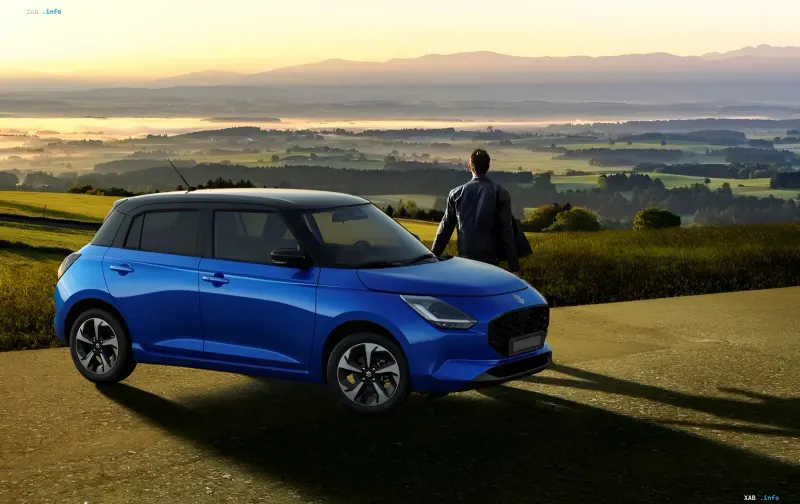
The European automotive market demonstrates a steady interest in A- and B-class vehicles. Drivers on the continent value them for their honesty and practicality, yet subcompacts are extremely rare on Ukrainian roads. Experts and analysts ask: what exactly are Ukrainians losing by refusing small cars in favor of bulky crossovers?
Historical context and the myth of "budget" cars
The automobile was originally created as a means of transporting people and their belongings. In the first decades of the industry's existence, cars did not have full-fledged trunks, and their dimensions corresponded to modern A- and B-class vehicles. Legendary models such as the Austin 7, Fiat Topolino, Citroën 2CV, Renault 4 CV, and Austin Mini were produced in millions.
It is important to understand that these cars were not primitive budget products. They were quite adequate and comfortable cars by the standards of the time, just small in size. The idea of "nothing superfluous" was always key: buyers paid only for what they really needed — four full-fledged seats in the cabin and a compartment for purchases.
The phenomenon of the Ukrainian market
Despite obvious advantages, a specific attitude towards small cars prevails in Ukraine. Auto expert Yevhen Mudzhiri, founder of the Autogeek project, calls this a unique market phenomenon that has nothing to do with pragmatic economics.
According to the expert, while Europeans count every euro and vote with their wallets for subcompacts, a mental marker from the 90s continues to live in Ukraine: "the car must be big." This leads buyers to overpay thousands of euros for heavy and bulky crossovers, carrying a pile of "extra" metal and air in the trunk.
The history of the Ukrainian car enthusiast knows a short period of popularity for the "Tavria" and "Slavuta", driven by low prices. However, the market has now returned to a dismissive attitude towards small models, which, according to experts, has a purely national specificity.
Technology versus prejudice
A modern B-class hatchback (length approx. 3.7 – 4.2 m) offers the user a full set of current advantages. This is not a compromise or a sign of poverty, but a choice in favor of technology. Yevhen Mudzhiri confirms this with his own experience: since 2011 he has owned a Honda Jazz, which at the time was the most expensive car in its class.
"Even then, my subcompact had equipment that cars two classes higher could envy: cruise control, rain and light sensors, and even a panoramic roof," notes the expert. The buyer of such a car gets the maximum amount of technology in a small size.
The paradox of supply and demand
Only five models of A- and B-class cars are officially sold in Ukraine in the classic hatchback format. At the same time, all major players in the world automotive industry operate in this segment, but due to low demand, manufacturers are not in a hurry to supply them to the country.
The situation looks paradoxical against the backdrop of the modest purchasing power of the Ukrainian consumer. The principled ignoring of affordable and practical models seems strange, considering the realities of urban life. Multi-hour traffic jams and full parking lots have become typical not only for megacities but also for regional centers.
Furthermore, smooth and well-maintained roads, friendly to classic subcompact hatchbacks with their ground clearance and small wheels, have become common in all regions. Nevertheless, Ukrainians continue to massively choose large cars, ignoring the logic of saving and comfort in conditions of dense traffic.


