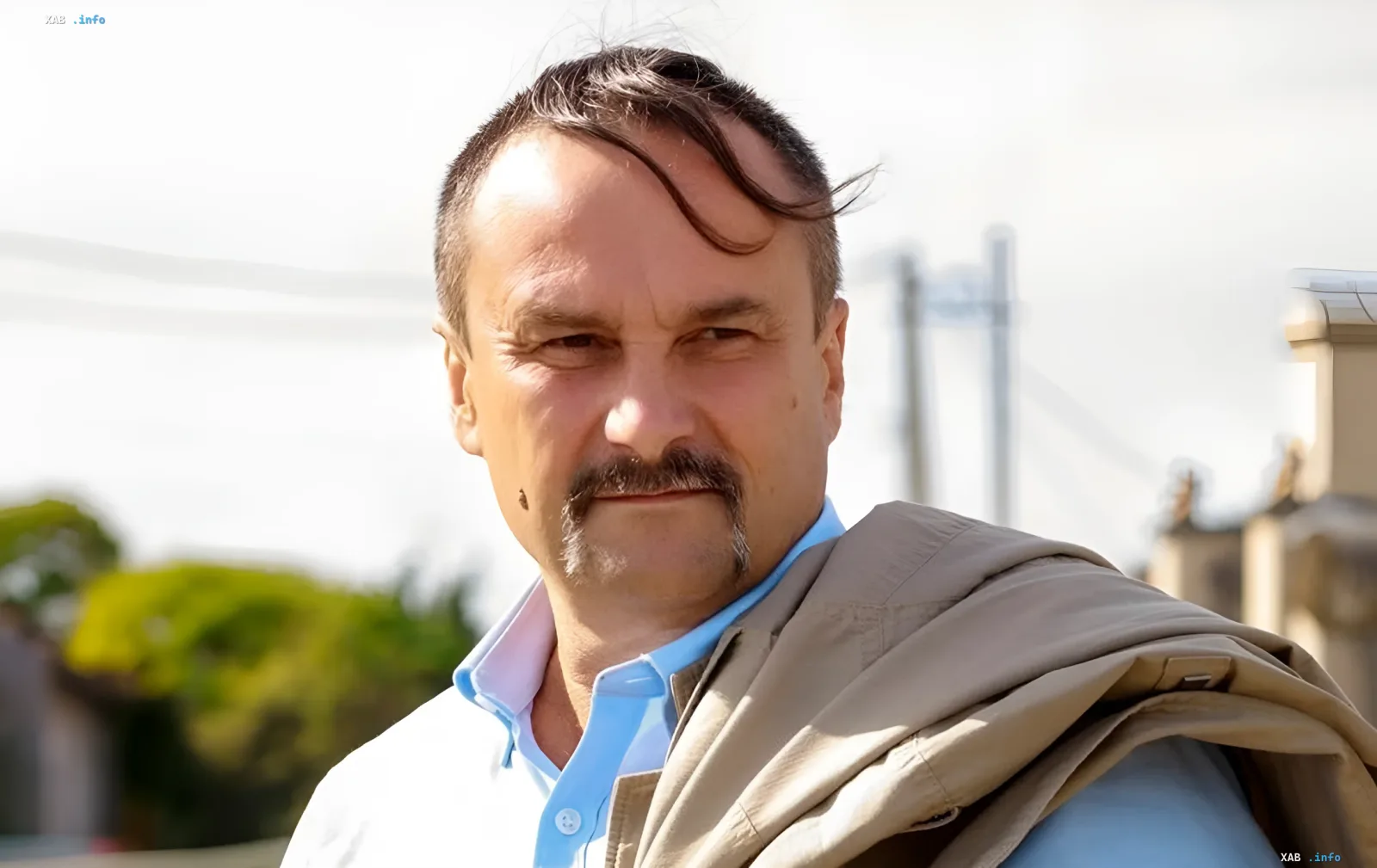
More than two million people in Ukraine now hold veteran status, and the question of how they will govern the country after their return has ceased to be theoretical — some of them have long been in power. One of the most striking examples is Taras Sulymko, head of the Sokolnytsia hromada near Lviv, who went to the front in 2014 and whose village has today found itself at the center of the largest urban-planning conflict in the country's west in recent years. Amendments to Sokolnytsia's master plan were adopted by the village council on 30 December 2024, and since then the story has not left the news agenda.
Who Is Taras Sulymko and Why His Case Is No Coincidence
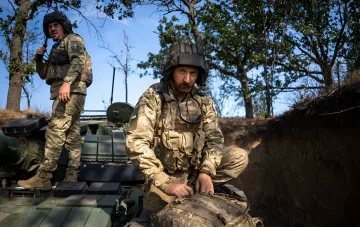
Among village heads, Sulymko is an exception. In 2014 he went to the front as a volunteer, served in the 24th Brigade, and fought for Luhansk Airport. On Christmas 2015 his unit repelled an attack near Krymske in Luhansk Oblast, after which the militants put a bounty on his head. Upon his return he headed the Sokolnytsia village council, and in 2020 he won the election for head of the united hromada, securing the support of more than half the voters. Trust in such leaders is high: according to the "Portrait of a Veteran 2025" study, 92% of people trust the veterans of the current war. Sulymko has eleven years of such governance behind him, and it is against this backdrop that his hromada has become the battleground for a loud dispute.
A Master Plan for 50,000: What the Document Contains and Why It Is Called "Development"
According to Sulymko, the village's population has grown from roughly 8,500 in 2015 to about 10,500 today, while a significant share of residents are not registered in Sokolnytsia, and since 2022 the hromada has continued to receive displaced persons from various regions. The master plan, drawn up for 18 years — until 2044 — provides for the village to grow fivefold, to 50,000 residents: 14 residential quarters, more than 13,000 apartments, an industrial park, as well as kindergartens, schools, its own water and sewage systems, parks, and a transport framework. Part of these lands borders the runway of Lviv Airport. Opponents call the document a "development project" — a "city for 50,000 under the runway" — while Sulymko emphasizes that housing is only one element of the hromada's comprehensive development.
The Court Battle: City Council, Airport, and the Supreme Court
The Lviv City Council went to court: two instances refused to hear the claim, but in April the Supreme Court returned the case for a substantive review. The airport first filed its own claim, and after the April memorandum with the regional administration and the Sokolnytsia village council it filed a motion to leave its claim unexamined. A district council also features separately, where the decision on changing the village's borders has been pending for over a year. Thus, as of publication, the legal fate of the master plan remains unresolved.
Contradictory Data
In the public sphere two substantially different framings of the case have emerged. Supporters of the master plan, above all Sulymko himself, present the document as a strategic 18-year development plan in which housing construction is only one component alongside infrastructure, social facilities, and the industrial park. Opponents, including the Lviv City Council, describe the same document as a "development project" and a "city for 50,000 under the runway," emphasizing the threat to the airport zone and to the million-strong city. Moreover, views on the document's legal force diverge: on the one hand, the village council adopted the master plan on 30 December 2024 and is acting within its framework, while on the other — the Supreme Court in April returned the city council's claim for a substantive review, meaning that the plan's legality and applicability have not yet been finally established. Both versions are set out in the parties' public statements, and the final word belongs to the court.
Sokolnytsia as a Test Site for Decentralization
Within two years the conflict has gone beyond Lviv Oblast. Around every major city there are hromadas that did not join the center during decentralization and are now growing faster than it — Kyiv's suburbs have shown what this looks like when there is no plan. The relevant committee of the Verkhovna Rada is studying the French model of agglomerations, the Ministry of Regional Development has announced a review of the methodology for assessing hromadas' capacity, and the reform's authors from the very start described its logic as "not the fish, but the fishing rod": the hromada itself seeks the investor and itself takes responsibility for its development. The Sokolnytsia case now shows what happens when this logic collides with the interests of a million-strong city. According to Sulymko, the problems grow along with the village — from sewage and water supply to transport links with Lviv, where rush-hour traffic jams call for a comprehensive approach and cooperation among all neighboring hromadas.