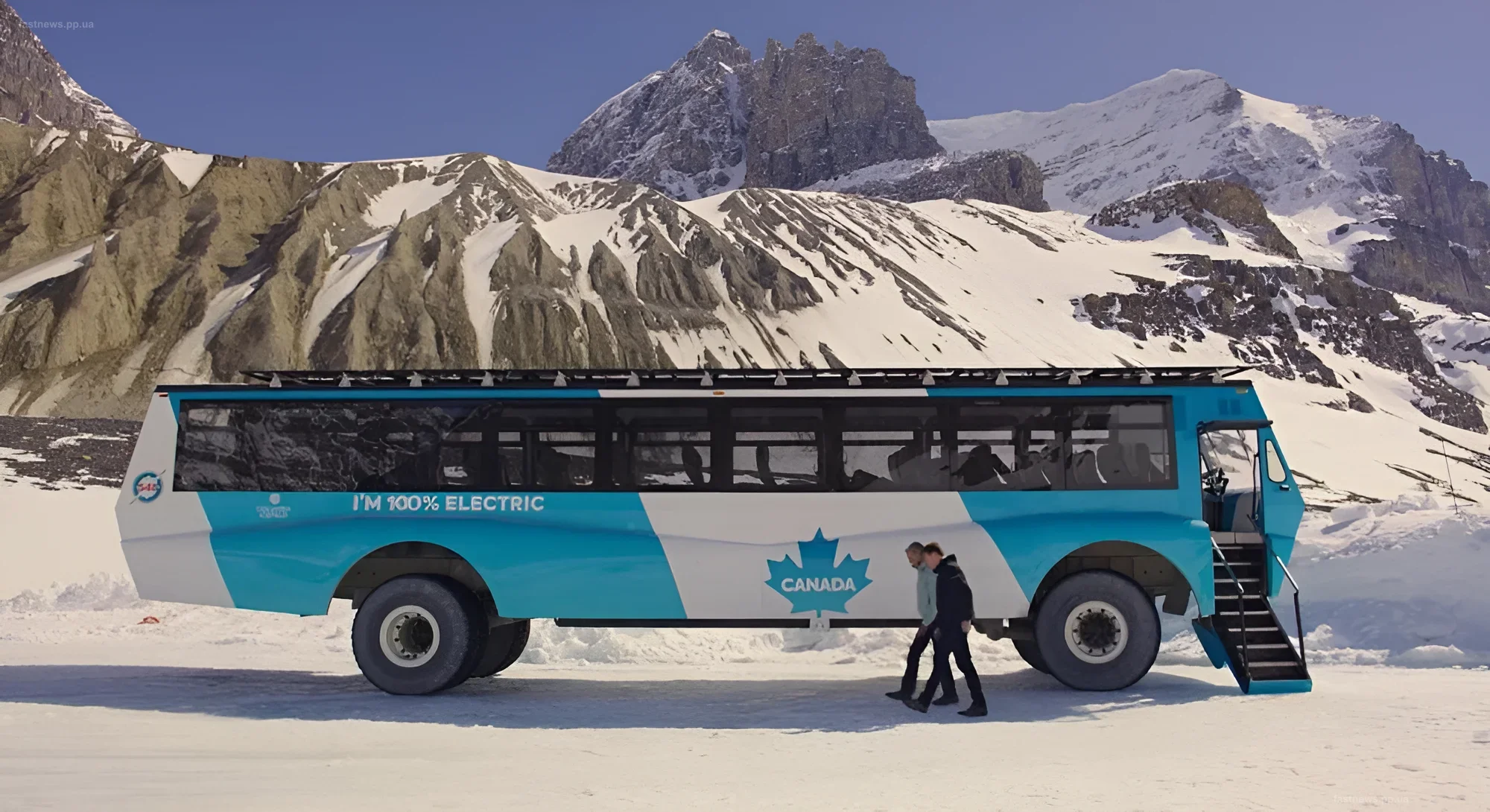
Imagine a vehicle that needs no charging socket, requires no generator support, and can operate for months in the harsh conditions of high mountains. Canadian engineers have turned this scenario from science fiction into reality by creating a unique electric bus for Jasper National Park. This is not just "green" transport, but a true technological breakthrough in the field of autonomous mobility.
Glaciers as an Energy Source
The key feature of this novelty is complete energy independence. In glacial conditions where laying power lines is impossible and using diesel generators harms the environment, engineers from Noble Northern found a brilliant solution. They turned the habitat itself into a power source. The bus roof is covered with 6 kW bifacial solar panels.
Here, the physics of reflection works: snow and ice act as giant mirrors, multiplying insolation. As a result, the installation generates about 40 kWh of energy per day. This is enough to keep the system running and compensate for battery consumption, creating a closed cycle.
Technical Core and Regeneration
The machine is based on the chassis of an old diesel truck, but with radical changes. Engineers retained the four-wheel drive and two-axle scheme but installed dual wheels for better weight distribution on unstable terrain. The heart of the bus is a 528 kWh battery equipped with an advanced thermal regulation system, allowing it to operate at extremely low temperatures.
The most important element of autonomy is the regenerative braking system. When descending from the glaciers, the bus does not just brake; it returns kinetic energy back to the battery. Combined with solar generation, this allows one charge to last for 32–35 full trips.
Environmental Mission
The project operator is the company Pursuit, which replaced a fleet of ten diesel buses with this electric novelty. Engineers consciously refused to install a hybrid diesel generator, although such an option was considered. Their goal is to prove that even in the harshest conditions, one can rely solely on clean energy from the sun and ice. This is the world's first fully autonomous electric bus for glacial expeditions, setting new standards for the tourism industry.


