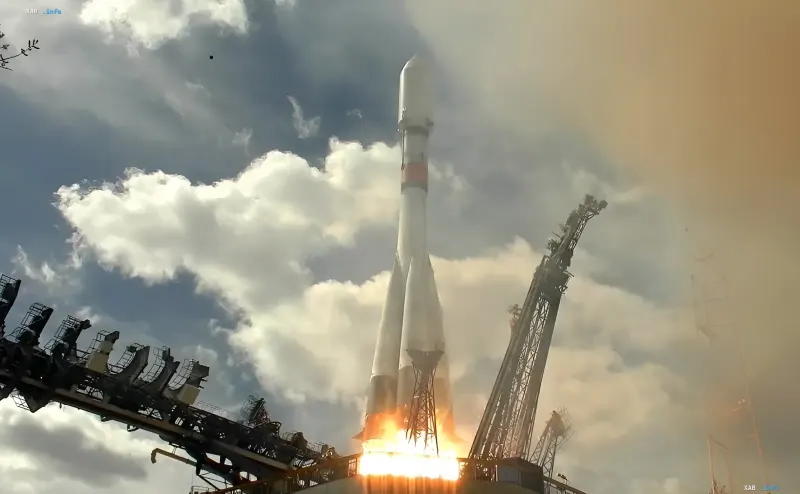
In the early hours of August 24, 2026, at 5:40 Moscow time, a combat unit of the Russian Aerospace Forces carried out the launch of a medium-range “Soyuz-2.1b” carrier rocket from the Plesetsk Cosmodrome in the Arkhangelsk region. This was officially announced by the Russian Ministry of Defense, which emphasized that the operation proceeded normally and in accordance with the approved plan. Against a backdrop of dense cloud cover and early morning light, the launch complex performed without any issues, and the rocket stages and the upper stage block completed the orbital insertion program.
Mission objective: military spacecraft
According to the ministry, the carrier rocket placed into orbit spacecraft intended for the tasks of the Ministry of Defense. The specific purpose of the satellites, their number, and the parameters of the target orbit are not disclosed in public statements — as is customary for military launches, information about the payload is classified. It has only been confirmed that the insertion of the spacecraft into the calculated orbit was carried out in full and without any deviation from the trajectory.
Plesetsk: a strategic launch hub in the north
The Plesetsk Cosmodrome, located in the Arkhangelsk region, remains a key strategic launch center for Russia. It carries out military, governmental, and defense tasks, and its geographic position at high latitudes provides favorable conditions for placing spacecraft into various types of orbits. The regularity of launches from this site underscores its role in maintaining and developing the country's space infrastructure.
“Soyuz-2.1b” as the workhorse of the fleet
The medium-range “Soyuz-2.1b” carrier rocket has for many years been one of the most widely used and reliable launch vehicles in the Russian space fleet. Its configuration with two side boosters and universal nose cones allows it to be used for launching both civilian and military spacecraft. The successful launch on August 24 once again confirmed the operational readiness of this modification and the well-rehearsed launch procedures at Plesetsk.
Assessment and significance of the launch
For observers of the space industry, this launch is of interest above all as a demonstration of the stability of the military segment of Russian space activities. The absence of failures, the precise adherence to the schedule, and the nominal insertion of the payload speak to a high level of preparation of both personnel and equipment. In a situation where the details of the mission remain classified, the public confirmation of success by the Ministry of Defense serves as the main benchmark for assessing the state of the launch campaign for the current period.