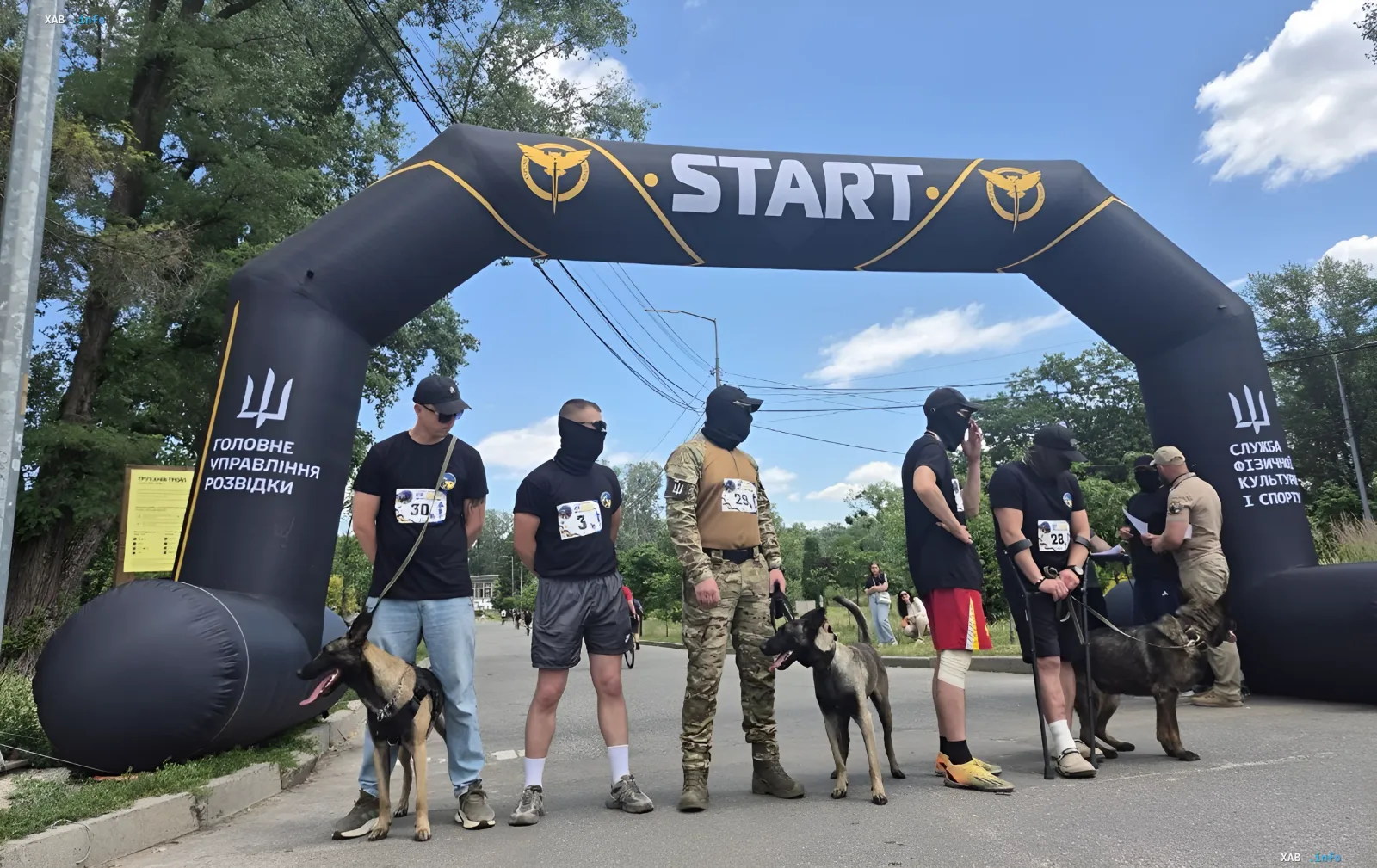
A unique sporting and patriotic event took place in Kyiv — the country's first military K9 race, DRYLAND CANICROSS. Representatives from various Ukrainian law enforcement agencies gathered at the starting line with their service dogs to test their endurance and speed over a 1000-meter distance. The event not only demonstrated the high level of training of the dog handlers but also concluded with the establishment of an official national record.
Record and Recognition
The main outcome of the competition was the registration of a new achievement in the Book of Records of Ukraine. The category "Best recorded time for completing a 1000-meter distance in a military K9 DRYLAND CANICROSS race" now has its first holder. Organizers emphasize that such events carry deep meaning: they remind society of the importance of canine units in ensuring the security of the state.
"Times are difficult in Ukraine right now, but life goes on. And it is precisely such events that bring our state and all of us closer to victory, which, I hope, is already near," noted a representative of the Book of Records of Ukraine.
A Combat Family, Not Just Friends
Thirty representatives from various law enforcement agencies, including Security and Defense Forces, participated in the race. For many of them, a dog is not just a pet, but a full-fledged fighter with whom they share risks and victories.
"At the trench, everyone is the same: the dog and the shooter. A dog is not a friend; it is our combat family that helps us complete tasks," said Serhiy Chub, father of the late Hero of Ukraine Alexander Chub, at the opening of the event.
The winner of the competition was participant number "7" along with his dog. "The victory was unexpected because there was no time for preparation. But looking at the results, I see that all the guys are in good shape. It is nice that our service is valued. It wasn't hard; I am ready for longer distances; this was our first race," he shared his impressions.
Specifics of Work at War
The competition became a vivid demonstration of how canine pairs work in real combat conditions. Participants talked about the specifics of the tasks their four-legged partners perform.
A representative of the SBU Special Operations Center (participant No. 8) told about the work of his dog "Caiman." This is a stormtrooper trained to detect the scent of a human. Before a mission, a special camera is attached to the dog, and it enters the target area to search for the enemy, allowing the handler to observe the situation in real time.
Another participant, a representative of the HUR with the callsign "Yaponchik" (No. 3), brought a Dutch Shepherd named Harley to the start. She is trained to detect explosives. "She searches for explosives, which is dangerous for her. We mostly work in the rear. Currently, fewer dogs are used on the front line because drones pose huge risks to them," he explained.
Problems and the Future of Canine Units
The war has introduced changes in working with animals. A representative of the DOG "ARM" Veterans Union with the callsign "Thor" noted that due to the active use of drones, dogs are more often deployed in the rear or at checkpoints to minimize threats.
"Due to the war, the number of trained service dogs has significantly decreased. If there were thousands of trained animals in Ukraine by 2022, today their number is significantly smaller, and training is a long-term process requiring constant practice. A dog that searches for explosives is trained throughout its life, which is 3-4 training sessions a week," "Thor" said.
Dutch and German Shepherds, purchased from Ukrainian kennels, are most often trained for combat operations. The race organizers plan to make it an annual event, and by autumn, they intend to involve civilian participants as well.
"When a person prepares for a long time, they want to show a result. And when the whole country sees it — that is the highest praise," "Thor" concluded.
In the future, a Military Working Dog program is planned to be launched — an international competition in which military dog handlers from all NATO countries will participate. For now, the victory in the Kyiv race remains a bright symbol of the professionalism and loyalty demonstrated by Ukraine's defenders and their four-legged partners.


