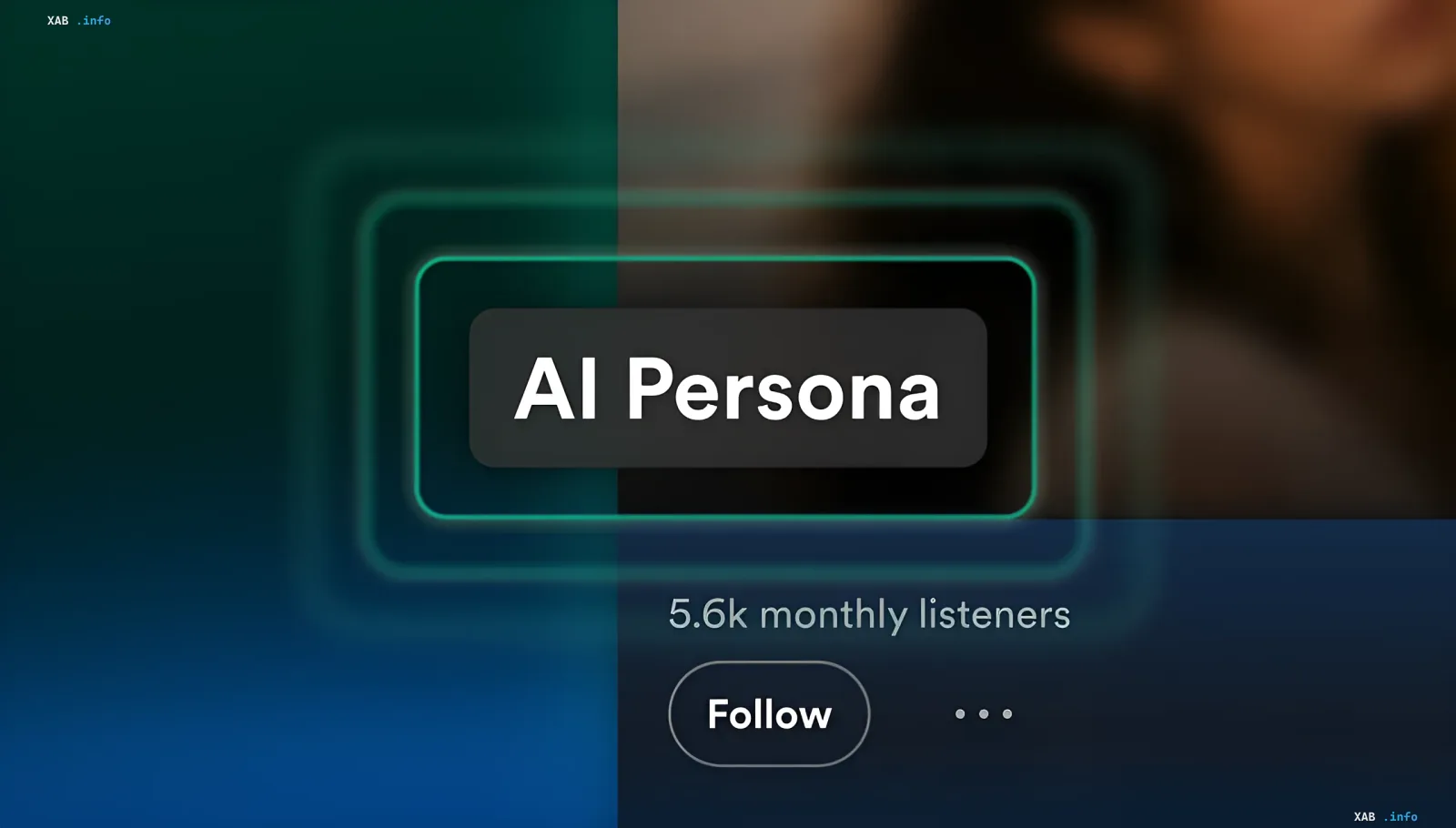
In August 2026, Spotify announced the implementation of a new labeling system for artist profiles created using artificial intelligence. Starting from mid-September, users will be able to see a special 'AI Persona' badge on the pages of such performers. This decision aims to distinguish real musicians from digital avatars, whose popularity is often achieved through algorithmic manipulation.
New labeling system and its goals
According to data published on xbt.com and confirmed by Techcrunch.com, the 'AI Persona' badge will be displayed on the artist's profile banner, in the 'About' section, in search results, and next to tracks in playlists. This will allow users to immediately understand that they are looking at a generated AI persona rather than a living person. The company emphasizes that this is not an assessment of music quality, but merely an indication of the profile's origin.
Exclusion from recommendations and focus on real artists
An important aspect of the innovation is the exclusion of music from AI personas from Spotify's recommendation system. This means that such tracks will not be automatically suggested to users in playlists like 'Discover Weekly' or 'Release Radar'. The company explains this by its desire to support real artists who are building a real career and investing time in creativity. As noted by Spotify, 'software tools are aimed at promoting music by real artists'.
Popularity threshold and verification mechanism
Initial checks will apply only to profiles that have crossed a certain threshold of listeners. This will allow a focus on the most popular AI artists who can influence the market and mislead users. Once identified, the badge will be automatically added to the profile. At the same time, every user retains the right to subscribe to any artist, including AI personas, which serves as a signal of their conscious choice.
Appeal and protection of artists' rights
If an artist believes that the 'AI Persona' badge has been installed erroneously, they can file an appeal through a special form in the app. Spotify promises to review such requests within 7–10 business days. This is important because some real musicians may use AI as a tool in their creativity while remaining living people. The company emphasizes that the labeling concerns the profile itself, not the method of music creation.
Contradictory data
While Techcrunch and xbt.com report on the implementation of labeling from September 2026, The Guardian indicates that some elements of the system have already been tested since July. Furthermore, Mashable notes that Spotify does not disclose the exact listener threshold at which verification begins — this raises questions among independent analysts. Some experts believe that the threshold may be too high, allowing less popular AI artists to remain unnoticed.
Impact on the music industry
This decision by Spotify could set a precedent for other streaming platforms, such as Apple Music, YouTube Music, and Amazon Music. In the face of the growing number of AI-generated content, platforms are forced to find ways to maintain user trust and protect the rights of real artists. However, critics fear that this could lead to censorship or restriction of creative freedom, especially for those who use AI as an auxiliary tool.
Thus, the introduction of the 'AI Persona' label is not just a technical update, but an important step in shaping a new ethics of digital music. Spotify is trying to find a balance between innovation and transparency, which in the long term may change how we perceive and consume music in the age of artificial intelligence.