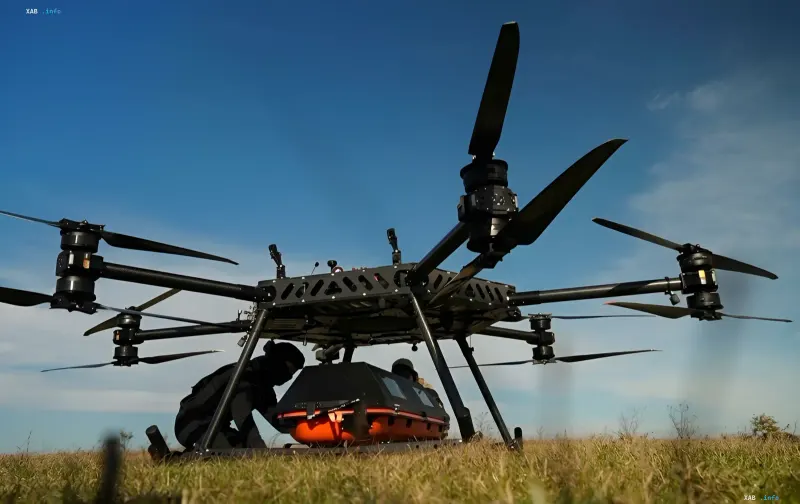
Ukrainian defense company SkyFall has handed over the first unit of the StarGate drone to one of its combat brigades—an aerial platform designed to evacuate wounded soldiers from positions inaccessible to ground vehicles. This is reported by RBC-Ukraine, citing an Associated Press report. The device is beginning a month-long cycle of real combat testing within the "Code 9.2" unit, following which the effectiveness of the new medical evacuation system will be evaluated. If the drone proves its reliability at the front, it has the potential to fundamentally change how wounded personnel are retrieved from under fire.
An Idea Born in the Trenches
According to a SkyFall representative, the StarGate concept was born not in a design bureau, but directly on the front line. Last year, the commander of the 475th Separate Assault Regiment (the "Code 9.2" unit), operating under the call sign "Flint," approached the company's founder with a request to develop a safe way to extract the wounded from hard-to-reach positions. "The idea came directly from the frontline, from the trenches," the developer's representative emphasized. Work on the drone has been underway over the past year, and it has now been handed over to the troops for combat evaluation for the first time.
The "Kill Zone" Problem
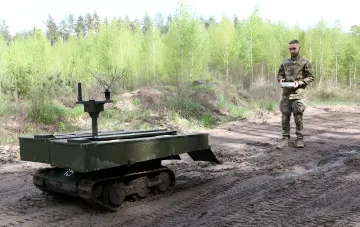
In a number of frontline sectors, the so-called "kill zone"—territory under constant fire control by enemy drones, artillery, and UAVs—stretches for 10 to 15 kilometers. Evacuating on foot through such areas is extremely risky, and ground robotic systems struggle to overcome mud, shell craters, and mined paths; rivers, mines, and drones can halt them entirely. "Ground robots usually need 2 to 3 hours to reach a position. Overcoming 10 kilometers in a matter of minutes using a drone would be a game-changer on the frontline," noted a commander with the call sign "KVN" from the "Code 9.2" unit. He added that evacuations are carried out regularly, but due to the intensity of shelling, retrieving a wounded soldier on the same day is not always possible, and in critical cases, every hour of waiting can cost a life.
Navigation Without GPS and Under Electronic Warfare Conditions
The main engineering challenge was ensuring navigation when electronic warfare (EW) disrupts communications or jams GPS signals. To protect against signal loss, StarGate utilizes redundant communication channels—Starlink and its proprietary L-Link system. The drone is manually operated but equipped with artificial intelligence features that allow it to function where GPS is unavailable or where frequencies are jammed and spoofed. This enables the craft to orient itself in space without a GPS signal and automatically plot a route back to a safe zone. During demonstrations, StarGate successfully passed tests under EW conditions and simulated enemy FPV drone attacks—one of which was intercepted and downed by a net deployed by the evacuation drone itself.
Specifications and Production Plans
The drone is capable of operating in rain and snow, is equipped with thermal imaging cameras for night missions, and its design allows flight to continue even if one of the propeller arms is lost. According to SkyFall estimates, the cost of a single StarGate system will start at $50,000 depending on configuration. By the end of 2026, the company plans to scale production up to 1,000 units per month. The developer is already known for creating the heavy strike drone Vampire (known in Russia as "Baba Yaga"), Shrike FPV drones, and the P1-SUN air interceptor, making StarGate a new direction in the company's portfolio—a transition from strike and interceptor vehicles to support and evacuation platforms.
What's Next
The "Code 9.2" unit has already begun a month-long cycle of testing the drone in real combat conditions. "This is a completely new method of evacuation. Right now it's hard to talk in detail about the pluses and minuses. We need to work with it more," added the commander with the call sign "KVN." The results of these tests will determine whether StarGate becomes a serial element of the medical evacuation system or remains an experimental development.