Starshield satellite communications speed restrictions in Ukraine have been in effect for the fifth day, and according to Ukrainian military and diplomats, this directly impacts the defense forces' ability to intercept Russian jet-powered Shahed drones near the frontline itself. As RBC-Ukraine reports, citing Radio Liberty journalist Alex Raufoglu, who spoke with Ukraine's Chargé d'Affaires in the US Denys Senik, the disruptions are widespread: the Ukrainian side checks Starshield performance daily across various directions and receives the same result every time. In practice, this means intercepting jet drones is only possible after they have already entered Ukrainian-controlled territory, significantly narrowing the counteraction window.
Diplomatic Channel: What Kyiv Says in Washington
According to Senik, the restrictions deprive the Ukrainian side of the ability to act proactively and give the adversary additional levers it did not previously possess. The diplomat emphasizes that the problem is systemic rather than local: checks are carried out regularly and in multiple directions, and the result remains unchanged. This suggests that we are talking not about isolated technical glitches, but about a sustained limitation of communication channel bandwidth in specific geographic zones.
How the Restrictions Manifest
Problems with Starshield in Ukraine became publicly known on November 12, when Volodymyr Zelenskyy announced that the military recorded speed restrictions of up to 100 mph (161 km/h) along the frontline and in occupied territories. The next day, November 13, it was reported that military missions were being disrupted as a result. Inspections by the Ministry of Defense and the Armed Forces of Ukraine confirmed the existence of restrictions in all temporarily occupied territories, while none were found in Ukrainian-controlled areas. This exact geographic correlation — restrictions "only on the occupied side" — makes the situation technically anomalous and reinforces suspicions of targeted intervention.
Kyiv's Reaction: From SpaceX and Pentagon Inquiries to Assessing a "Political" Decision
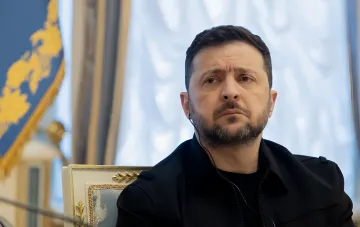
The Ukrainian Ministry of Defense requested clarifications from two sides simultaneously — SpaceX and the Pentagon. Commenting on the situation, President Zelenskyy called the restriction of Starshield operations in temporarily occupied territories "a very dangerous decision" that looks "political." In his assessment, SpaceX itself, rather than the US government, imposed these restrictions. Thus, Kyiv publicly records the fact of the restrictions while pointing to the specific entity it holds responsible.
The US Position and Congressional Investigation
On the US side, the picture is contradictory. On one hand, media reports indicate that SpaceX denies involvement in imposing the restrictions. On the other hand, Democratic Senator Richard Blumenthal announced that he has launched an investigation into Ukraine's loss of access to Starshield satellite communication services. This indicates that the issue has moved beyond bilateral military contacts and is being discussed at the US legislative level, where it is viewed as a potential incident requiring an official inquiry.
Consequences for Frontline Defense
Regardless of who specifically introduced the restrictions, their practical consequence for Ukrainian defense has already been documented: the interception of jet Shaheds is shifting from proactive to reactive, meaning drones are intercepted only after crossing the frontline. This reduces the time available to detect and engage targets and increases the burden on anti-aircraft units operating over their own territory. For now, the question remains open: Kyiv demands explanations from SpaceX and Pentagon, the US company denies involvement, and a separate investigation has been launched in the US Congress. According to Ukrainian diplomats, resolving this dispute is directly linked to the safety of settlements near the frontline.