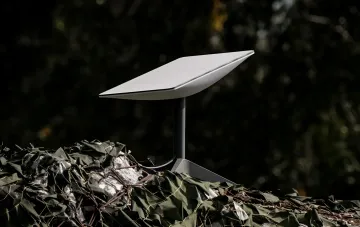
The Ukrainian military has faced massive disruptions in the operation of the Starshield satellite system—the military version of Elon Musk's SpaceX Starlink, which the Armed Forces of Ukraine use to control drones and intercept Russian UAVs. According to Axios, cited by RBC-Ukraine, an anonymous Ukrainian official reported that due to new restrictions, all missions depending on this system are facing disruption. This is already the second such incident in the past few weeks, making the situation critical for Ukraine's defense infrastructure.
Phased Tightening: From 10% to Complete Paralysis
An Axios source in the Ukrainian government said that the restrictions were not introduced all at once, but gradually over three days. On the first day, disruptions accounted for about 10% of the total number of missions, on the second day the figure rose to 50%, and by the third day, according to the official, 100% of operations were failing due to restrictions. According to the Ukrainian military, this stepped dynamic rules out the version of a random technical failure and points to a targeted change in the system's operating parameters.
The 100 mph Threshold: Technical Essence of Restrictions
Denys Sienik, Ukraine's Chargé d'Affaires in the US, clarified the key technical parameter: the Starshield system shuts down when drones reach speeds exceeding 100 miles per hour, which is approximately 161 km/h. For many types of strike and reconnaissance drones used by the Armed Forces of Ukraine, this value is a working or even minimum speed to complete a combat mission. According to Sienik, at the time of publication, the Ukrainian side had not received explanations from either SpaceX or the Pentagon regarding the reasons for introducing such restrictions.
Zelenskyy: Not Accidental Failures, But Systemic Restrictions
On November 12, President Volodymyr Zelenskyy publicly announced serious disruptions in the operation of Starshield. According to him, Ukrainian units are recording significant disruptions with Starshield along the entire frontline, as well as in the temporarily occupied territories. The head of state emphasized that after reports from the Minister of Defense and the Commander-in-Chief of the Armed Forces of Ukraine, the military checked the circumstances of the incident and concluded that it was not about accidental technical failures, but about systemic restrictions on equipment operating speeds. This fundamentally changes the nature of the problem: if the failures were accidental, they would be episodic, whereas a stable pattern tied to a specific speed threshold has been recorded.
SpaceX Categorically Denies: "No Changes Were Made"
Elon Musk's company, in turn, completely denies introducing any new restrictions for Ukraine. A brief response was received by Axios from SpaceX: "That's not true. No changes were made." Thus, the positions of Kyiv and Palo Alto turn out to be diametrically opposed: the Ukrainian side records clearly measurable, reproducible restrictions tied to speed, while the system operator claims there are no changes in configuration. Against this backdrop, the Ukrainian side continues to clarify the circumstances of the incident with American partners; however, according to Sienik, neither SpaceX nor Pentagon has yet provided official explanations.
Context: Vulnerability Associated with a Single Satellite Channel
The second incident with Starshield in a few weeks exposes the structural vulnerability of Ukraine's UAV control system, a significant part of which is tied to a satellite communication channel provided by a single commercial company. The situation raises questions about the diversification of communication channels for military operations and about mechanisms of guarantees that can ensure the uninterrupted operation of critical infrastructure in a conflict. While the Ukrainian side is negotiating with American partners, the question of who exactly initiated the changes—technical, regulatory, or political—remains open.