

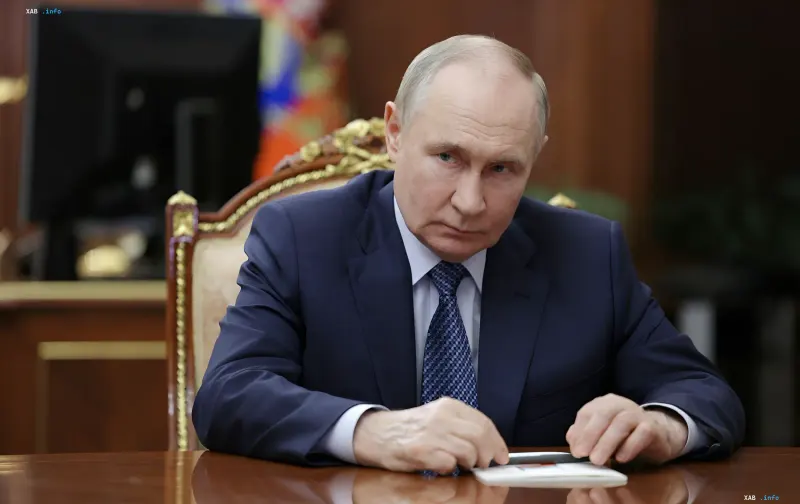
An unprecedented situation is unfolding in the Kremlin and the State Duma. Vladimir Putin has faced a rare public demand from deputies to present a clear plan for ending the war in Ukraine. At the center of attention is State Duma deputy Vyacheslav Markhaev from the CPRF faction, who stated in his speech that Russia is on the brink of a social explosion.
Warning of chaos and the collapse of statehood
Markhaev did not resort to euphemisms, listing the real problems plaguing the country: corruption scandals, oligarchy, the loss of the most active and reproductively capable segment of the population, as well as regular drone strikes by Ukraine on Russian territory. According to him, the time for illusions is over, and the blame for the impending collapse will fall on the entrenched ruling power.
The deputy warned that if the current situation persists, social unrest and chaos will become inevitable. Moreover, he pointed out a strategic error: the West will inevitably use the internal crisis to destroy the remnants of Russian statehood.
Economic crisis and fleeing from statistics
Markhaev's words find confirmation in dry figures and the actions of the authorities. The State Center for the Study of Public Opinion (VTsIOM) stopped publishing the "open" rating of trust in Putin this week. Earlier, in early April, only 29.5% of Russians named the president as a politician they trust — this is the lowest figure since the start of the full-scale war.
The Russian economy is showing signs of exhaustion. Growth has slowed to a minimum, and inflation remains high. Ukrainian attacks on oil refineries and terminals have dealt a blow to the budget: crude oil refining has dropped to a 16-year low.
According to Janis Kluge from the German Institute for International and Security Affairs, Russia's military spending in early 2026 increased by more than 30% compared to the previous year, reaching 46% of total budget expenditures. The expert noted that military spending is equivalent to two-thirds of the Russian budget's revenue for the first quarter of 2026. Almost every second ruble from the federal budget goes to military needs.
Internal friction: Nabulina's ultimatum
Against the backdrop of economic pressure, relations within the elites are intensifying. Independent Russian channels, citing sources, report that the head of the Central Bank of Russia, Elvira Nabiullina, has issued an ultimatum to Putin. She is ready to seek an extension of her term only on the condition that the Kremlin does not close the borders and introduce martial law.
According to the channel "We Can Explain," Nabiullina plans to leave her post. This week, she and her deputies missed a meeting with Putin and ministers to discuss interest rates, which became a loud signal of internal conflict.
Kremlin response: Mobilization and army growth
Despite the rise in domestic discontent and economic distress signals, Vladimir Putin has not retreated from his course. On Friday, the president signed a decree to increase the official strength of the Russian army by almost 10,000 people. This is the second such case in the last four months.
At the same time, Ukraine is asking its allies for an additional $20 billion to consolidate superiority on the battlefield. An unnamed Ukrainian official told Politico: "Everyone sees that Russia is burning, and we want it to burn even more, but we need funding for this." The request will be voiced on June 18 at a meeting of the Contact Group.
Breaking unity: Who is no longer silent
Vyacheslav Markhaev joins a growing list of public figures moving away from the official line. At the end of last month, State Duma deputy Renat Suleimanov (CPRF) called for an early end to the war, stating that the economy cannot withstand its continuation. In March, former Kremlin supporter Ilya Remeslo spoke out with sharp criticism, calling Putin a "war criminal and thief" and calling for his trial.
Among the reasons for the drop in the trust rating, according to VTsIOM, experts cite the blocking of Telegram, restrictions on mobile internet, rising prices, and the deep fatigue of Russians from the war.


