
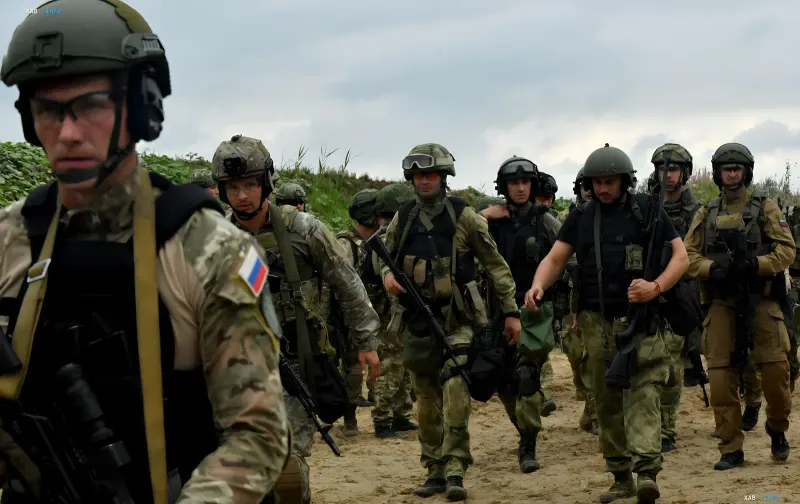
On the southern front, in the Orikhiv area, the situation has sharply escalated. Russian troops have significantly intensified their activities, using deteriorating weather conditions as a tactical advantage. According to intelligence data, the enemy plans to covertly move sabotage groups closer to the city.
Infiltration plan amidst the rain
Vladyslav Voloshyn, spokesperson for the Southern Defense Forces, warned of the threat during a Telethon broadcast. He stated that in recent days, Russian troops have resumed activity directly near Orikhiv. According to Voloshyn, the enemy has been tasked with taking advantage of the bad weather, predicted by meteorologists, to infiltrate groups towards the city itself.
The goal of such actions is obvious: to bring saboteurs as close as possible to the urban area to create a threat from the rear or prepare conditions for a larger-scale offensive.
Massive use of aviation
Parallel to the preparation of sabotage operations, the Russian army continues to intensively shell Orikhiv and other settlements in southern Ukraine. The main weapon remains guided aerial bombs (KABs).
The statistics of the strikes are alarming in their regularity and intensity:
- In just the past 24 hours, about ten guided aerial bombs were dropped on Orikhiv.
- In total, on the southern front, the enemy delivers up to 25 air strikes daily.
- Approximately a hundred such bombs are used daily to implement this tactic.
Tragedy in Zaporizhzhia: strikes on civilians
While preparations for a breakthrough are underway in Orikhiv, Russian troops continue to strike occupied Zaporizhzhia, showing no mercy to civilian infrastructure and peaceful residents. The chronicle of attacks over the past week demonstrates the systematic nature of the violence.
On July 9, the occupiers attacked the city, targeting a gas station. A few days earlier, on July 6, Russians also shelled a gas station in Zaporizhzhia. As a result of this attack, two people were killed, and nine others were injured.
In the evening of July 4, a series of strikes hit the city. A multi-story residential building and critical infrastructure facilities were damaged, and casualties were reported.
The attacks on July 3 were particularly tragic. In the evening, Russian drones hit the No. 7 branch of "Nova Poshta" in Zaporizhzhia. As a result of the strike, a company employee was killed. Earlier that same day, the enemy dropped aerial bombs on one of the city's enterprises, which led to the death of another person.
Later, Russian troops attacked Zaporizhzhia again. During the second strike, two women on the street were injured. Later, the number of casualties from that attack rose to 21 people. Among the injured were children — a 12-year-old boy and a 16-year-old girl.


