
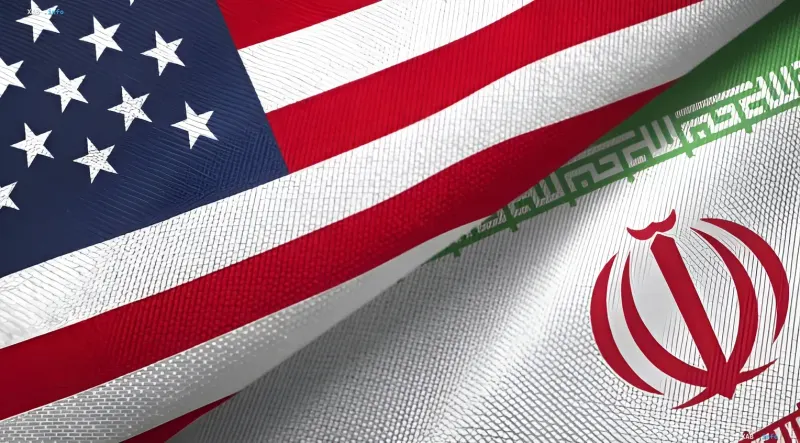
From container ship attack to airstrikes: chronicle of escalation
The situation in the waters of the Strait of Hormuz and the Gulf of Oman has entered a phase of open military-political confrontation. The region, a key hub of global trade, found itself at the epicenter of the conflict following a series of incidents involving commercial fleets and military units of the US and Iran. The trigger for the sharp escalation was the attack on the large container ship Ever Lovely and the subsequent retaliatory actions by US aviation.
According to official data from the British Maritime Trade Operations Management Organization (UKMTO, briefing No. 074-26), on June 25, 2026, at 14:10 UTC, the merchant vessel Ever Lovely was subjected to fire. The incident occurred 7.5 nautical miles southeast of the Omani port of Dahit. The captain of the ship, owned by the Taiwanese company Evergreen Marine Corp., reported a hit by an unidentified projectile — presumably a loitering munition — on the starboard side. The strike caused local damage to glazing and bridge structures.
According to a statement by the Maritime and Port Authority of Singapore (MPA), all 21 crew members are safe. Despite the damage, the ship maintained speed and successfully completed transit through the strait.
Retaliatory strike and threat of blockade
Official representatives of the US Department of Defense stated the direct involvement of the Islamic Revolutionary Guard Corps (IRGC) Navy in the attack on the civilian cargo ship. As a retaliatory measure, on June 26, the US Air Force Command (USAF) ordered precision airstrikes on Iranian coastal radar posts and UAV bases.
A new peak in tension was recorded on the morning of June 27. Coastal services in Oman intercepted IRGC radio communications demanding that commercial tankers alter course under threat of coastal missile systems. Tehran, through the Persian Gulf Strait Regional Administration (PGSA), issued a notification stating that any vessels proceeding through the southern (Omani) corridor without Iranian authorization would lose insurance guarantees. This decision threatens approximately 20% of the world's crude oil transit.
Legal aspect: transit rights
The actions of the Iranian side are in direct conflict with international law. In accordance with Part III of the 1982 United Nations Convention on the Law of the Sea (UNCLOS), a regime of transit passage applies in international straits. It guarantees all ships freedom of navigation solely for the purpose of continuous and expeditious transit. According to the convention, coastal states have no legal grounds to suspend or block such passage, making the PGSA's demands for "transit permission" legally void in the eyes of the international community.
Economic consequences and humanitarian crisis
The surge in combat activity coincided with the implementation of the International Maritime Organization's (IMO) 60-day plan to evacuate ships stranded in the Persian Gulf for more than 100 days due to mine threats. IMO Secretary-General Arsenio Dominguez officially announced the temporary suspension of the humanitarian mission.
"I have decided to temporarily freeze the execution of the evacuation plan to re-verify firm security guarantees from all regional players. The safety of civilian seafarers remains an absolute priority," Dominguez stated.
Markets reacted to the escalation instantly. Brent crude rose to $75 per barrel, while Murban quotes showed a short-term spike of +4%. Analysts from the German bank Landesbank Baden-Württemberg (LBBW) note that the current destabilization interrupts the downward trend in hydrocarbon prices. Insurance syndicates and P&I clubs are forced to revise coverage terms, increasing premiums for war risks in the Gulf of Oman. Amidst uncertainty, investors flocked to safe-haven assets, leading to the stabilization of spot gold in the range of $4150–$4200 per ounce.


