
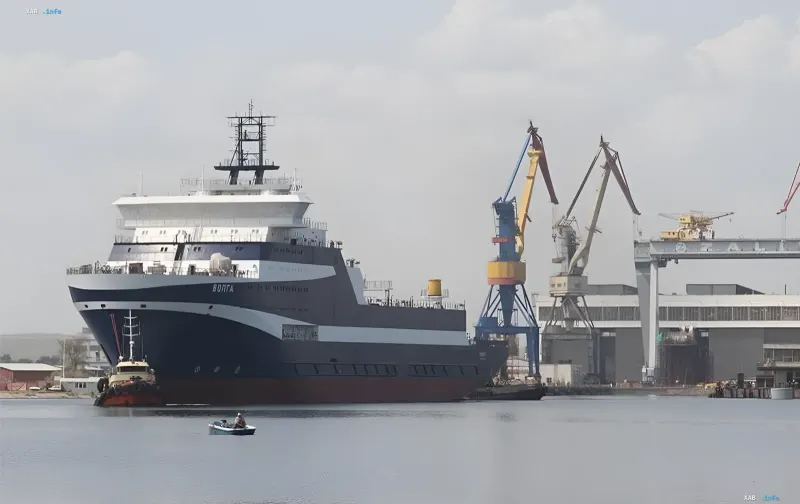
A major event has occurred in the temporarily occupied Kerch, which could significantly alter the logistical and military landscape in the region. Commandos from the SBU's special unit 'Alpha' launched targeted strikes on the 'Zaliv' shipyard. As a result of the drone attack, several strategically important facilities were damaged.
Damage to Cable-Laying Ships
The primary targets of the strike were the cable-laying ships 'Volga' and 'Vyatka'. These vessels are not civilian transport units; they were built to order for the Russian Ministry of Defense to perform specific tasks. Following the drone hits, large-scale fires broke out on both ships, engulfing a significant portion of their structures.
Damage to Infrastructure and Military Objects
In addition to the ships, strikes were launched against the passenger-cargo ferry 'Petropavlovsk'. The vessel was at the final stage of readiness — 96% — and was also engulfed in flames. Thus, three major shipbuilding objects were put out of commission almost simultaneously.
Particular attention is drawn to the damage to military infrastructure. SBU drones destroyed the weaponry and radar station of an S-400 surface-to-air missile system, which provided cover for the Kerch Strait area. Now, part of the air defense system in this strategically important region is non-functional.
Operation Goals and Consequences
This operation was personally approved by Ukrainian President Volodymyr Zelenskyy. Its main goal is to weaken Russia's military and logistical infrastructure in Crimea, as well as to deprive the adversary of the ability to use the peninsula as a base for supplies.
As reported by RBC-Ukraine, the consequences of the attack are already being felt in neighboring regions. In particular, Sevastopol is experiencing blackouts and the beginning of a fuel crisis, which may indicate systemic failures in energy and supply.
Significance for the Region
The attack on the 'Zaliv' shipyard demonstrates the ability of Ukrainian special services to strike deeply located objects in Crimea. This not only inflicts material damage but also undermines confidence in the security of key infrastructure facilities.


