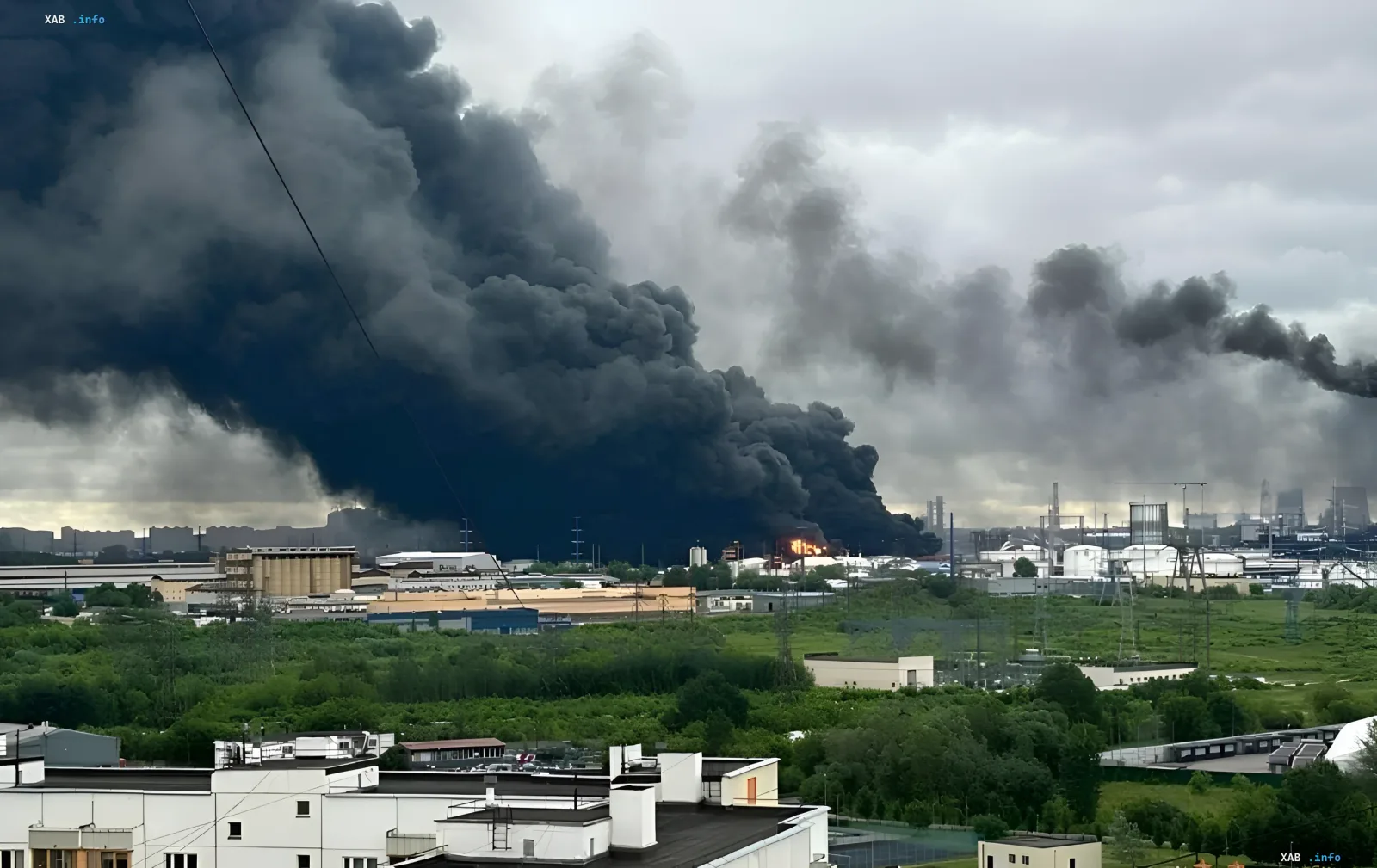
On June 18, Moscow and the surrounding region became the scene of one of the largest drone attacks by Ukraine this year. The focal point was a strategically vital facility in the Kapotnya district — the Moscow Oil Refinery (NPP). A repeat strike on the enterprise led to massive fires and dealt a serious blow to the production capacity of the Russian energy sector.
Critical damage to a key node
According to OSINT specialists and the Security Service of Ukraine, the attacks caused damage not only to the perimeter of the plant but also to its production core. The AVT-6 primary processing unit was damaged during the strikes. Experts call this complex the 'heart' of the entire enterprise, as it accounts for half of the plant's processing capacity.
In addition to the AVT unit, the fire engulfed the tank farm and the diesel hydrotreating unit. Fires broke out in at least two locations, which is confirmed by visual data and analyst reports. Although Reuters sources previously reported that the second primary processing unit could resume work soon, the current state of the AVT-6 complex raises serious concerns about the timeline for restoring full capacity.
Economic consequences and market reaction
The news of damage to the key node of the Moscow Refinery was immediately reflected in financial indicators. Immediately after the confirmation of the strike, the shares of the largest Russian oil and gas corporations — Gazprom, Rosneft, and Lukoil — began to plummet in price. The market reacted to the risks of reduced oil refining volumes and logistical difficulties in the region.
Scale of the attack and government response
The attack on June 18 required emergency measures from the capital authorities. Due to the threat in the sky, the operation of four Moscow airports was temporarily suspended. This indicates a high intensity of air activity and the complexity of the situation in the sky over the capital.
The General Staff of the Armed Forces of Ukraine published a list of facilities subjected to strikes that night. In addition to the Moscow Refinery, the targets included an oil depot in the Rostov region, bridge crossings in Crimea and the Donetsk region, as well as a command post of Russian occupation forces. The consequences of previous attacks on oil facilities in three other regions of the Russian Federation were also confirmed.
Kyiv's position
Ukrainian President Volodymyr Zelenskyy confirmed that the Defense Forces struck the Moscow Refinery for the second time in a week. According to him, these actions are a just response to the regular shelling of Ukrainian cities. Zelenskyy emphasized that Ukraine did not seek war, but Russia must feel the consequences of its own aggression. The head of state called on Russians to pressure the Kremlin leadership if they wish for the cessation of hostilities.


