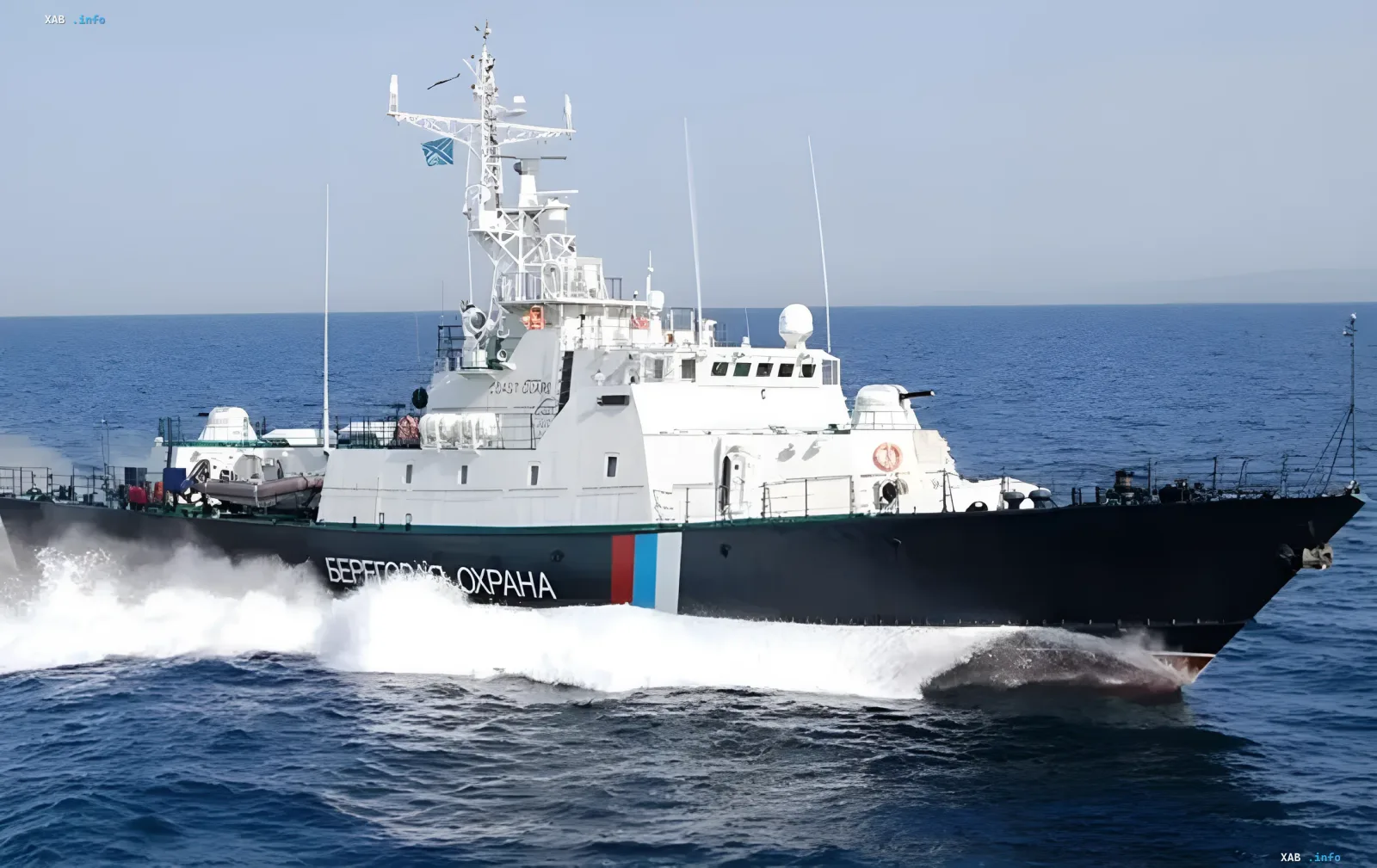
On the night of May 4, the Unmanned Systems Forces of the Armed Forces of Ukraine carried out a precision strike on a Russian border guard ship of the 'Svetlyak' class. The attack took place in the settlement of Yurkino, located in temporarily occupied Crimea. This was reported by the Commander of the Unmanned Systems Forces of the Armed Forces of Ukraine, Robert 'Madyar' Brovdi, in his Telegram channel.
Target of the attack: Project 10410 ship
The target was the border guard ship 'Svetlyak' of Project 10410. This vessel, 49.5 meters long, is designed to perform a wide range of tasks: from controlling and protecting ports to creating a tactical air defense and anti-submarine warfare line.
The ship is equipped with a serious arsenal, including:
- 16 sets of 'Igla' man-portable air-defense systems (MANPADS);
- AK-176 artillery mount;
- 14.5 mm machine gun mounts;
- Six-barreled anti-aircraft automatic cannons.
The ship's crew consists of 28 servicemen. The vessel has an autonomy of up to 10 days and is capable of covering a distance of 2,200 miles.
Part of a broader strategy
The strike on the 'Svetlyak' is a continuation of a series of successful operations by the Ukrainian side aimed at reducing the combat capabilities of the Russian fleet. Previously, on June 3, the Defense Forces of Ukraine struck ships and infrastructure facilities in the port of Kronstadt in the Leningrad Region. In particular, the corvette 'Boykiy' was damaged, demonstrating Kyiv's ability to strike enemy military objects even at a significant distance from the front line.
Also, on the night of May 23, Ukrainian military forces attacked a naval base in Novorossiysk. As a result of the drone strike, two ships of the Russian Black Sea Fleet were damaged — the frigate 'Admiral Essen' and the Project 1239 missile ship on an air cushion.
Significance of the attack
The destruction of a border guard ship in Crimea is not only direct damage to the military potential of the occupiers but also a demonstration of the effectiveness of unmanned systems in modern conditions. Such operations show that even large maritime objects located in the enemy's 'rear' remain vulnerable to high-precision strikes.


