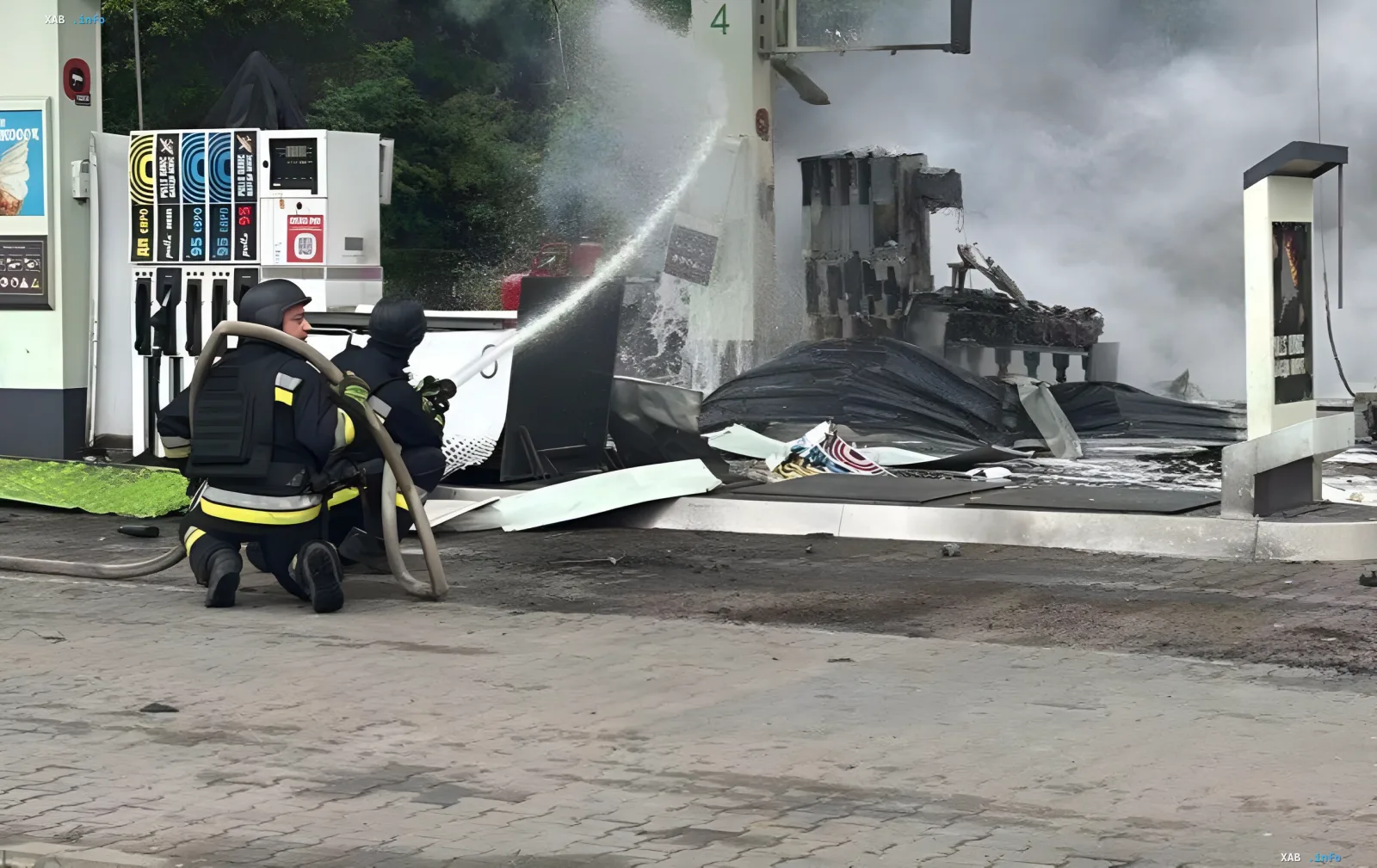
A new, extremely dangerous chapter of the war is unfolding in southern Ukraine. The Russian side has sharply intensified shelling of civilian objects, making gas stations (gas stations) the primary target. According to Vladislav Voloshin, spokesperson for the Southern Defense Forces, the attacks are systematic and carried out with the knowledge of the Russian leadership.
Fuel terror against the population
The strikes have hit regions critical for logistics and supply: Kherson, Mykolaiv, Zaporizhzhia, and Dnipropetrovsk oblasts. Vladislav Voloshin, in an interview on the TV marathon, called these actions a manifestation of the enemy's "terrorist nature." The expert emphasized that Russian military forces usually do not refuel at civilian gas stations, so the goal of the attacks is precisely to create a humanitarian catastrophe and put pressure on the local population.
The destruction of fuel market infrastructure in the frontline zone threatens not only everyday inconveniences but also a complete paralysis of life in the affected regions.
The role of the special unit "Varyag"
Responsibility for the strikes on civilian objects in the south lies with the 50th Special Purpose Brigade "Varyag". This unit is part of the reserve of the President of the Russian Federation and, according to Voloshin, specializes in the "middle strike" tactic — strikes deep into the enemy's defense.
"Varyags" are actively operating in the Pridneprovsky and Zaporizhzhia directions. The brigade does not suffer from a shortage of means of destruction and is equipped with the latest technologies. In particular, experimental fiber-optic controlled drones have appeared in the arsenal of the fighters. Such drones have a range of up to 30 km and are practically invulnerable to electronic warfare means, making them an ideal tool for pinpoint strikes on vulnerable infrastructure points.
Change in occupiers' tactics
In addition to high-tech strikes, Russian occupiers are changing the tactics of ground operations. Activation of the enemy has been recorded in the Orikhiv direction. According to Voloshin, the enemy is trying to take advantage of bad weather to move sabotage-reconnaissance groups (SRG) closer to the city.
In addition, there is a change in logistics schemes. To hide the movement of ammunition and avoid detection, the occupiers began to use civilian passenger cars with trailers. This indicates that Russia is forced to look for detours to supply its troops, masking military logistics as civilian transport.


