
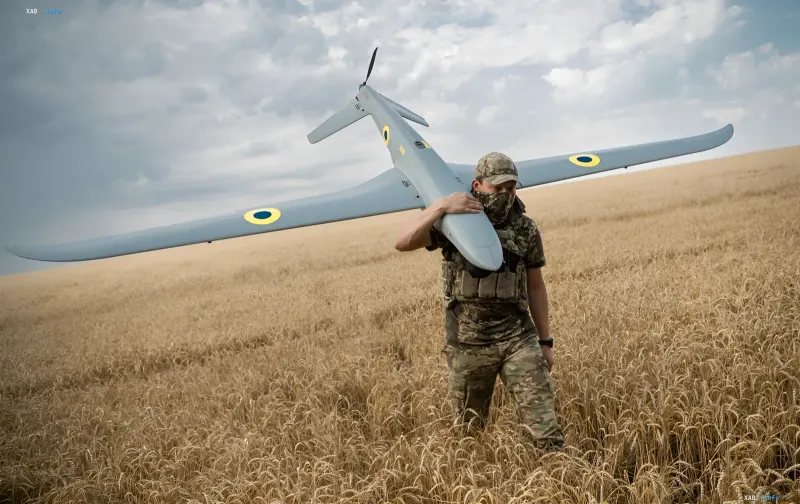
On Tuesday, June 2, and during the night of June 3, the Defense Forces of Ukraine carried out a series of large-scale strikes on key economic and military targets within the territory of Russia. According to the General Staff of the Armed Forces of Ukraine (AFU) and the Security Service of Ukraine (SBU), strategically vital points supporting the logistics and financing of the Russian war machine were hit.
Oil Terminal in St. Petersburg
One of the main results of the night operation was the strike on the "St. Petersburg" oil terminal. The SBU confirmed that drones traveled more than 1,100 kilometers to strike the territory of the tank farm. At least four major fire hotspots were recorded at the site.
The terminal is one of the largest transshipment complexes in the Baltic region with an annual capacity of up to 10 million tons. The facility is critical for the export of oil products and supplying the needs of Russian armed formations. The attack occurred on the day of the opening of the St. Petersburg International Economic Forum, which the SBU interpreted as a symbolic response to the event's slogan regarding a "stable future".
Strikes on the Defense Industry and Infrastructure
In addition to logistics hubs, defense industry enterprises were also targeted. On the night of June 3, drones attacked the "Progress" plant in Michurinsk. A fire was recorded on the territory of the enterprise, the scale of which is being clarified. The plant specializes in the production of high-precision components for aviation and missile systems, including gyroscopic instruments, autopilots, and navigation systems.
It was also confirmed that oil pumping was stopped at the "Zenzevatka" station in the Volgograd region, which was struck earlier on June 2. At the "Saki" airfield in temporarily occupied Crimea, the RBSN-4N short-range navigation radio technical system was destroyed.
Consequences for Military Warehouses and Refineries
The Defense Forces of Ukraine also struck targets on occupied territories in the Donbas. An ammunition and drone warehouse in Halynivka (Donetsk region), a fuel and lubricants warehouse in Beloluzhka (Luhansk region), and a command and observation post in Selydove were hit.
Previously, as a result of attacks on June 2, damage to a technological trestle, a primary oil processing unit, and two tanks at the "Ilsky" oil refinery was confirmed. Furthermore, according to data regarding the strike on May 30 on the "Primorsky Posad" training ground in the Zaporizhzhia region, the destruction of personnel shelters and the death of approximately 30 Russian soldiers were confirmed.
Reaction Amidst Attacks on Moscow
On the night of June 3, drones also attacked Moscow. The Mayor of the capital, Sergei Sobyanin, reported that services were working at the sites of debris falls. Ukrainian President Volodymyr Zelenskyy confirmed strikes on Kronstadt and Tambov, noting that all these targets are linked to the financing or material and technical support of the Russian army.
The General Staff of the AFU stated that Ukraine will systematically weaken Russia's military-economic potential, forcing the country to cease its aggression. The SBU emphasized: the longer Russia chooses war over peace, the more frequently the objects supporting this war will be destroyed.


