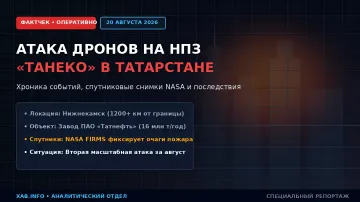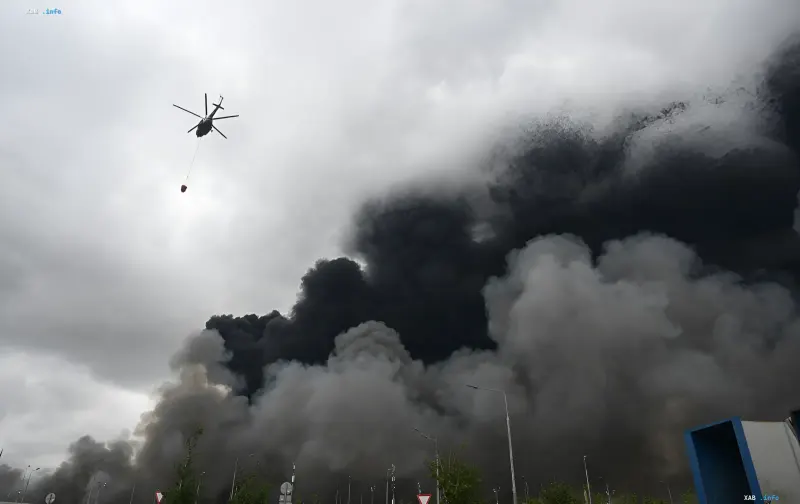
On the night of November 15, units of the Ukraine Defense Forces launched strikes on Russian military-industrial complex facilities in two regions — Tatarstan and the Bryansk region. According to the General Staff of the Armed Forces of Ukraine, reported by RBC-Ukraine, a petrochemical plant and an oil refinery complex in Nizhnekamsk were hit, as well as a helicopter manufacturing enterprise in Trubchevsk. Fires were recorded at both Tatarstan enterprises following the explosions.
Petrochemical Hub Under Attack
One of the targets was Nizhnekamskneftekhim PJSC, one of the largest petrochemical complexes in Europe and a key production site of the Sibur holding. Explosions thundered across the enterprise's territory, after which a fire broke out. The plant produces synthetic rubbers — specifically polyisoprene and butyl — as well as plastics. This products are in demand not only in civilian industry: they are used to make tires for military trucks, armored vehicles, and aircraft, as well as seals, hoses, and other rubber-technical parts.
Connection to the Missile Industry
As noted by the General Staff, certain types of synthetic rubber are used as a binder component in solid rocket fuel, including for Iskander missiles. Thus, the products of Nizhnekamskneftekhim are significant for several sectors of the Russian military-industrial complex — from tire production to rocket engineering.
TAIF-NK Refinery and Helicopter Plant in Bryansk Region
The second hit object in Nizhnekamsk was the single primary processing unit ELOU-AVT-7 at the TAIF-NK oil refinery, a large complex with a conversion depth of over 95%. The enterprise processes heavy high-sulfur oil and gas condensate; its products go toward mass fuel and also serve as raw materials for petrochemistry and military needs. A fire was also recorded on the refinery's territory. On the same day, the Defense Forces hit Monolit JSC in Trubchevsk, Bryansk region — an enterprise specializing in the production of aircraft, in particular helicopters, as well as spare parts, components, and metalworking.
Logic of Rear Strikes
The General Staff emphasized that hitting such enterprises is aimed at weakening Russia's military and economic potential. "Every downtime of such plants means fewer tires for equipment carrying ammunition to the front, fewer rubber parts for armored vehicles and aviation, less raw material for the missile industry, and less fuel for the Russian army," the military summarized. The scale of damage at both enterprises in Tatarstan is being clarified at the time of publication.
Night Context: Attacks in Rostov Region
Recall that on the night of November 15, drones also attacked the Rostov region. In Taganrog, an electrical substation providing power to the railway was damaged as a result of the strike, and a substation caught fire in the Shubin quarter. In addition, in the Neklinovsky district, a bridge over railway tracks on the 64th kilometer of the R-280 highway leading from Rostov towards the occupied territories of southern Ukraine was damaged.