
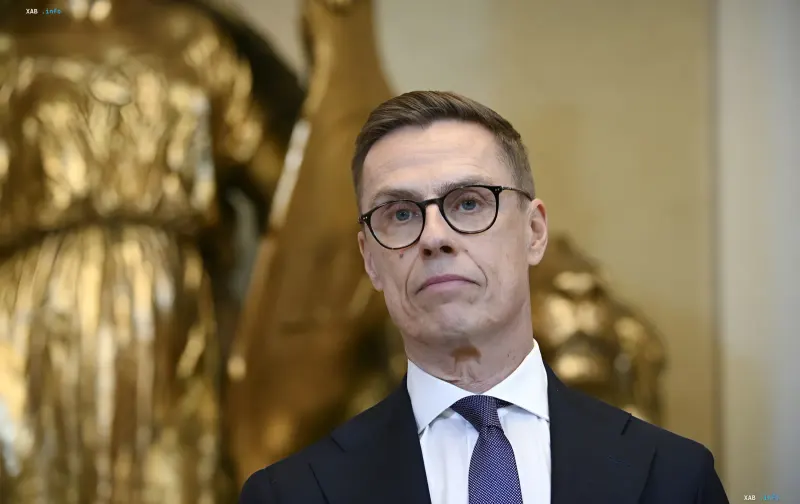
In an interview with Politico, Finnish President Alexander Stubb delivered a harsh assessment of the conflict in Ukraine. According to the Finnish leader, Russia has not only failed to achieve its objectives but has also suffered crushing strategic defeats, the consequences of which will be felt for years.
Three Major Failures of the Kremlin
Stubb categorically rejected the thesis that Vladimir Putin has strengthened his position thanks to the war. On the contrary, Moscow's actions have led to results diametrically opposite to those planned in the Kremlin. The Finnish president highlighted three key areas where Russia has collapsed:
- Ukraine's European Choice. Stubb called this "failure number one." According to him, Ukraine will inevitably become a member of the European Union and eventually join NATO.
- Alliance Expansion. Russian aggression became a catalyst that forced Finland and Sweden to abandon decades of neutrality. Stubb emphasized that without the attack on Ukraine, these countries would not have joined the bloc. Now, NATO has been bolstered by two of the region's strongest military powers.
- Surge in Defense Spending. The third blow to Moscow was the rapid growth of military budgets in Europe, which is radically changing the balance of power on the continent.
"So, talking about Russia being empowered, I simply do not believe in this narrative," the head of Finland summarized.
The Reality of EU Accession: 2026–2030
Stubb's words about Ukraine's European future are backed by concrete political steps. According to reports, on June 15, 2026, Kyiv officially opened the first "Fundamentals" cluster within the framework of EU accession negotiations. This block covers fundamental issues of justice, freedom, and basic human rights.
In total, Ukraine must coordinate six thematic clusters of legislation. Under an optimistic scenario, the country's full membership in the Union is expected by 2030.
Brussels has already clarified that the integration process will be individual. The European Union has abandoned synchronous movement with Moldova, betting instead on the speed depending on the actual results of reforms in each state.
Alternative Scenarios from Berlin
Despite confidence in the final outcome, European leaders view the intermediate stages differently. German Chancellor Friedrich Merz expressed the opinion that full EU membership for Ukraine before the end of the war is impossible. Instead, Berlin proposed an associated member status model to Kyiv as a necessary intermediate stage of integration.


