
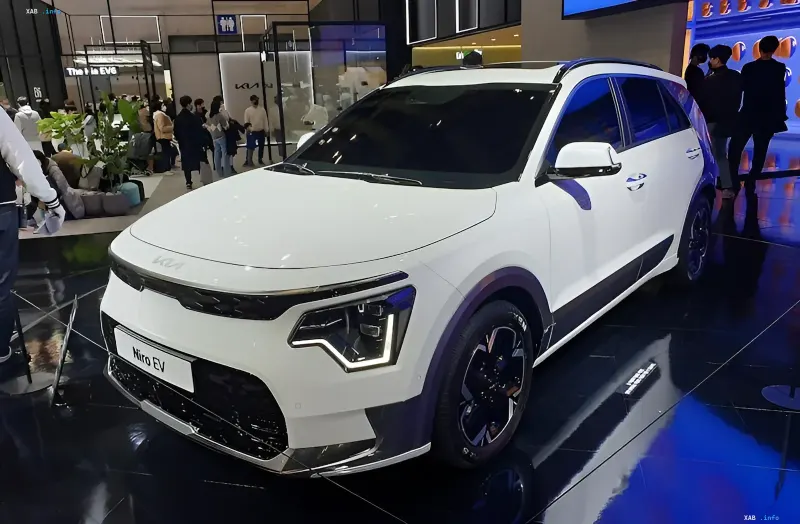
The myth that an electric vehicle battery is a consumable item that quickly loses its properties has been debunked by a large-scale study. The reality turned out to be much more optimistic: modern traction batteries demonstrate remarkable durability, maintaining functionality even after significant mileage.
Analysts conducted a detailed audit of the condition of batteries in used electric vehicles. The sample included 9,954 checks carried out in Sweden between 2022 and 2026. The diagnostic system of the Austrian company AVILOO was used to collect data. The results showed that many popular models retain more than 95% of their initial capacity after crossing the 100,000-kilometer mark.
Absolute leaders of the rating
Models from the Korean automotive industry firmly hold the top of the longevity list. The undisputed leader is the Kia e-Niro with a 64 kWh battery. The average remaining capacity for this model was an impressive 97.25%.
Almost immediately following it is its close relative — the Hyundai Kona Electric with a battery of the same volume, showing a result of 97.18%. The top three is completed by the Kia EV6 (77.4 kWh), which retained 95.95% of its capacity.
The top six also included:
- Volvo XC40 Recharge (CATL battery pack, 69 kWh) — 94.70%.
- Polestar 2 (CATL, 78 kWh) — 94.35%.
- BMW i3 (120 Ah) — 93.77%.
Why the same model can behave differently
The study revealed an important nuance: battery longevity depends not only on the car brand but also on the specific battery manufacturer installed in it. The most vivid example is the Tesla Model 3.
The version of the model with a lithium-iron-phosphate (LFP) battery from CATL retained an average of 93.34% of its capacity after 100,000 km. However, modifications with LG Chem batteries showed a result of 91.5%. And versions with Panasonic batteries demonstrated more noticeable degradation — 89.8% and 88.2%, depending on the specific trim level.
A wide base of reliable models
The list of vehicles with high remaining capacity also included Tesla flagships (Model S, Model X, Model Y), as well as representatives of the German automotive industry: Audi e-tron 50 and 55, Volkswagen ID.4, ID.3, and Skoda Enyaq iV.
Even the model that took last place in the top-20 rating — the Volkswagen ID.3 — showed a decent result, retaining 91.79% of its initial capacity after a mileage of more than 100,000 km.
The authors of the study emphasize that external factors influence the rate of degradation: climatic conditions, charging modes, and driving style. This is why even identical vehicles can show different results. Nevertheless, the overall picture refutes common fears: modern traction batteries degrade much slower than generally believed and are capable of serving owners for many years.


