
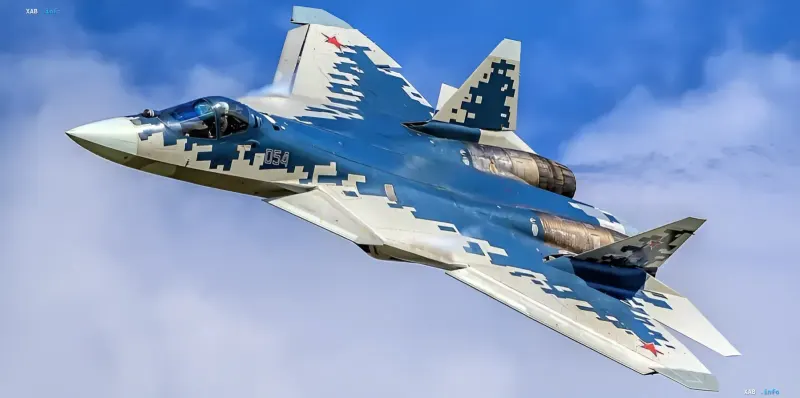
Specialized aviation and monitoring publications have released a technical analysis of new photographic materials demonstrating the Su-57 multirole fifth-generation fighter of the Russian Aerospace Forces in an atypical configuration. As reported by Thomas Newdick, a commentator for the American portal The War Zone, images released into the public domain suggest the possible deployment of these aircraft for air defense of infrastructure facilities and the interception of small aerial targets in the deep rear.
Speed Priority Over Stealth
Analysis of the published materials indicates a change in the standard combat protocol for the Su-57, which is traditionally oriented towards maintaining principles of radar low observability. The recorded aircraft features external pylon equipment. Such a scheme significantly increases the effective radar cross-section (RCS) of the airframe, however, it radically expands the range of simultaneously deployed systems and reduces reaction time to threats.
Experts note that using heavy fifth-generation fighters for patrolling internal areas and combating loitering munitions is a forced measure of redistributing aviation resources. This tactic is driven by the high intensity of the deployment of classic short-range surface-to-air missile systems (SAMs) and facility air defense on border sections.
Technical Composition of the Loadout
The characteristics of the armament and equipment recorded in the images allow for conclusions regarding the specifics of the tasks being solved:
- Electro-optical targeting complex: A suspended targeting container has been recorded under the left engine nacelle (air intake) of the fighter, identified by industry experts as a modification of the 101KS-N "Atoll" targeting station. This complex was developed by the Ural Optomechanical Plant (UOMZ). The purpose of the unit in the current configuration is visual detection, thermal tracking, and verification of low-flying objects with low thermal contrast and minimal reflective surface, including unmanned aerial vehicles made of composite materials.
- Guided missile armament: Guided air-to-air missiles of short range (presumably R-74M2 or specialized versions of the R-73 family with infrared homing heads) have been identified on the external underwing hardpoints. Placing missiles on external racks instead of internal bays eliminates the cycle of opening weapon bay doors, which is critical when intercepting multiple targets.
The integration of the onboard radar station (N036 "Belka") with an active phased array antenna (AESA), combined with the electro-optical system, allows for the detection of targets moving at extremely low altitudes under conditions of signal reflection from the underlying surface.
Information Security Issues
The appearance of detailed technical information in open sources is linked to the recording of the object by civilians. One of the frames captures an unauthorized person in the cockpit, as well as elements of the structure of a protected arched hangar. Profile Russian military bloggers and Western OSINT analysts agree that the photos were taken on the territory of one of the Russian Aerospace Forces airbases during demonstration events.
The situation points to possible lapses in ensuring security regimes and access control at a restricted facility. The Su-57 fighter (NATO reporting name: Felon) is serially produced by the Komsomolsk-on-Amur Aviation Plant named after Yu. A. Gagarin. According to the state armament program, the basic functionality of the platform provides for the destruction of all types of aerial targets and the striking of enemy ground objects while overcoming air defense systems.


