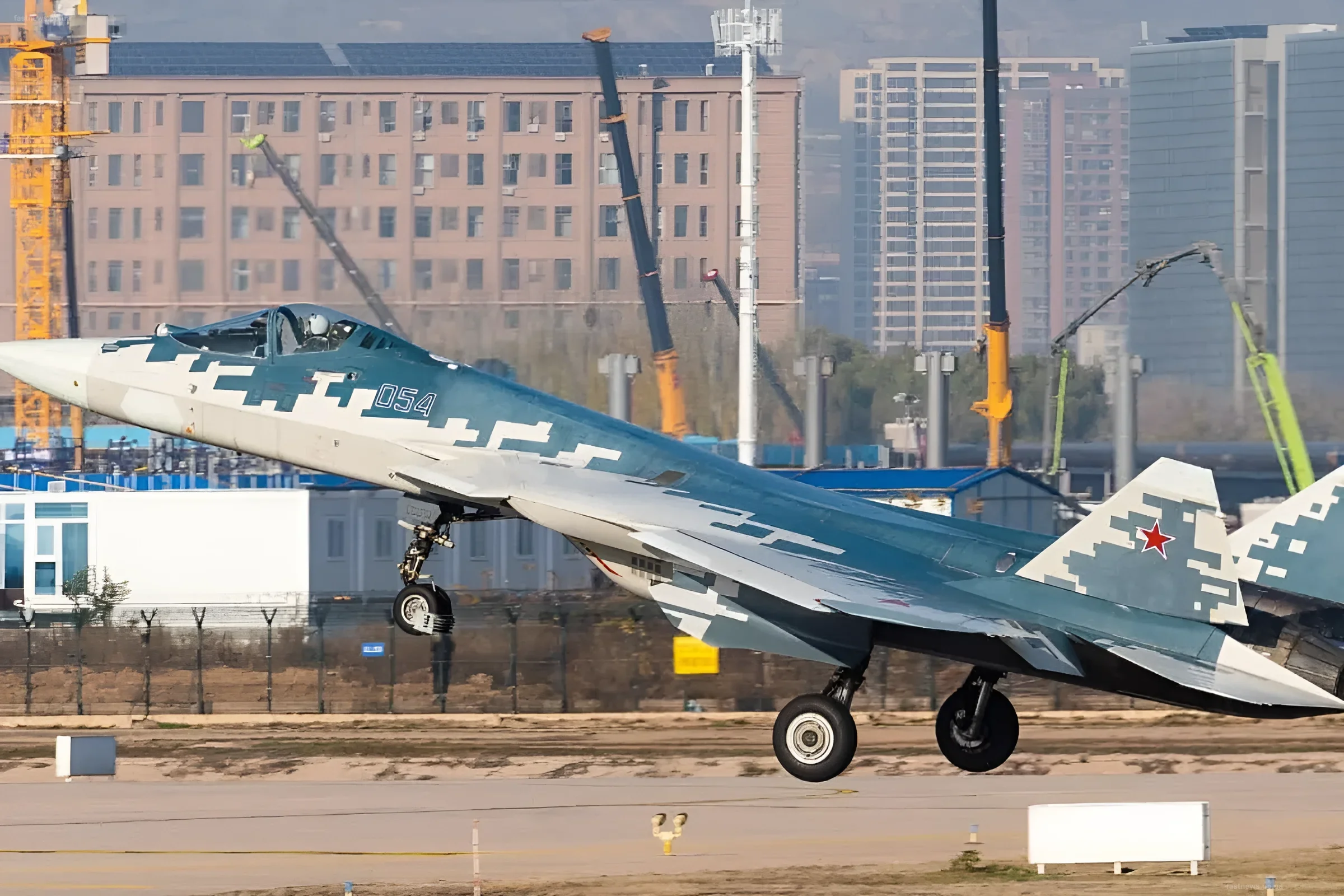
Air warfare is changing the rules of the game, and Russia is attempting to stay ahead of its rivals by unveiling a modification of its flagship aircraft. We are talking about the Su-57D — a two-seat variant of the fifth-generation fighter, which has been assigned a new, critically important mission. This is not a trainer for pilot instruction, but a full-fledged airborne command center capable of managing combat in real-time.
The Second Pilot — Cyberwarfare Operator
The key difference in this new version lies in the distribution of crew roles. While the second crew member previously performed the functions of a navigator or flight engineer, they now become a network interaction operator. Their task is to synthesize data from sensors, manage a swarm of unmanned aerial vehicles (UAVs), conduct electronic warfare, and designate targets for strikes. This allows the pilot-operator to focus entirely on flying and tactical maneuvering in air combat.
Swarm Instead of a Lone Wolf
The concept of the Su-57D is built around the idea of a 'lead' aircraft that coordinates the actions of other carriers. A symbolic graphic has appeared on the tail of the prototype, depicting a fighter jet surrounded by drones. This is not just an artistic touch, but a reflection of real combat doctrine. Such a formation may include:
- The heavy strike UAV S-70 'Okhotnik' for reconnaissance and target destruction.
- The unmanned fighter Su-75 Checkmate, serving as a forward sensor or decoy.
- The low-observable cruise missile Kh-69 for covert strikes against ground targets.
- The hypersonic missile 'Product 810' with a range of up to 450 km and a speed of up to Mach 6 for intercepting large aerial targets.
A New Challenge for Air Defense
Western experts assess the appearance of the Su-57D as an escalation of threats. Now, the adversary will have to fight not just one aircraft, but an entire network, where the fighter acts as the 'brain' and the drones as the 'hands'. Such a configuration significantly complicates the task for air defense systems, as it requires the simultaneous suppression of multiple targets coordinated from a single center.


