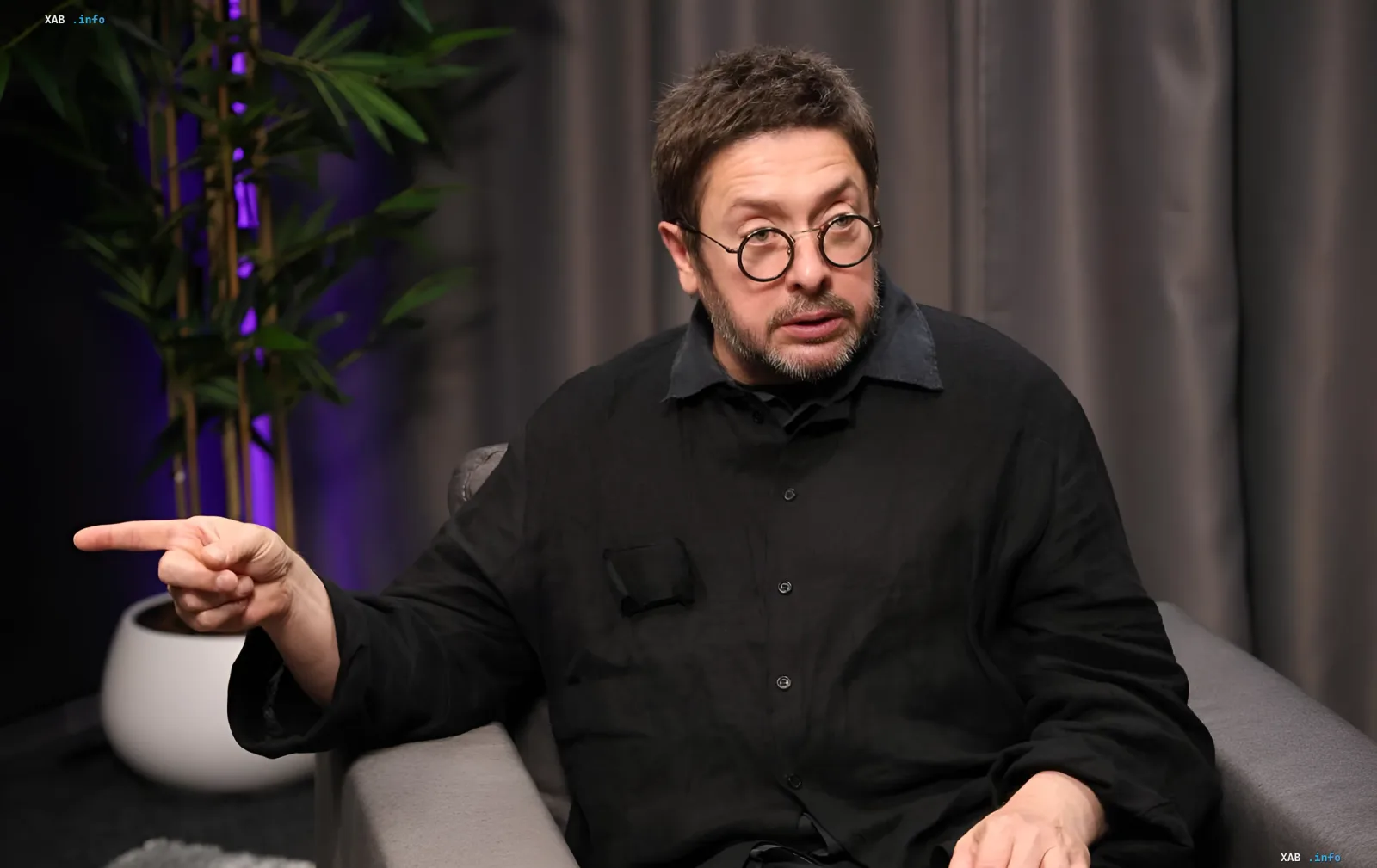
TV presenter Alexey Sukhanov, born in Russia and an émigré in Ukraine, spoke candidly in an exclusive interview with Wave RBC-Ukraine about his journey to the Ukrainian language. Sukhanov, who has been designated a foreign agent in Russia, explained why mastering the state language became a matter of personal principle for him, rather than a mere formal requirement. In his words, learning Ukrainian was not an easy process: “There is always a barrier. Russian and Ukrainian are completely different languages. Ukrainian is deeper, more emotional, and more vivid,” he emphasized in conversation with the journalist.
The Barrier Between Languages and the Legacy of Words
Sukhanov drew attention to the significant differences between the vocabulary and conceptual apparatus of Russian and Ukrainian. As a clear example, he cited the words “love” (lyubov) and “kokhannya.” “In Ukrainian there is the word ‘lyubov,’ which is used when we talk about parental or friendly love, and there is the word ‘kokhannya,’ which is used only for romantic relationships,” the presenter explained. In his view, such linguistic nuances testify to the “development, depth, brightness, and colorfulness” of the Ukrainian language and constitute its invaluable legacy.
Emigration as a Conscious Choice
According to his own admission, Sukhanov’s main motivation was not the formal need to learn the language, but a deep desire to tie his life to Ukraine. “I emigrated to Ukraine not to spend a year, two, or three here. I emigrated with the thought that I want to live here,” he stated. That is precisely why the presenter cannot understand how a person can live in a country for years and consciously not use its state language: “But how can you live in a country and not know its language? I can’t imagine it. I can’t imagine for myself how one can live and not only fail to use the language, fail to speak it, but actually despise it.”
Understanding and Changing Circumstances
At the same time, Sukhanov showed understanding toward people who grew up in Russian-speaking families and did not condemn them. However, he stressed that circumstances change, and linguistic behavior should change along with them: “Well, it just happened that I really grew up in a Russian-speaking family. So what? Well, we lived in such circumstances, but now times have changed,” the presenter believes. For him, the switch to Ukrainian became a matter not only of respect for the country but also of personal principle, which cannot be separated from everyday life.
Pedagogy Instead of Pressure
During the conversation, the journalist recalled Anastasiia Prykhodko, who, according to her, categorically communicated with her in Russian. Sukhanov acknowledged that such a position can cause dissonance: he himself had learned Ukrainian from scratch, while some people born in Ukraine oppose the transition to the state language. “I think we need to bring in some pedagogy here and be a bit cleverer,” he noted, adding that pressure and confrontation may not be the most effective way to convince a person to switch to Ukrainian.
Protection and Natural Immersion
Sukhanov emphasized that Ukraine must remain a state with Ukrainian as its sole state language, while a person who does not yet use it should feel protected. “When a stubborn person who does not want to switch to Ukrainian realizes that here, in his country, in Ukraine, where Ukrainian prevails… he is protected here, he has a job, protection by the courts, the law enforcement system, social protection…,” he explained. In his conviction, it is precisely this approach—creating conditions under which Ukrainian naturally becomes part of everyday life—that can gradually change a person’s attitude toward the language: “On the other hand, you need to move in, and then Ukrainian will enter this person on its own,” the presenter concluded.