
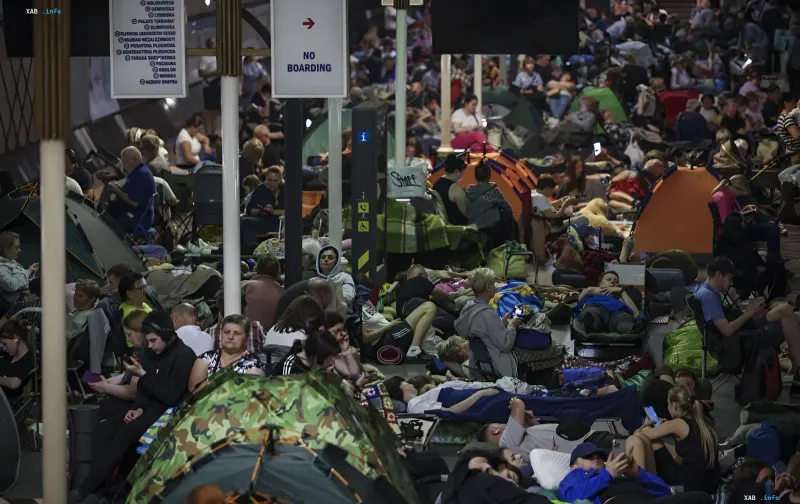
The night of July 2 became one of the heaviest for Kyiv in recent years. In response to an unprecedented attack, a record 52,500 people took shelter in the capital's underground. Among those seeking refuge from missiles and drones were nearly 4,500 children. This number surpassed all previous records fixed since the full-scale war began.
Scale of the attack and consequences
The cause of the emergency influx of people was one of the most massive combined attacks on the Ukrainian capital. The Russian armed forces simultaneously used ballistic and cruise missiles, as well as attack drones. Strikes hit districts across the entire city.
Preliminary data indicates that more than 30 locations were damaged as a result of the attack. The most severe destruction was recorded in the Darnytskyi district, where part of a nine-story residential building was destroyed. Other residential buildings, medical facilities, an emergency response substation, and hotels were also damaged. The toll is tragic: 20 people were killed, and about 90 were injured.
Metro as a shelter: rules and recommendations
In the face of the threat, all 46 underground stations in Kyiv switched to a 24-hour operating mode as shelters. All vestibules are open to citizens without exception. However, the metro administration emphasizes that during the day, when there is no air raid alarm, movement through the stations takes place under general conditions.
For those forced to spend the entire night underground, the utility company has issued several important recommendations:
- Temperature regime. The average temperature on the stations is 17–18°C. However, due to drafts coming through the tunnels, it may feel cold. Residents are strongly advised to prepare warm clothing in advance.
- Location choice. Stations in large residential areas traditionally become the most crowded during alarms. There are generally fewer people on central stations. If the situation allows, citizens are asked to choose less crowded locations to avoid overcrowding.
- Attitude towards staff. Metro employees urge people to understand the work of the staff. It is these people who ensure the uninterrupted operation of stations during wartime, while simultaneously preparing the underground for full passenger movement during the day.


