
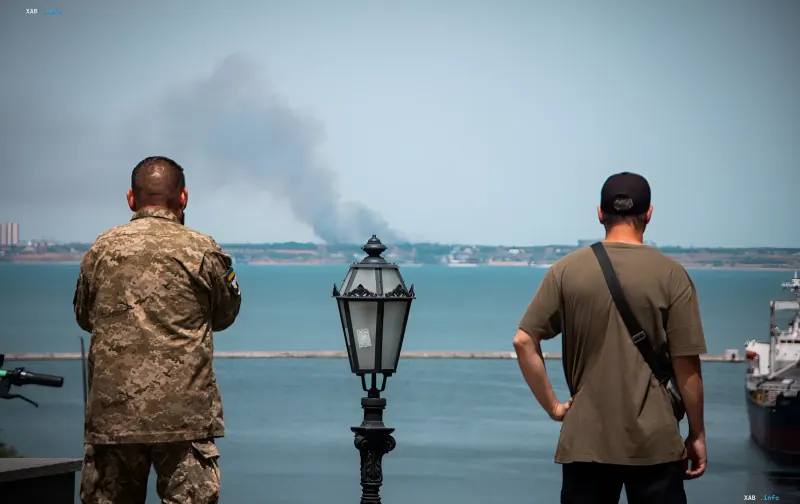
Protecting Ukraine's coastal areas from kamikaze drone attacks requires new approaches. In response to regular threats to Odesa and port infrastructure, an innovative system capable of autonomous 24/7 operation has been developed. This refers to a project by the Danish startup BlueShadow, which proposes deploying squadrons of unmanned surface vessels.
Concept of Continuous Duty
Charles Maher, founder and CEO of BlueShadow, revealed details of the new system in an interview with RBC-Ukraine. The key idea is to create squadrons of 12 autonomous boats. According to the project, 10 vessels will be constantly at sea ensuring the security perimeter, while two boats will be based on shore for maintenance and refueling.
This rotational scheme allows for continuous defense throughout the year. One vessel is withdrawn from the patrol zone, replenished with interceptor supplies, and returns to service, replacing the one that went to base. This ensures uninterrupted system operation without the need for constant crew presence on board.
Minimizing the Human Factor
One of the main advantages of the project is the ability to manage a complex system with a minimal number of personnel. Maher noted that the shore team capable of commanding the entire squadron could consist of just five people. This significantly reduces the load on the staff and allows resources to be focused on situation control.
The Blue Dragon system, developed by the startup, is designed to detect and destroy hostile targets from the sea. It is capable of eliminating an unlimited number of drones at a distance of 10–20 km from the coastline. This is critical for intercepting threats while they are still approaching, covering areas where traditional air defense means may be less effective over the water.
Economics and Scalability
Development is at the design stage, so the final cost of the basic version is still being refined. However, the estimated price of the starter complex has already been calculated. According to the head of BlueShadow, deploying the first squadron, including the shore command and control center and integration into the national platform, will cost approximately 10–12 million euros.
This amount includes a full package of spare parts for technical support of the complex. The project aims to protect not only port infrastructure but also the civilian population and trade routes from regular kamikaze drone attacks.


