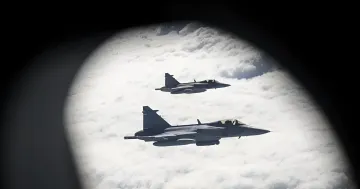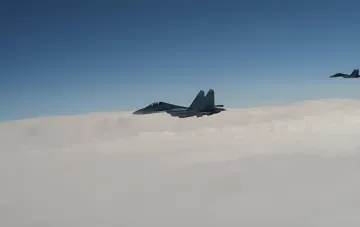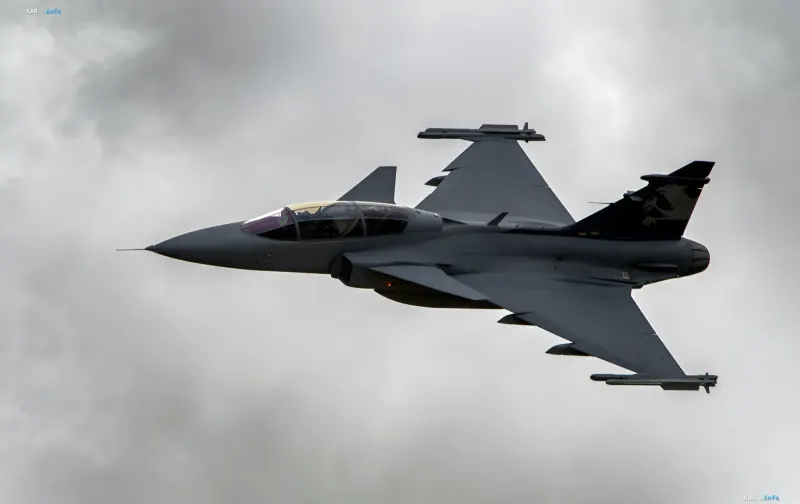
The Swedish Armed Forces have fundamentally revised their air force deployment doctrine in the event of a potential military conflict with the Russian Federation. While Swedish military strategy was previously built primarily on defensive scenarios and the protection of its own borders, the new concept now provides for active offensive operations, including airstrikes on rear positions and infrastructure facilities on the territory of a potential aggressor.
New Tactics and the Role of JAS 39 Gripen Fighters
Colonel Carl Bergqvist, Head of the Swedish Air Force Air Operations Centre, officially stated that in the event of aggression, Stockholm intends to move beyond a limited response. The multi-role JAS 39 Gripen fighters, armed with modern Taurus KEPD cruise missiles, will become a key tool in implementing this strategy. The range of these munitions reaches up to 500 kilometers, making it possible to effectively destroy strategically important and well-protected ground targets deep behind enemy lines.
Strategic Scope and Long-Range Weapons
Experts note the ambition of the new Swedish military program. In addition to the existing medium-range missiles, the acquisition of strike systems with a range of up to 2,000 kilometers is being considered for the future. For comparison, the straight-line distance between the Swedish capital Stockholm and Moscow is approximately 1,200 kilometers, giving such plans serious military-political significance within regional security.
Force Dispersal and Air Defense Development
In addition to offensive potential, the new concept pays special attention to the survivability of Swedish combat aviation. The plan provides for the large-scale dispersal of aircraft to various backup airfields, as well as the regular use of public highways as temporary runways. At the same time, the Swedish command intends to significantly strengthen the national air defense system and expand intelligence capabilities through the deployment of modern drones and satellite constellations.