
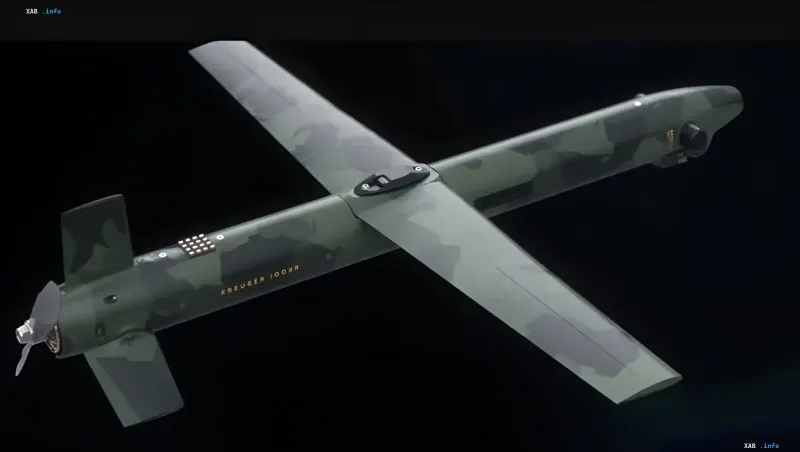
Against the backdrop of escalating global conflicts, where unmanned aerial vehicles (UAVs) have become one of the key tools of war, Sweden has presented its own solution. Startup Nordic Air Defence conducted the first public demonstration of the autonomous interceptor drone Kreuger 100 (K100XR modification). This event marks an attempt to create an affordable alternative to expensive surface-to-air missiles, capable of effectively neutralizing threats in real-time.
The Economics of Interception: Why Missiles are Becoming Obsolete
The main problem with modern air defense systems is the cost imbalance. Traditional means, such as man-portable air-defense systems (MANPADS) like the Stinger, cost hundreds of thousands of dollars per unit. Using such a missile to destroy a cheap reconnaissance drone or a loitering munition is economically unviable. This is the problem that Kreuger 100 aims to solve.
According to Nordic Air Defence leadership, their solution focuses on reducing the cost per kill. Instead of missiles that can cost up to $480,000, the company proposes using mass-produced programmable drones costing a few thousand dollars. This allows for the optimization of defense budgets and makes protection against mass UAV attacks more accessible.
Technical Specifications and Autonomy
The K100XR platform is a compact unit about 0.3 meters long, made of carbon fiber composites. The design is based on a software-defined architecture, where complex mechanical components are replaced by intelligent algorithms for dynamic positioning. A key advantage of the system is its full operational autonomy.
After launch, the drone independently performs search, recognition, and targeting. This is achieved using an onboard computer vision system and an infrared tracking sensor that operates in complex weather conditions and at night. An important aspect is the radio silence mode: the device does not require constant data exchange with the operator, which minimizes vulnerability to electronic warfare (EW) systems.
Key tactical and technical parameters of the complex:
- Maximum speed: over 354 km/h;
- Flight time: up to 20 minutes;
- Range: up to 3 kilometers;
- Maximum interception altitude: up to 1,000 meters;
- Power system: electric installation with battery packs.
Strategic Partnerships and Export Control
Nordic Air Defence, founded in Stockholm in March 2024, has already attracted around $4.4 million in investments. Platform development is taking place in close cooperation with European industrial giants. In September 2025, a partnership with Volvo Defense was announced to integrate Kreuger 100 launch cells into the VIPRO mobile protection module on automotive chassis.
An agreement has also been signed with Polish defense enterprises WB Group and Tantalit to explore the possibilities of integrating Swedish interceptors into Poland's air defense. However, it is worth noting that development and technology transfer are strictly regulated. All processes are carried out in accordance with the directives of the Swedish Defence Materiel Administration (FMV) and international export control rules, which require mandatory end-user certificates for cross-border deliveries.
Prospects for Combat Deployment
The intended purpose of the K100XR is to intercept reconnaissance UAVs ("Orlan" class) and loitering munitions (Shahed type). As part of the planned test stages, developers plan to conduct winter tests and transfer prototypes for efficiency evaluation under real fire and electronic countermeasure conditions. If the tests are successful, Kreuger 100 could become the standard for small-scale air defense in Europe.


