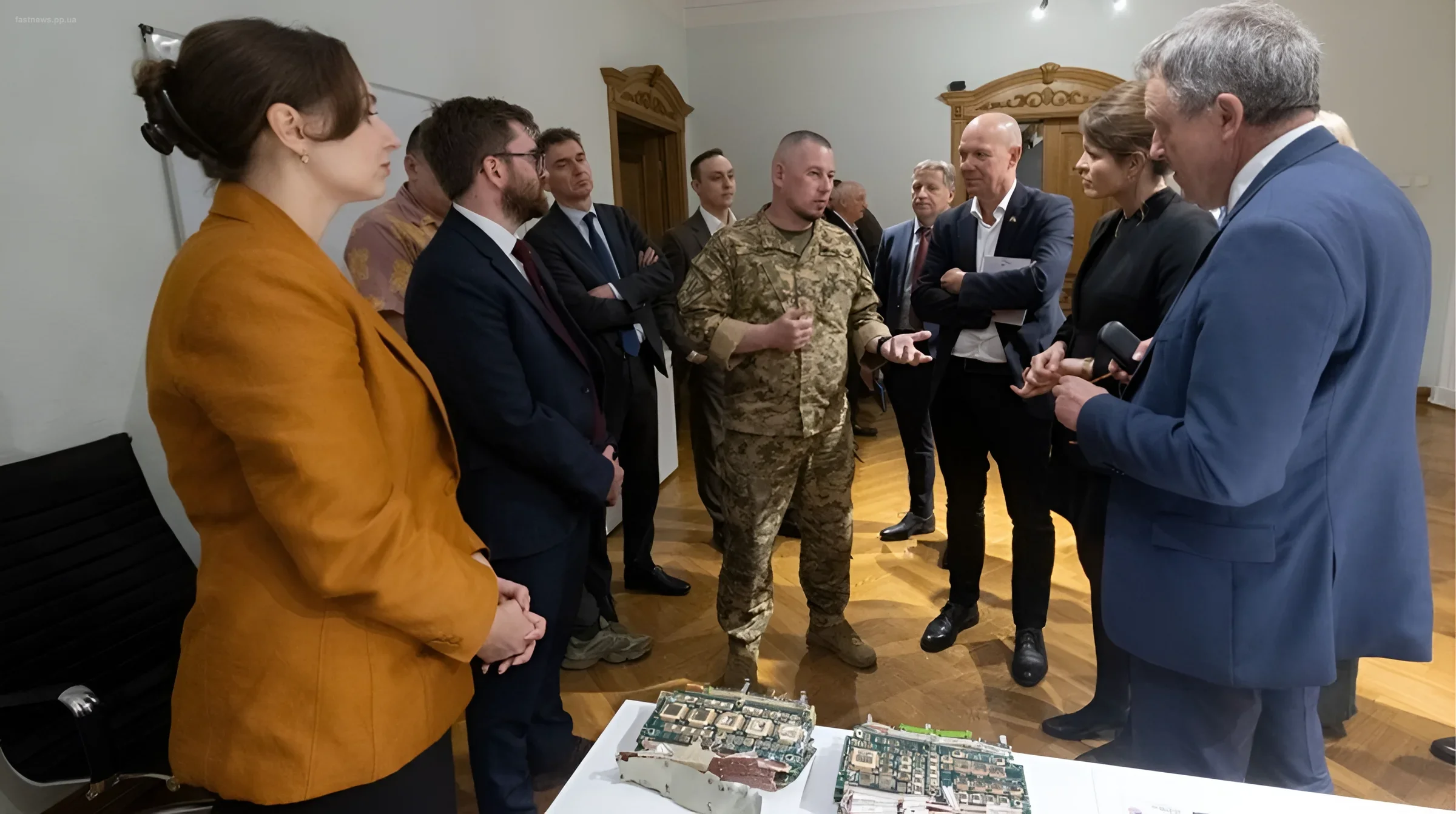
A new wave of discussions about sanctions is unfolding in the corridors of power. European diplomats are currently being shown not dry reports, but physical evidence of how the Russian war machine operates. Burnt fragments of missiles and drones that flew towards Ukraine on the night of May 24 lie on the tables. And what is most astonishing is that parts produced in countries that officially condemn the aggression were found in these "killers".
Global Supply Chain for War
The situation looks absurd: components necessary for the operation of the hypersonic "Zircon" missile, "Kalibr" cruise missiles, and "Geran-2" drones were manufactured in Switzerland, Germany, the USA, the UK, Japan, and China. Moreover, we are not talking about old stocks, but about products released this year. This indicates that, despite the tightening of the regime, the scheme for supplying critical electronic components to Russia continues to function.
However, there is another side to the coin. Ambassadors were shown boards from the "Oreshnik" ballistic missile. Unlike Western counterparts, Russian engineers here relied exclusively on domestic and Belarusian developments. But they are not new either: these components were produced between 2004 and 2014. This proves that Russia has been accumulating strategic reserves for decades to use them against its neighbors today.
The Belarus Factor and "Integral"
Minsk remains a key link in this chain. Vladyslav Vlasyuk, the President of Ukraine's Commissioner for Sanction Policy, directly pointed out the need to strengthen control over Belarus's access to foreign electronics. The "Integral" plant in Minsk has become the very conveyor belt where Western chips turn into the filling for cruise missiles and ballistic projectiles.
Vlasyuk did not smooth things over: stopping these supplies will be a crushing blow to the Russian military-industrial complex. For now, Western parts continue to find their way into Russian arsenals, making weapons more accurate and deadly.
Shadow Fleet and New Methods of Struggle
Ukraine is not limited to demonstrating evidence. Kyiv has called on European partners to move to tougher measures in the fight against Russia's "shadow fleet". We are talking about practical actions: arresting ships and blocking supplies based on intelligence data. Materials for such operations have already been collected by the SBU, the Office of the Prosecutor General, the Foreign Intelligence Service, and the GUR. Now the task of diplomats is to turn this data into real sanctions that will truly strangle the enemy's war machine.


