
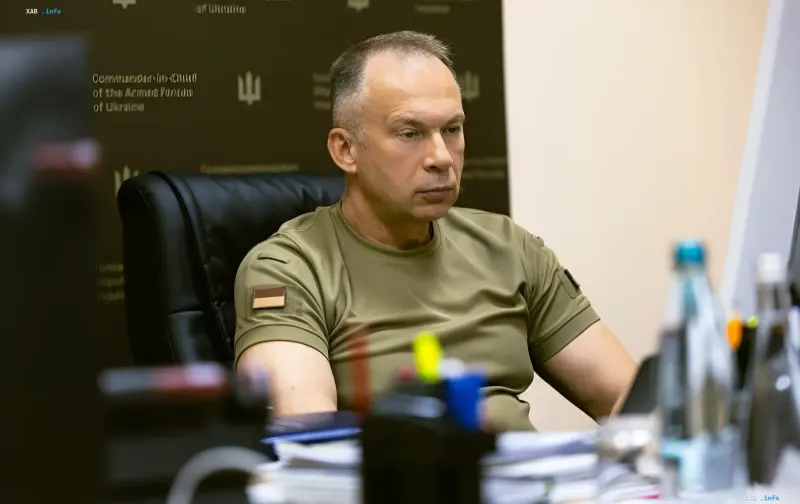
Modern warfare requires a radical rethinking of approaches to saving the wounded. The main priorities in Ukraine's military medicine are shifting towards full digitalization, robotics, and the creation of protected underground facilities. This was stated by the Commander-in-Chief of the Armed Forces of Ukraine, Oleksandr Syrskyi, in his official Facebook post.
According to Syrskyi, conditions on the battlefield have changed drastically. The enemy creates extensive "circles of death" with a radius of 15 to 20 kilometers, while logistics are constantly under threat from FPV drone attacks. In such a situation, traditional evacuation methods become ineffective and dangerous.
Three Directions for the Development of Medicine
During a monthly meeting on military medicine issues, key vectors for the development of the system were identified. Frontline medicine must become maximally autonomous and protected. Ground robotic complexes (GRC) are becoming the main tool for survival.
Syrskyi noted that experiments with the introduction of robots have already yielded positive results. Individual universal-type medical battalions using GRCs for evacuating the wounded have proven their effectiveness. Now, this practice will be scaled up.
A Medical Battalion in Every Corps
The next strategic step will be the creation of a separate medical battalion within each army corps. This decision aims to ensure a continuous system of troop support within the area of responsibility. Such an approach will significantly increase the operational efficiency of evacuation and first aid, reducing the time to deliver a wounded soldier to a doctor.
Parallel to the medical reform, the Ukrainian army continues to improve its air defense system. In June, the Defense Forces destroyed about 5,000 Shahed-type drones and other similar UAVs. To intercept the growing flow of drones, a multi-level system is used, including interceptor drones, turrets, and aviation.
Previously, Oleksandr Syrskyi also addressed the issue of demobilization. He emphasized that the discharge reform must take into account all possible risks and clearly outlined the main condition without which the mechanism will not work.


