

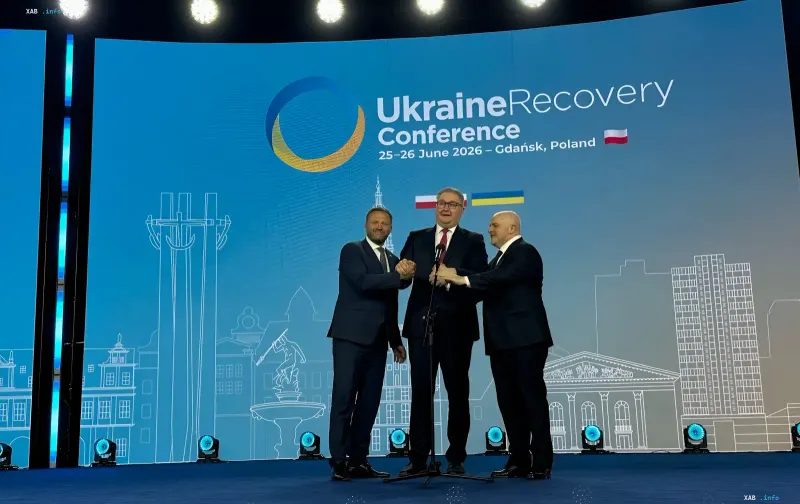
Ukraine's recovery efforts are reaching a new level of international cooperation. The next Ukraine Recovery Conference is scheduled to take place in 2027 in the Estonian capital, Tallinn. Official confirmation of this information was provided by the Estonian Ministry of Foreign Affairs, reports RBC-Ukraine.
The Economic Project of the Decade
Margus Tsahkna, the Estonian Minister of Foreign Affairs, emphasized the colossal scale of the upcoming work in his statement. In his assessment, the reconstruction of Ukraine is the "largest economic project" in Europe for the next ten years. This process goes far beyond simply repairing destroyed buildings.
The recovery effort encompasses three key areas:
- Reconstruction of infrastructure destroyed by Russian actions;
- Development of state institutions;
- Deeper integration of Ukraine into European Union structures.
Estonian Contribution and Regional Solidarity
Tallinn is taking on the organization of the forum not merely as a formality, but as a sign of firm commitment to long-term support for Kyiv. Tsahkna recalled that since 2022, Estonia has already been actively involved in this process through hundreds of projects. Dozens of Estonian companies and organizations are working daily on Ukraine's recovery and strengthening its resilience.
However, Tallinn does not intend to act alone. The main goal of organizing the conference in Estonia is to involve other Baltic and Nordic countries in the preparation and conduct of the event. For this purpose, the NB8 (Nordic-Baltic 8) format will be utilized.
"The NB8 cooperation format allows us to combine the knowledge, experience, and resources of our region to provide even more effective support to Ukraine and bring joint initiatives to the table that will help accelerate both the recovery process and integration with Europe," noted the head of the Estonian Ministry of Foreign Affairs.
Geopolitical Context and "Strategic Patience"
In his speech, Margus Tsahkna also addressed the broader context of the war. He called on European countries to show more "strategic patience" and increase pressure on the aggressor state. The minister noted that Russia is facing "long-range sanctions" from Ukraine, which is an important factor in the current situation.
Regarding the timeline for the end of the conflict, Tsahkna acknowledged that it is impossible to predict exactly when the war will end. Nevertheless, he expressed confidence that, given the scale of Russia's losses, the critical moment is "approaching".


