Repeated strikes on the TANEKO facility in Nizhnekamsk are forcing experts to revise forecasts regarding the stability of Russia's fuel balance for the second half of 2026. The TATNEFT complex is not just an ordinary plant; it is one of the five largest and most technologically advanced oil refining assets in the country. It is precisely the combination of high capacity, deep processing, and dependence on imported high-tech equipment that makes the object strategically significant for both the domestic fuel market and the parties launching drone attacks.
Target Profile: Scale and Depth of Processing
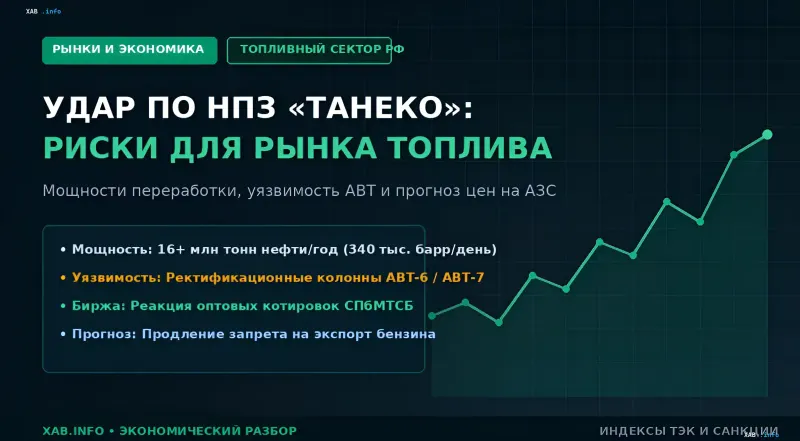
Construction of TANEKO began in the late 2000s, making it a rare example of a major Russian refinery built practically from scratch according to modern standards. According to Energybase data, the processing capacity exceeds 16 million tons of crude oil per year — approximately 340,000 barrels per day. The depth of processing exceeds 99%, and the yield of light oil products remains above 80%. The Nelson Complexity Index stands at 12.3 points, placing the plant on par with leading European and Asian complexes. The product line includes Euro-5 and Euro-6 diesel fuel, AI-92 and AI-95 automotive gasoline, RT aviation kerosene, base technical oils, and low-viscosity marine fuel.
Why CDU Columns Remain a Critical Vulnerability
Unlike standard tank farms, fires in which are localized by fire suppression systems, a direct strike on primary oil processing units (CDU-6 or CDU-7) disables the entire technological chain. Rectification columns and heat exchange equipment are manufactured individually for a specific plant, ruling out quick replacement from other sites. Sanction barriers exacerbate the problem: high-tech automation, high-pressure pumping units, and hydrocracking catalysts were previously purchased from Western licensors (Axens, Chevron Lummus Global, Honeywell UOP), and under current conditions require complex parallel import schemes, delaying restoration work for months.
Forecast for SPIMEX and Retail Gas Stations
August is traditionally characterized by peak seasonal demand for motor fuel due to the agricultural harvest campaign and the vacation season. As Forbes notes, any incidents at top-tier plants are instantly reflected in the growth of exchange indices on the St. Petersburg International Mercantile Exchange (SPIMEX). In the event of confirmed serious damage to TANEKO's primary units, the Russian government will have to extend strict restrictions on the export of gasoline and diesel. Damper payments to oil companies will increase, curbing a sharp spike in prices at retail gas stations; however, the wholesale market may face a local shortage in the Volga region and the Central Federal District.
Contradictory Data
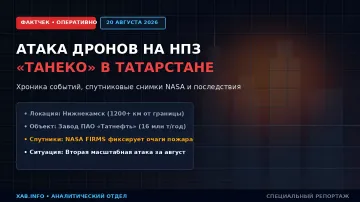
Operational sources (DW, Fakty, Glavred) record a drone attack on the refinery in Nizhnekamsk on August 20, 2026, while media.az reports 12 deaths as a result of the attack on the refinery. However, none of the listed sources specifically confirm the failure of the primary CDU units, upon which the economic scenario of a shortage is based. The analytical material, conversely, proceeds from the assumption of serious damage to primary processing. Thus, the fact of the strike is confirmed, but the scale of technological damage and the figure of human losses remain un-cross-verified and may be adjusted as official reports are received.
Long-term Consequences for the Fuel Balance
Even with localized damage, repeated strikes on one of the five largest refineries form a persistent risk factor for fuel market planning. Dependence of restoration work on the parallel import of Western components means that a full return to nominal capacity of 16 million tons per year could take from several months to a year. In the medium term, this strengthens the argumentation for maintaining export restrictions and expanding damper mechanisms, as well as increasing the volatility of SPIMEX indices during periods of seasonal peak demand.