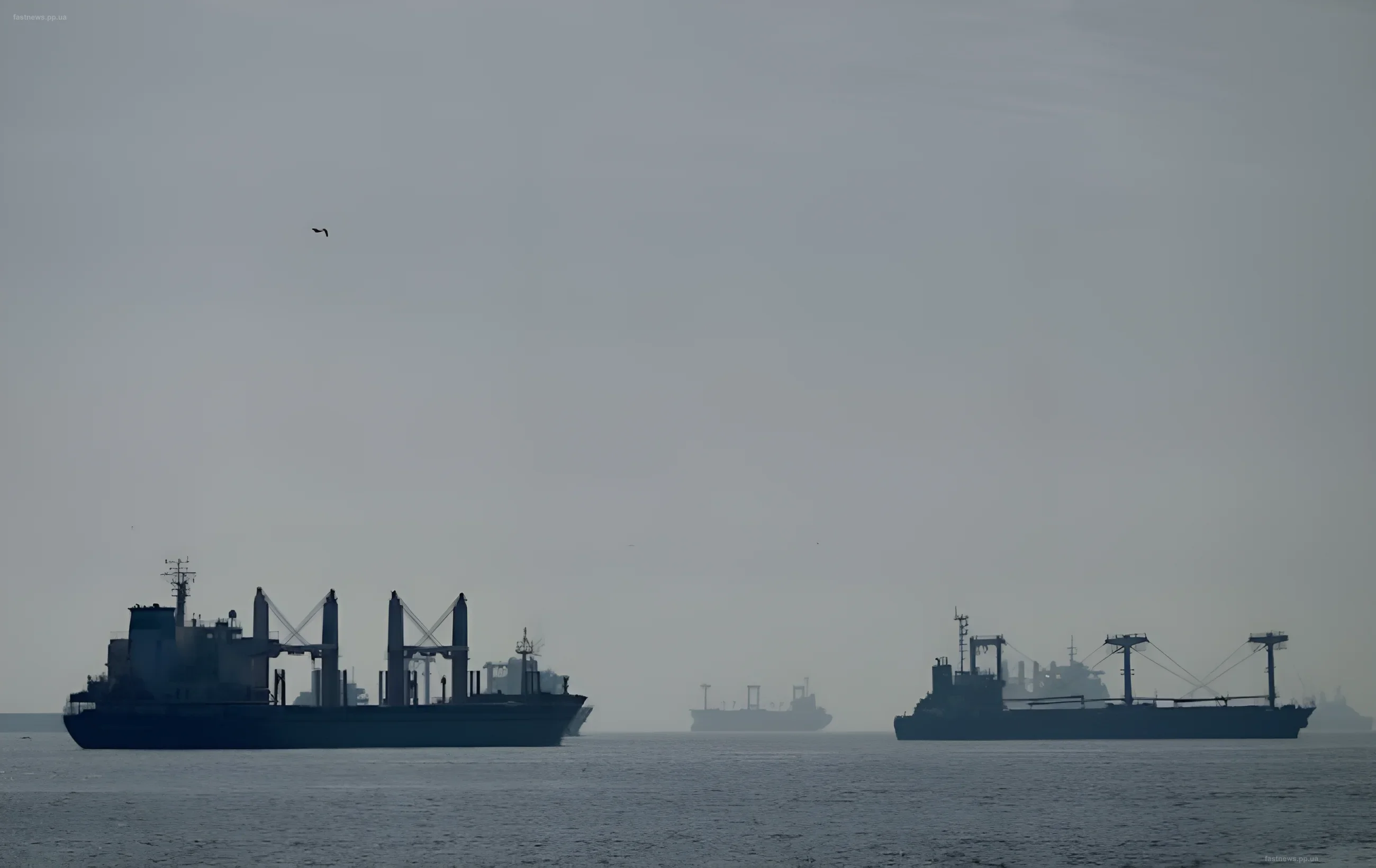
A major incident has erupted in the Black Sea off the coast of Turkey: three tankers linked to Russia's 'shadow fleet' have fallen victim to an attack. However, contrary to the initial impression of suddenness, these vessels have been under Kyiv's watch for years. Ukraine was aware of their activities long before they came under fire.
Vladyslav Vlasyuk, the President of Ukraine's Commissioner for Sanctions Policy, confirmed to journalists that the attacked vessels are typical representatives of a system created to bypass international restrictions. Their operations were systematic, and violations were regular.
Scale of Sanctions Violations
One of the key vessels targeted by the attack is already under sanctions by Ukraine, the EU, the UK, and Switzerland. Since the beginning of Russia's full-scale invasion, it has made more than 20 calls at Russian ports. Its task is to transport millions of barrels of Russian oil, specifically Rosneft products, bypassing the price cap established by the G7.
The statistics are staggering: only between January 2024 and July 2025, this tanker transported about 6 million barrels. Furthermore, according to intelligence data, the vessel is linked to an Iranian tanker network controlled by the inner circle of Iran's top leadership.
Stealth Technologies and 'Ghost' Flags
The second vessel, sailing under the flag of Sierra Leone, is also under severe sanctions pressure. It shares commercial managers with another known violator, the tanker ALTURA. The third vessel is a complete 'ghost': it has no confirmed flag, although it previously used the flag of Palau. Ukraine, the UK, and Australia have imposed sanctions for its participation in the shadow fleet.
These vessels have been involved in the export of Russian oil since June 2024. Their tactics are simple and effective: turning off radars near the Kerch Strait in the Sea of Azov and direct transshipment of oil at sea to other sanctioned tankers.
Kyiv's Response
Vladyslav Vlasyuk emphasized that such practices—exclusion from trackers, ship-to-ship transshipment, and the use of opaque ownership structures—are direct evidence that these vessels are used exclusively to circumvent sanctions. Ukraine continues to monitor the situation and gather evidence to increase pressure on the management and owners of such tankers.
The attack on May 28 marked the culmination of a long game. Preliminary data suggests the vessels were hit by drones. Neither Russia nor Ukraine has officially taken responsibility, but the facts speak for themselves: the 'shadow' of the Russian fleet can no longer remain safe.


