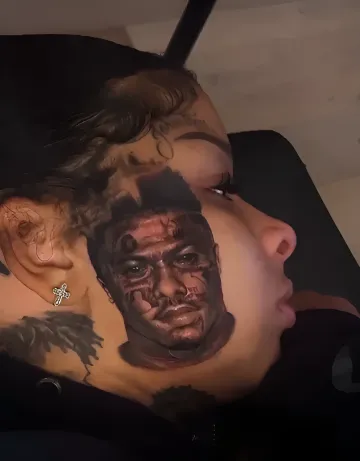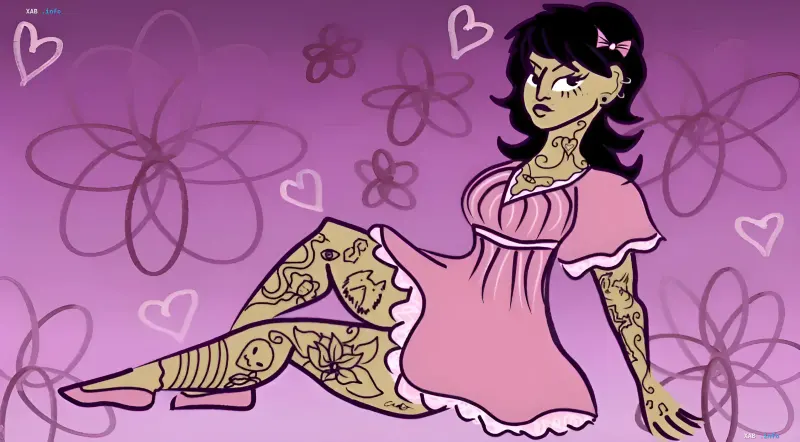
Social media is seeing a growing number of posts where women publicly express regret over their tattoos and warn others against getting inked. At first glance, this seems like a simple shift in taste, but it masks a deeper transformation in how the beauty industry defines the 'norm' of femininity. Right now, beauty brands are actively promoting the image of the 'natural' and 'classic' girl: flawless skin with not a single scar, 'I just woke up' makeup, and dissolvable fillers instead of sharp features. Against this backdrop, tattoos suddenly find themselves outside the approved framework.
Public Regret as a New Trend
Characteristically, this current surge cannot be explained by aesthetics alone. If it were merely a matter of a design becoming 'outdated' or falling out of favor, we wouldn't see such a wave of public declarations. This is about pressure that some women have begun to inflict upon themselves: by posting about their regret online, they effectively self-police their bodies to match the baseline set by the industry. The industry doesn't even need to impose the standard directly—it's enough for it to become the general background against which a person starts doubting their own choices.
Statistics Versus Stereotypes
The paradox is that the numbers say otherwise. According to the Pew Research Center, tattoos are actually more prevalent among women today than among men. Meanwhile, according to Removery, millennials and Gen Z are the ones most frequently choosing tattoo removal, and the New York Cosmetic, Skin & Laser Surgery Center notes that women undergo removal procedures noticeably more often than men. This creates a curious picture: more body art is being applied than ever, but it is also being erased more actively—and it is this combination that makes the trend of public regret so prominent.
The Double Standard Rooted in American Tradition
The roots of this pressure run deep into history. In the American tradition, tattoos were associated with rebellion, counterculture, and 'masculine' toughness for decades. According to PBS, when the art form arrived in the US, the first and most massive clients for tattoo artists were sailors and servicemen. This association still lingers in the subconscious: a tattoo on a man is perceived as 'manly,' while on a woman it is seen as 'unattractive' and 'unladylike.' It is precisely this double standard that creates the pressure under which some women begin to doubt their own decisions. Yet reality has long shattered this stereotype: Angelina Jolie and Megan Fox—names firmly associated with pop-culture beauty—openly display their tattoos, and over the past two decades, the tattoo market has experienced a true boom with women at its core.
Two Different Processes: Growing Up vs. Standard Pressure
It is important to separate two distinct processes here. First, a person might genuinely outgrow a specific design—that is a normal part of growing up, and no one disputes the right to remove an outdated sketch. Second, there is an entirely different motivation: removing a tattoo because it 'makes you less feminine.' And this is where the problem begins, because the very idea of 'natural femininity' is not a given, but a marketing construct that changes alongside trends. Tattoo culture experts emphasize that body art is a form of self-expression telling the story of who a person was, is, and wants to become; when the beauty industry declares this form of self-expression 'unfeminine,' it effectively strips a person of the right to their own body.
The 'Quiet' Femininity of 2026
Another nuance: in 2026, 'proper' femininity has become quiet. No bright makeup, no flashy clothing, no body modifications—even if they make a person happier. This is no longer about aesthetics, but about self-control, which women are beginning to practice themselves by posting about regret online. The industry doesn't even need to impose the standard—it's enough for it to become the background where doubting one's own body feels natural.
The Pendulum of Standards: The Body Is Not a Display Window
The main argument against panic is simple: beauty standards swing like a pendulum. What is declared 'unfeminine' today may become a hallmark of individuality in ten years. Tattoos, piercings, or hair dye do not make a person look worse in a dress—they make them themselves. And spending thousands of dollars on tattoo removal just to 'look more like a woman' means submitting to a standard that will change to the opposite tomorrow. The body is not a display window, but a space where everyone has the right to decide what stays on it.