
The situation on the front lines is changing not only as a result of artillery duels and infantry maneuvers, but also thanks to technical solutions. As it has become known, the disabling of repeaters on the territory of Belarus has dealt a significant blow to the capabilities of the Russian army. Now, the occupiers find it significantly more difficult to control kamikaze drones in real-time.
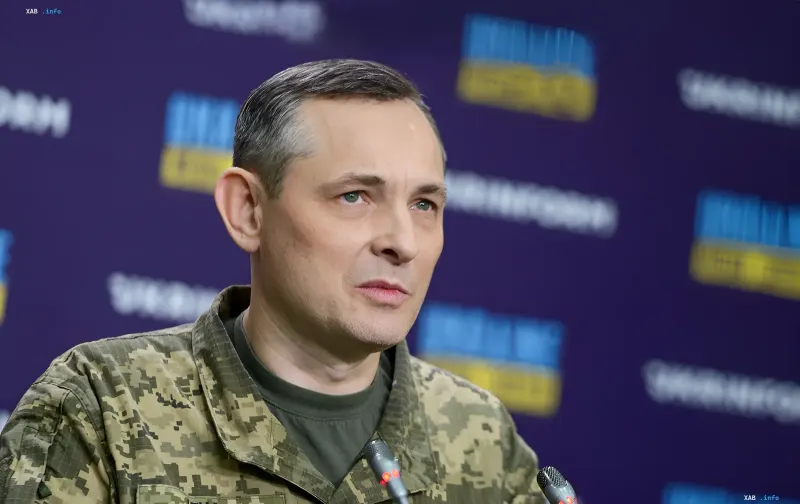
This was stated by Yuriy Ignat, Head of the Communications Department of the Air Force of the Armed Forces of Ukraine, during a televised marathon. According to him, Russian unmanned aerial vehicles have not disappeared and continue to fly, but the effectiveness of their use has dropped sharply. It has become much harder for the enemy to deliver pinpoint strikes against dynamic targets.
Loss of 'eyes' in real-time
Repeaters located along the Ukrainian border on the Belarusian side played a key role in the tactics of using 'Shahed' drones. These devices allowed the transmission of video signals to the operator over long distances, compensating for the limitations of line-of-sight.
Ignat emphasized that it was precisely the presence of stable video communication that allowed Russian operators to track the movement of Ukrainian objects and change attack coordinates mid-flight. 'Having a video feed in real-time, the enemy can strike with a drone even against moving objects or change attack coordinates,' noted the representative of the Armed Forces of Ukraine.
Thanks to this technology, Russian occupiers previously successfully attacked Ukrainian trains and mobile firing groups, which could not be hit using pre-set coordinates. Now, the enemy's ability to coordinate their actions in these regions is significantly limited.
Diplomatic pressure and results
This technical success was a direct result of Kyiv's firm stance. On June 19, Ukrainian President Volodymyr Zelenskyy issued an ultimatum to the leader of Belarus, Alexander Lukashenko. The head of state demanded the dismantling of repeaters used by Russia to guide drones within one week.
Zelenskyy warned that if Minsk did not voluntarily comply with the demand, Ukraine would take the task upon itself and destroy the equipment independently. The pressure worked: shortly thereafter, Belarusian media reported that 'Shaheds' had not moved along the border for three days. And on June 24, the President of Ukraine confirmed that the repeaters had ceased to function.
The situation demonstrates that even during the active phase of hostilities, diplomatic pressure and the threat of military action can yield tangible tactical results, depriving the enemy of important technological advantages.


