

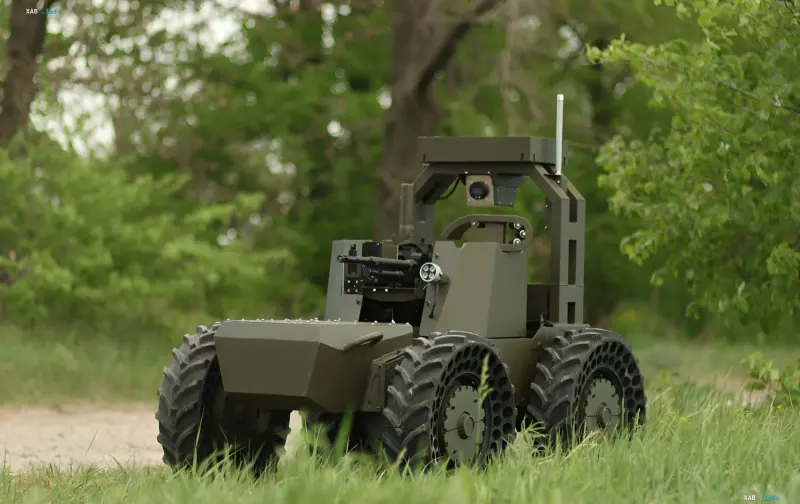
The situation regarding the use of ground robotic complexes (GRC) on the front lines is entering a new phase. Following 2023–2024, when manufacturers struggled to adapt their equipment to rapid tactical changes, clear requirements for effective combat vehicles have finally been formulated. Petr Leontiev, Director of UGV Robotics, revealed the industry's development prospects and outlined key vectors of evolution in an interview with RBC-Ukraine.
From a "race" to conscious development
At the end of last year, the pace of the technological race slowed down somewhat. This allowed engineers and military personnel to understand what characteristics an ideal GRC should possess. Currently, priority is given to two parameters: increasing the range and improving the image quality from cameras. It is precisely these factors that determine the effectiveness of the complex in modern battlefield conditions.
Currently, small combat GRCs dominate the front lines, however, there is a growing use of heavy, large complexes. Their main task is logistics and cargo transport. However, the existing operational scheme has its limitations. As Petr Leontiev noted, there are currently so-called "holding points" for combat robots.
These positions are located 10–15 kilometers from "zero" — the front line. At these points, specialized personnel change batteries, reload ammunition, and perform minimal maintenance. The expert emphasizes that this distance is currently considered too close, limiting the autonomy of combat equipment.
New tactics: big robots for small ones
The key forecast for the near future is a change in logistics. In the foreseeable future, large ground robotic complexes will transport smaller combat GRCs to the front. Such a scheme will significantly expand the operational radius of combat vehicles and preserve their range, solving the problem of limited autonomy.
The second important vector of development is full autonomy. In the future, logistics GRCs will be able to perform cargo delivery missions without operator involvement. The robot will be programmed with a route, after which it will independently navigate, recognize and overcome obstacles, reaching the destination point.
Development of Ukrainian robotics
Industry experts, including Taras Ostapchuk, founder and CEO of Ratel Robotics, are actively discussing the prospects for the use of domestic ground drones. Ukrainian engineers have already demonstrated the ability to create complexes capable of solving a wide range of combat tasks. An example of successful integration of robotics into the military structure is the story of the creation of a unique robotic company by an Armed Forces of Ukraine officer.


