Amidst the ongoing war and the necessity of ensuring the stable operation of critical infrastructure, the Ukrainian telecommunications sector faces a serious legal threat. The Association of Telecommunications Operators 'Telas' has appealed to the government and the National Security and Defense Council (NSDC) to urgently eliminate legislative gaps in the Land Code that create risks for companies with foreign participation. The issue concerns the ambiguous interpretation of Article 82, which regulates property rights on land for non-agricultural purposes.
The legal trap of Article 82
The essence of the problem lies in the lack of a clear temporal cutoff for assessing the composition of participants in a legal entity. The law does not specify at what point the company's status should be evaluated — at the time of its creation or at the time of the actual acquisition of property rights to the land plot. According to 'Telas' experts, this uncertainty has led to chaotic application of the norm in judicial and administrative practice. As a result, companies that legally own or lease land may be deemed violators if foreign capital is found in their structure at the current moment (or during inspection), which formally restricts their property rights.
Threat to communication stability and national security
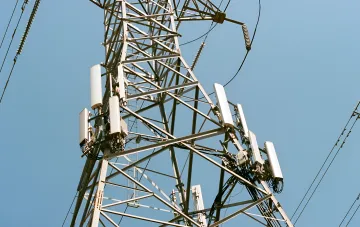
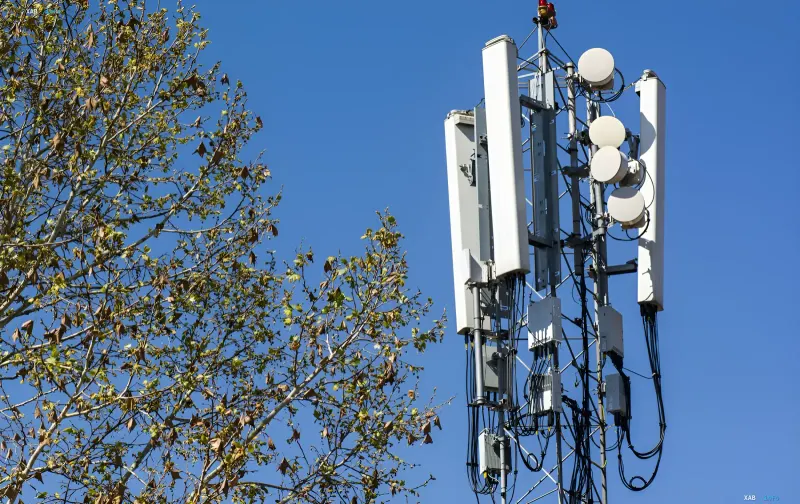
The most critical consequences of this legal collision are observed in the telecommunications sector. Mobile base stations, often located on plots that may be reviewed by courts or regulatory bodies, are at risk. In the event that property rights are declared invalid, control over the land may pass to third parties. This opens the door to blackmail: new owners may inflate rental rates, block access for repair crews to equipment, or even demand the dismantling of towers. In the context of blackouts and emergency situations, where every second of communication is precious, such actions could lead to a paralysis of communications and the failure of public warning systems.
Scale of the problem: from towers to defense
Although the most obvious consequences concern telecoms, the problem is systemic. 'Telas' estimates the scale of the threat to cover more than 80,000 Ukrainian enterprises with foreign capital. At risk are not only communication operators but also agro-industrial complexes, energy facilities, logistics hubs, and even enterprises of the defense industry. The Association cites the Supreme Court's ruling in case No. 926/3616/23, indicating that inconsistent application of norms could trigger a wave of land disputes, which would strike a blow to the country's investment attractiveness in 2026.
Contradictory data
On the one hand, the 'Telas' Association insists that the current legal uncertainty creates a direct threat to national security and the investment climate, requiring immediate legislative intervention. On the other hand, official comments from the Ministry of Justice or the Verkhovna Rada regarding the timing of the consideration of this issue are currently absent in open sources. There is a risk that regulators may interpret the situation differently: as a need to tighten control over foreign participation in strategic assets, which could lead to the opposite effect — further restriction of business rights instead of their protection. For now, the authorities' position remains unclear, which in itself is a risk factor.
Appeal to the authorities and possible consequences
In its open letter, 'Telas' calls on the government and the NSDC to eliminate the legal uncertainty regarding the application of Article 82 of the Land Code. Association experts emphasize that without clear rules of the game, Ukrainian business with foreign participation remains vulnerable to arbitrary decisions. If legislators do not react promptly, the country risks facing mass land disputes that could undermine the trust of foreign investors and, more importantly, disrupt the operation of critically important infrastructure in the midst of the conflict.