
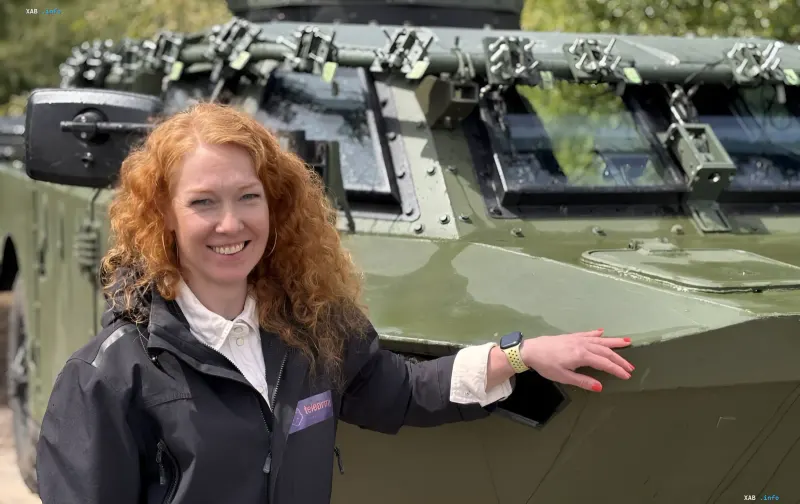
Remote vehicle control technologies, allowing operators to manage machines without being physically present in the cabin, are reaching a new level in Ukraine. The Estonian company Telearmy has begun actively implementing its solutions in both the defense sector and the civilian sphere. This was stated by the company's co-founder, Tuuli Tolmats-Aija, in an interview with RBC-Ukraine.
Military Application: From Theory to the Frontline
Developers have already begun adapting their systems to the specific needs of the Ukrainian army. The company has established cooperation with the General Staff of the Armed Forces of Ukraine and the ASD unit. The result of this work has been the retrofitting of an Armored Reconnaissance and Patrol Vehicle (BRDM) for use on the front lines. Now, such combat vehicles can be controlled remotely, which significantly enhances crew safety.
Over six years of operation, the Telearmy team has accumulated significant experience, integrating its development into nine different types of vehicles. The company is currently in the scaling phase: the number of connected vehicles is planned to increase from dozens to hundreds.
Civilian Sector and Taxis
Alongside military projects, Telearmy is entering the civilian market in Ukraine. In collaboration with the popular taxi service Uklon, work has already begun on implementing remote control technologies in the transportation industry. This echoes previous steps by the service, which earlier began testing autonomous taxis at the "Boryspil" international airport.
In Estonia itself, the technology has already been certified and is fully operational in the car-sharing and taxi sectors. There, vehicles can move without a safety driver in the cabin at speeds of up to 50 km/h.
Autopilot and Competition with Tesla
When asked about competition with the tech giant Tesla, Tuuli Tolmats-Aija answered affirmatively, but with an important caveat: the competition lies in usage scenarios, not in the level of system readiness. Nevertheless, the company's plans are ambitious.
During the summer of this year, Telearmy plans to begin implementing the first elements of autopilot. This will allow an operator to send one vehicle along a route autonomously, freeing themselves to manage another vehicle performing a military or civilian mission.


