
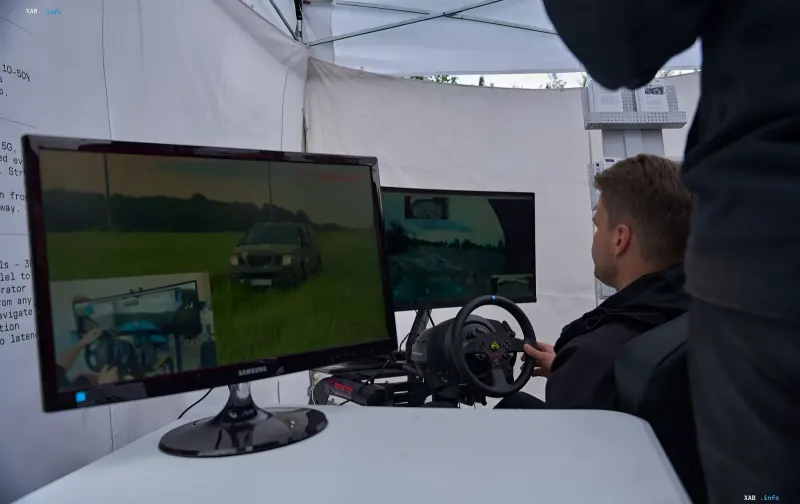
On the front lines, where every step can cost a life, technology becomes not just a tool, but a factor of survival. The Estonian startup Telearmy has presented a solution that is already actively used on the Ukrainian front: a remote vehicle control system. It allows the execution of critically important tasks — from logistics to the evacuation of the wounded — without risk to operators.
On the capabilities and prospects of the technology, co-founder of Telearmy Tuuli Tolmats-Aija told RBC-Ukraine in an exclusive interview. According to her, the first tests of the system in real conflict conditions began two years ago. Today, this is not an experiment, but a working tool that saves lives.
From logistics to combat units
Currently, the main tasks for remotely controlled machines on the front line are the delivery of cargo and the evacuation of the injured from zones of active hostilities. The system is already fully compatible with various types of armored vehicles, including BRDM and Humvee.
Developers are considering the potential of the technology more broadly. According to Telearmy engineers, the combination of remote vehicle control with remote weapon control creates a full-fledged unmanned combat unit. Such a machine is capable of fighting in the zone of fire without requiring the presence of a serviceman in the cabin.
Particular interest is the scenario of using equipment as mobile decoys. Instead of static models, which are easily recognized, the military can use real cars controlled at a distance. This allows effectively disorienting the enemy and masking real movements.
Opportunities for veterans
One of the key features of Telearmy technology is inclusivity. Veterans who have suffered serious injuries can control combat vehicles remotely. This opens new horizons for people who would like to continue helping the army but physically cannot be in the combat zone.
The company has already trained the first four drivers for the Uklon service. Among them is a war veteran with amputated legs. He uses a special manual switch instead of gas and brake pedals. During the demonstration of the technology to representatives of the ministries, he successfully controlled the car, taking guests for a ride. This proves that remote control allows people with injuries to remain active and in demand.
The future belongs to electric cars and the civilian sector
At Telearmy, they predict the rapid development of the era of remotely controlled electric vehicles designed to save lives. However, the ambitions of the Estonian startup are not limited to military tasks.
In the future, the technology is planned to be scaled in the civilian sector. Potential areas of application include:
- Agriculture;
- Logistics;
- Mining industry.
While drone manufacturers are actively implementing simulators for pilot training, Telearmy is creating infrastructure for controlling ground equipment, where the role of the human shifts from the cabin to a safe control center.


