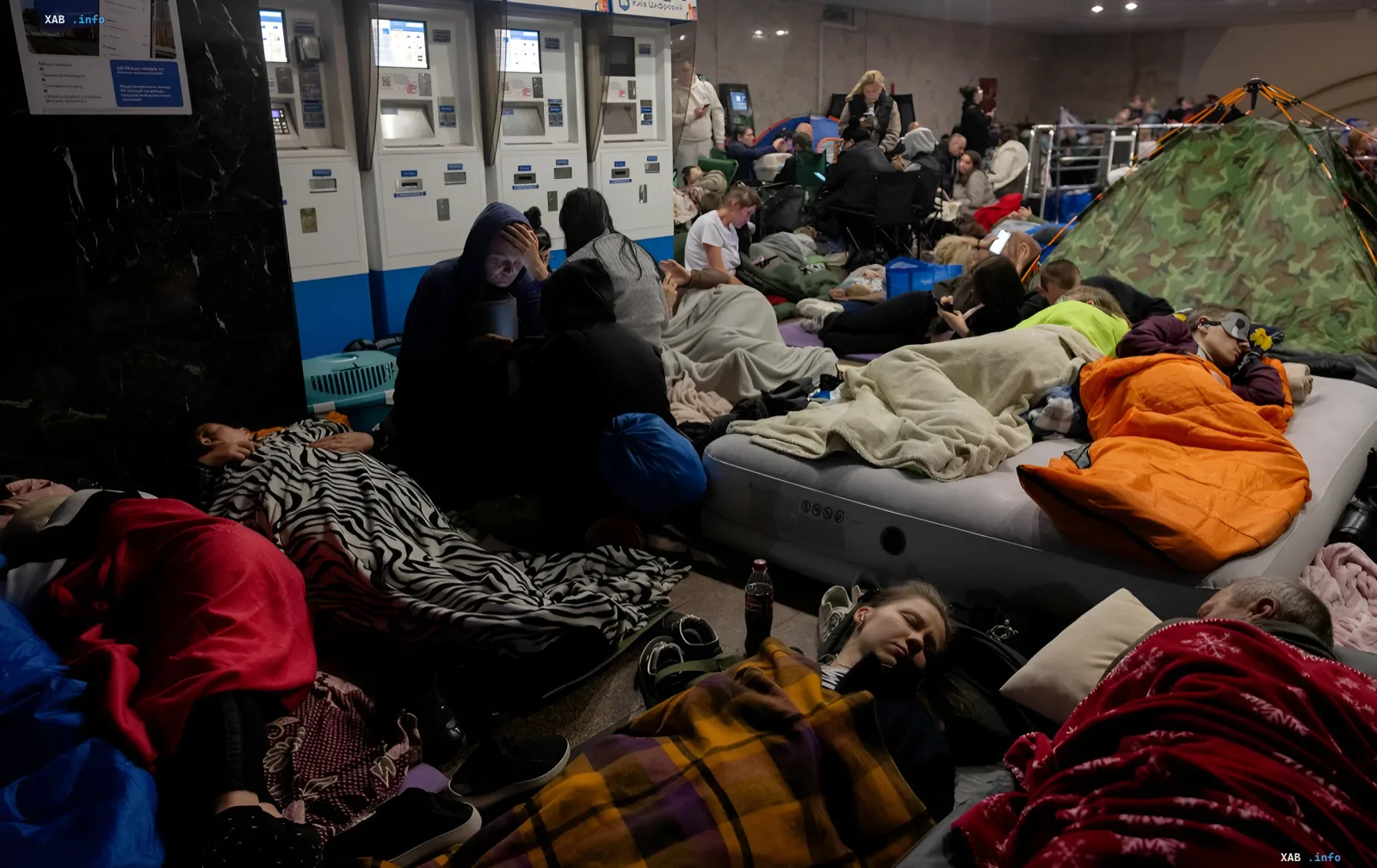
Amidst the ongoing war and regular air raids, Kyiv's metro stations have become the only reliable shelter for thousands of residents. Currently, 46 underground stations are operating as round-the-clock shelters. However, the growing influx of people seeking safety requires a rethinking of standard behavior in the subway. The Kyiv Metro has officially urged residents to abandon bulky tents and inflatable mattresses to free up vital space.
Fighting for Every Square Meter
The Kyiv Metro press service, citing RBC-Ukraine, explained the need for changes with simple logic: rational use of space allows for more people to be accommodated. In conditions where safety depends on the availability of free space, personal comforts must yield to collective safety.
Citizens are strongly advised to replace bulky tents and inflatable structures with compact camping mats (foam pads) and sleeping bags. This is not just a matter of comfort, but a way to ensure that the maximum number of capital residents can find shelter.
Temperature Regime and Gear
Kyiv's underground is not a greenhouse environment. The average temperature in the shelters is 17–18°C. This is enough to avoid hypothermia, but insufficient for comfortable sleep without proper preparation. Experts advise planning gear in advance to avoid freezing while waiting for the all-clear.
Furthermore, it is important to follow placement rules on the platforms. Passages to trains, restrooms, and service rooms must remain clear. This is critical for the operational work of staff and evacuation if necessary. Metro employees are always ready to guide citizens on where to settle without blocking paths.
Station Selection Strategy
If transportation is necessary to reach shelter, the metro advises preferring central stations. Statistics show that on platforms such as "Zoloti Vorota" (Golden Gates), "Ploshcha Ukrainskykh Heroyiv" (Square of Ukrainian Heroes), "Maidan Nezalezhnosti" (Independence Square), and "Kreschatyk", the density of people is usually lower than at peripheral hubs. This allows for finding a spot faster and avoiding crushes.
It is important to remember that during air raids, metro cars may be stationed directly at the platforms used as bomb shelters, which also requires discipline and order.
Systemic Shelter Problems
Despite the metro's efforts, the situation with protective structures in the country remains complex. The Ombudsman of the Verkhovna Rada for Human Rights, Dmytro Lubyntsev, stated that most inspected shelters have serious deficiencies. According to him, many protective structures remain closed, cluttered, or physically unsuitable for people with disabilities. This highlights that the metro remains a key, and sometimes the only available resource, for saving citizens.


