

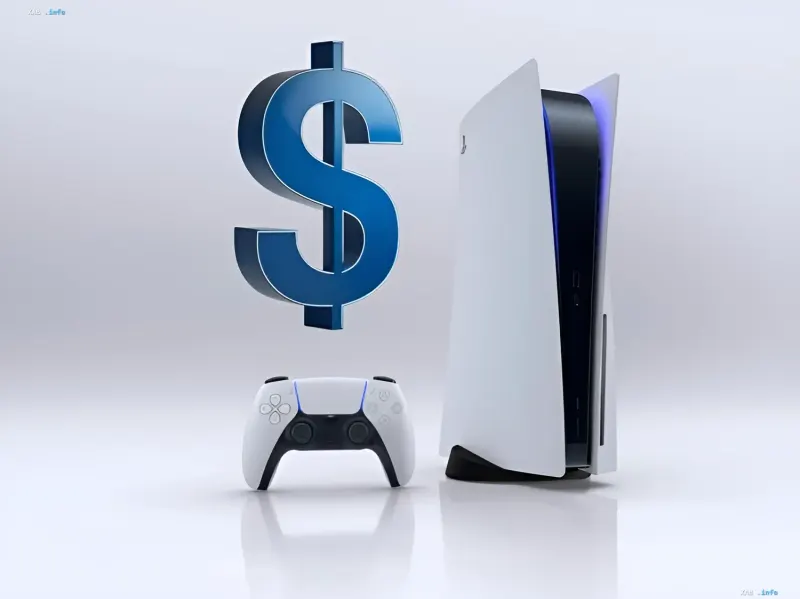
The gaming industry is preparing for one of the most significant economic shifts in recent decades. According to the latest data, the cost of components for the upcoming PlayStation 6 is approaching the critical mark of $1000. This is a fundamental change that calls into question the traditional business models of console manufacturers and could radically reshape the structure of the entertainment market.
Insider Kepler_L2, publishing data on the NeoGAF platform, reported a sharp spike in production costs. Over the last three months, hardware estimates have risen by approximately $200. If the base cost of components was estimated at $760 as recently as March 2026, the figure now fluctuates between $960 and $1000. Such a gap between forecasts and reality is forcing analysts to reconsider the scenarios for the launch of the next-generation console.
Physics and Economics: Why Chips Are Getting More Expensive
The price increase is not accidental and is driven by a complex of factors in the semiconductor industry. First, key contract manufacturer TSMC has raised tariffs on advanced lithography nodes. This refers to the 2-nanometer technological process (N2 class), which is necessary for creating hybrid processors based on AMD Zen 6 and RDNA 5/6 architectures.
Second, the memory market is experiencing turbulence. Microsoft experts and Lenovo analysts forecast a doubling of wholesale prices for high-speed GDDR7, HBM, and NAND flash memory by the end of 2027. Furthermore, engineers are forced to physically increase the die area of the processor. This is necessary to implement hardware acceleration for artificial intelligence algorithms, including PlayStation Frame Generation technologies. Increasing the chip area reduces the yield of good dies per wafer, which directly increases production costs.
The Shadow Legacy of PlayStation 3 and New Risks
The history of the gaming industry knows precedents where a high launch price led to a prolonged battle for the consumer. In 2006, the launch of the PlayStation 3 at a price of $599 led to a drop in sales rates in the early stages. Today, the situation is exacerbated by the fact that the cost of production already exceeds that launch price by two times.
The consulting agency Kantan Games, led by Dr. Serkan Toto, points out that a price of $1000 for the base model is a critical barrier. However, the market situation is changing: in the summer of 2026, Valve launched the Steam Machine at a price starting from $1050, and Microsoft is developing the Project Helix. This could shift the perception of consoles from a mass-market product towards a premium segment for enthusiasts.
Two Paths to Salvation: Subsidies or Premium?
Sony Interactive Entertainment management faces a difficult task. An artificial delay in the release is economically unfeasible: long-term contracts with TSMC and development schedules will not allow costs to be reduced by simply postponing deadlines. Experts highlight two likely scenarios for development by 2027–2028:
- Selling below cost. Sony could set the retail price at the level of $699–$799 for the digital version, consciously going into the red on the "hardware." Operating losses will be compensated by the 30% commission in the PlayStation Store, licensing fees from publishers, and PlayStation Plus subscriptions.
- Shift to the premium segment. The base cost of the console will be officially fixed in the range of $899–$999. In this case, the device is positioned as a high-price segment product, where marginality is ensured already at the stage of selling the "box".
The traditional business model allows for negative marginality at the start-up stage, but the unprecedented growth in semiconductor costs in 2026 requires a radical revision of the payback structure. Players will have to get used to a new reality where the entry ticket to the next-generation ecosystem becomes significantly more expensive.


