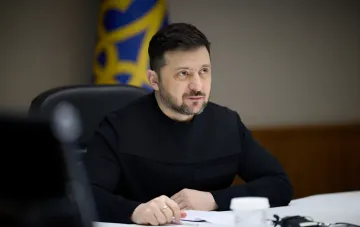
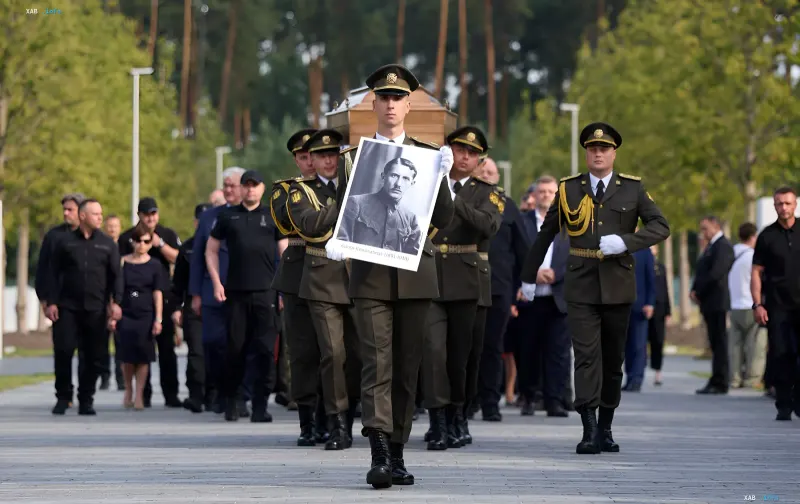
On August 18, 2026, a solemn reburial of the ashes of the leader of the Organization of Ukrainian Nationalists (OUN), Evhen Konovalets, took place at the National Military Memorial Cemetery in the Kyiv region. 88 years after his death in Rotterdam, the remains of the UNR colonel were returned to his homeland. The event became an important stage in restoring historical justice and national memory, emphasized Ukrainian President Volodymyr Zelenskyy in his speech.
The return of a hero: symbolism and political context
The head of state called the return of Konovalets' ashes an act of restoring national memory and the experience of the liberation struggle. "He fought with deeds, convinced with courage, and thought realistically when it was more convenient for many to remain captive to one or another chimera," Zelenskyy stated. He emphasized that Konovalets was a symbol of a sovereign state and one of the organizers of the Ukrainian army.
The President also noted that Konovalets returned to the Ukraine he dreamed of: strong, independent, and with one of the strongest armies in the world. "For the fifth year, Russia has been trying to break our state with its full-scale war... But whatever evil Russians commit, we know: we will return all their evil to them with our long-range capabilities, and for ourselves, we will choose and create the peace so necessary for us," Zelenskyy added.
Historical background: who is Evhen Konovalets?
Evhen Konovalets (1891–1938) was a Ukrainian military and political figure, a colonel of the Ukrainian People's Republic Army, commander of the Sich Riflemen, founder of the Ukrainian Military Organization (UVO), and the first head of the OUN. He was born on June 14, 1891, in the village of Zashkiv near Lviv. During World War I, he served in the Austro-Hungarian army and was taken prisoner by the Russians in 1915.
In 1917, he escaped from the camp and arrived in Kyiv, where he became one of the organizers of the Galician-Bukovinian Sich Riflemen detachment. Under his command, the formation became one of the most combat-capable units of the UNR Army. After the defeat of the Ukrainian Revolution of 1917–1921, Konovalets continued the struggle for Ukraine's independence in exile. In the 1920s, he headed the UVO, and in 1929, he became the head of the OUN, which was created at a congress in Vienna.
Circumstances of death and reburial
On May 23, 1938, Evhen Konovalets died in Rotterdam as a result of a special operation by Soviet intelligence services. An explosive device was hidden in a candy box handed to him by the NKVD agent Pavel Sudoplatov. Konovalets was buried at the Crooswijk cemetery in Rotterdam.
In July 2026, the Ukrainian government decided to rebury Konovalets' remains. On August 11, the colonel's remains were exhumed at the Crooswijk cemetery in Rotterdam. On August 13, the ashes were delivered to Ukraine, and on August 18, they were solemnly reburied at the National Military Memorial Cemetery.
Gratitude and future plans
Zelenskyy expressed gratitude to the Ukrainian Riflemen Community of Canada and the Ukrainian National Organization, which have kept the memory of Konovalets alive for decades. The head of state announced the continuation of work to return the ashes of Konovalets and other prominent Ukrainian figures. "Today, there are still many names of those who fought for Ukraine... and, unfortunately, rest outside Ukraine. We will do everything to step by step return each and every true Ukrainian hero to their native land," the President concluded.