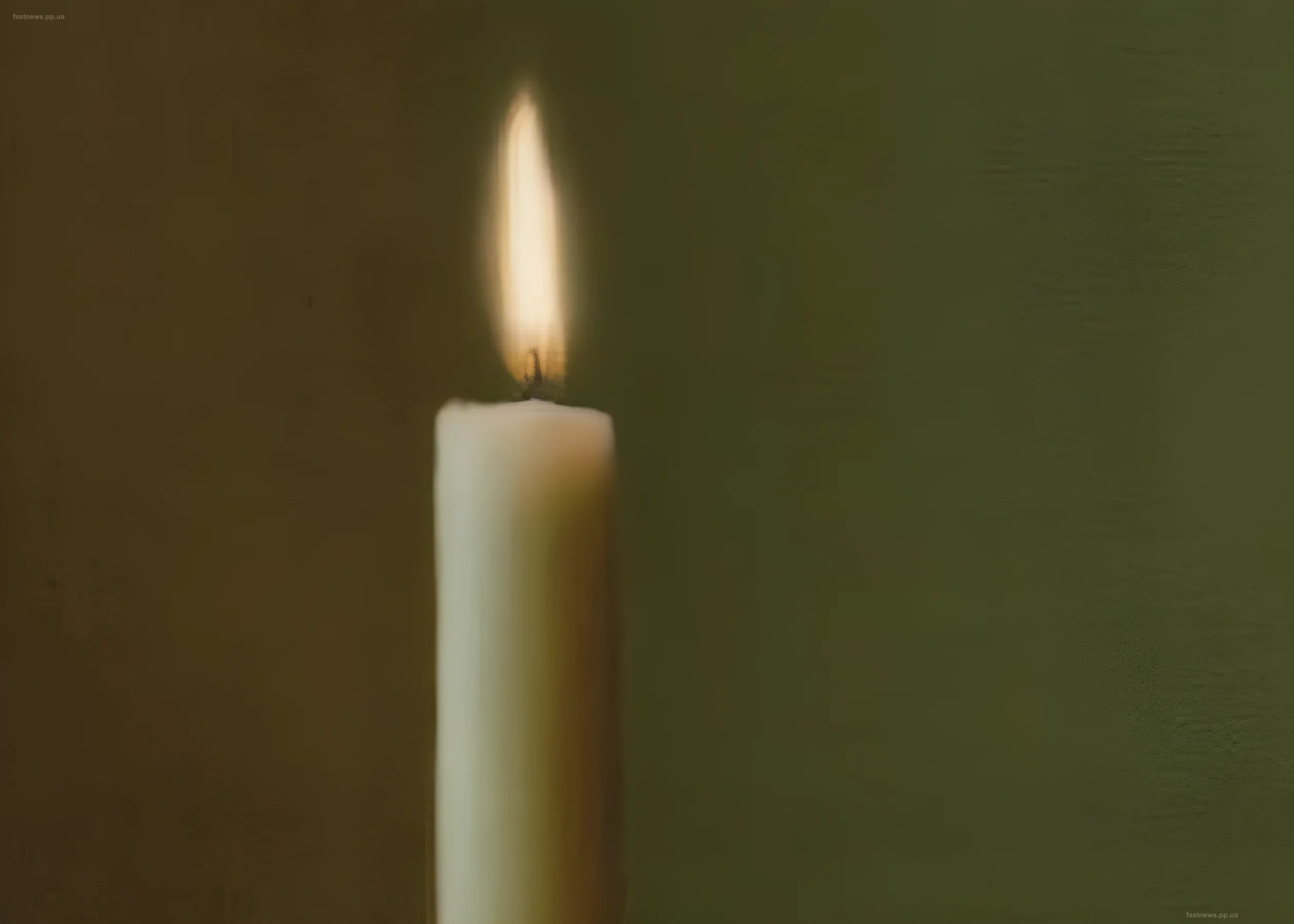
In New York, at the prestigious Christie's auction, an event took place that captivated the entire art world. The lot that exceeded all expectations was a painting by German artist Gerhard Richter. The canvas titled "Candle" (Kerze) was sold for an astronomical sum — $35,135 million. This is not just the sale of an art object; it is the triumph of an idea encoded in wax and flame.
Rebellion in Silence
At first glance, the subject is extremely simple: a single burning candle against a dark, almost black background. No grand battle scenes or pompous slogans. Yet, it is precisely this conciseness that made the work an icon of the era. For the inhabitants of former East Germany, living under the yoke of the socialist regime, the image of the candle became a universal language of silent protest. It was a symbol of hope that censorship could not ban and a sign of inner resistance to the totalitarian system.
Technique vs. Ideology
Richter painted the canvas in the style of photorealism, which in itself was a challenge to the then-dominant socialist realism. The artist did not distort reality for propaganda purposes but simply recorded it with photographic accuracy. After the fall of the Berlin Wall, the historical significance of the work increased manifold: it ceased to be just a still life and turned into a document of an era of change.
Contrast with Modernity
The events surrounding Richter's "Candle" resonate with recent incidents in the art world but have a diametrically opposite message. While activists from the Futuro Vegetal movement in Madrid splashed paint on "The First Homage to Christopher Columbus" to draw attention to climate issues through vandalism, Richter achieved eternity through contemplation. His painting does not require destruction; it requires attention to the light in the darkness.


