
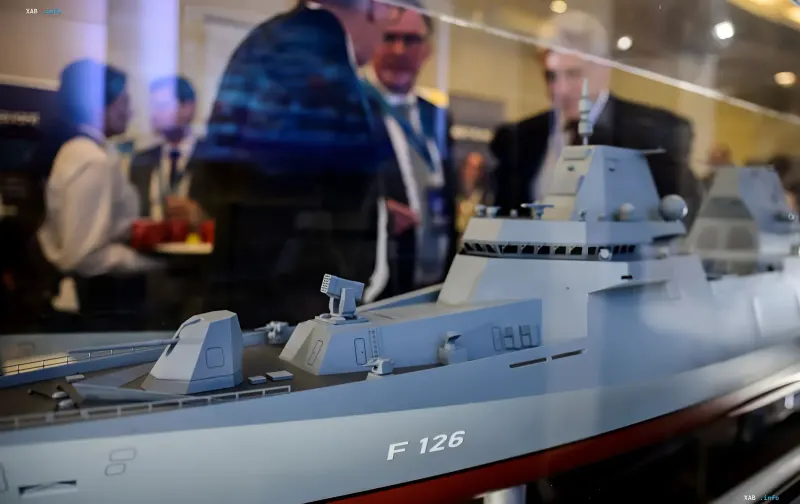
The German government has made an unprecedented decision: to officially abandon the ambitious project to build six F126-class frigates. This plan, which was intended to be the largest fleet modernization for Germany since World War II, has been halted during the implementation phase. The reason for the cancellation is a lack of funding and uncontrolled cost overruns, which have led to constant delays in the delivery of the ships.
Berlin's decision has dealt a blow to the defense sector. Shares of Rheinmetall, which expected to be the main contractor for the €12.8 billion contract, plummeted by 12%. Defense ministers explained that abandoning the project is necessary to avoid even greater losses and to preserve the right to claim damages against previous contractors who failed to stay within budget.
From "giants" to pragmatism
The F126 frigate was conceived as a true maritime giant. The hull length was to be 166 meters, and the displacement was to reach 10,000 tons. The ship was designed as a multi-purpose platform for long autonomous missions, capable of effectively detecting and destroying submarines. However, the complexity of the project and its cost made it unviable under current economic conditions.
Instead of the problematic F126s, Germany has revised its strategy. Instead of six giant ships, eight Meko-class frigates will be purchased. The cost of a single new ship will be around €1 billion. The main task of these vessels will be anti-submarine warfare, primarily against Russian submarines. In the context of growing threats from Russia, NATO is demanding increased presence in the Baltic region and the North Atlantic. The new frigates are expected to enter service faster than the cancelled giants.
Crisis in army reform
This incident is a vivid example of procurement problems within the framework of the massive reform of the German armed forces. By the end of 2030, €780 billion was allocated for army modernization, and the country hoped to become a leader in European defense. However, the frigate case showed that ambitious plans often crash against the reality of bureaucracy and overspending.
Nevertheless, the defense boom in Germany continues in other segments. Together with France, German engineers have presented the concept of a new "super-tank." The machine is equipped with an unmanned turret and integrated with drone systems, allowing it to be used as a command center for robotic complexes directly on the battlefield. Furthermore, the German army has already ordered more than two thousand all-terrain trucks from Rheinmetall for a sum of around one billion euros, confirming the high demand for ground equipment.


