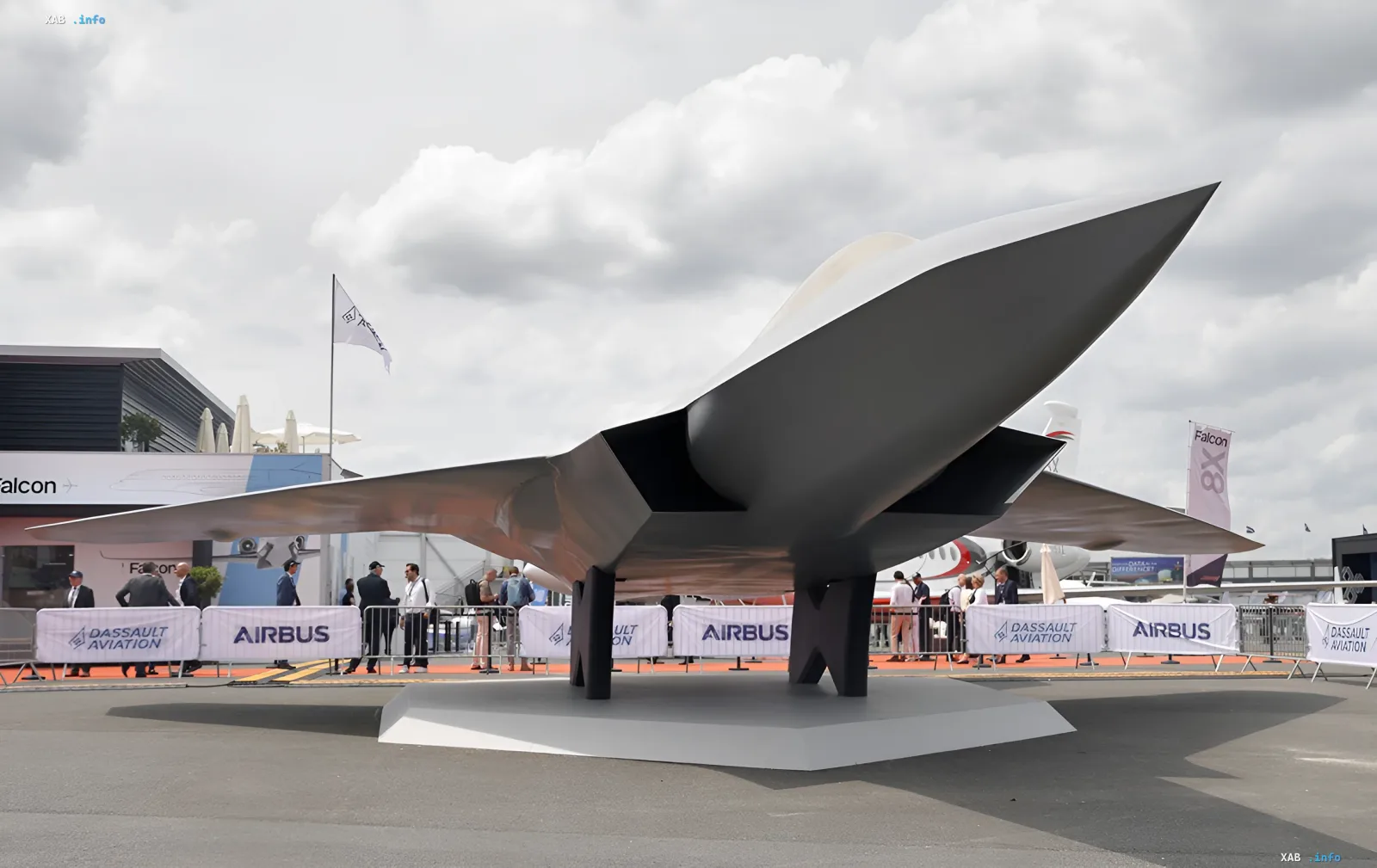
One of the most ambitious defense projects in European history has failed. France and Germany have officially halted the joint development of the Future Combat Air System (FCAS) — a sixth-generation fighter jet. Chancellor Friedrich Merz and President Emmanuel Macron have concluded that consensus is unattainable: Dassault Aviation and Airbus failed to agree on the distribution of roles.
The Battle for Leadership: Dassault vs. Airbus
According to sources in the German government, the root of the conflict lies in corporate policy. The French Dassault Aviation claimed a disproportionately large share of the project and a leading role in development. Berlin, however, expected the French partner to adhere to existing agreements providing for equal participation by both companies. Disputes over the allocation of responsibility arose repeatedly and ultimately proved fatal to the initiative.
Political Defeat and Divergent Requirements
According to ntv.de, the failure of FCAS is a bitter political defeat for Paris and Berlin. Emmanuel Macron has insisted for years on European sovereignty and joint defense projects, having been a co-initiator of the program. However, Chancellor Friedrich Merz recently identified the key problem as France needing a different fighter jet than the German armed forces.
The requirements of the partner countries proved incompatible:
- France insisted on creating an aircraft capable of carrying nuclear weapons, as well as a carrier-based variant for aircraft carriers as part of the next generation of fighters.
- Germany did not require such functions for its armed forces.
Berlin proposed a compromise in the form of implementing FCAS with two different types of aircraft, but Paris rejected this proposal.
The Cost of Ambitions: 100 Billion Euros
The FCAS project united the efforts of France, Germany, and Spain and was valued at more than €100 billion. Defense industry giants Dassault Aviation, Airbus, and Indra Sistemas were involved in the development. According to plans, the new fighter, along with a swarm of drones, was to replace the French Rafale and the German-Spanish Eurofighter. The first test flight was scheduled for 2028–2029, but now this date remains merely a historical reference.


