
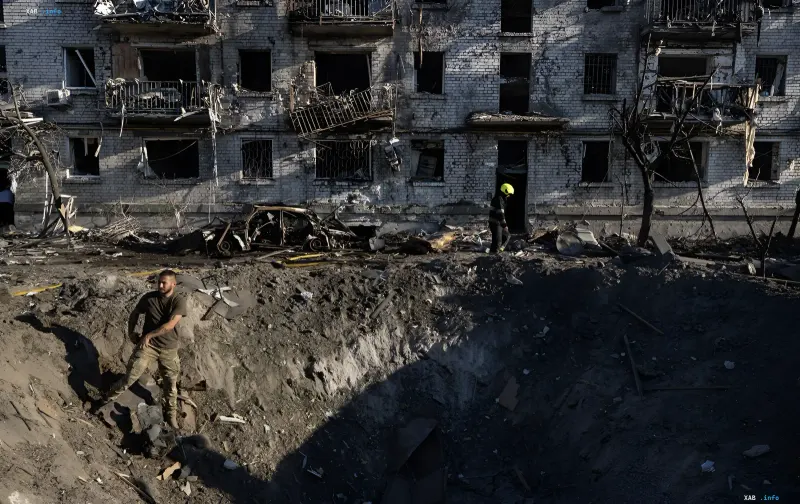
The night strike on Kyiv, which destroyed residential buildings and infrastructure, has sparked an international outcry. In the night of July 2, Russia unleashed an unprecedented number of munitions on the Ukrainian capital — 570 units, including 74 missiles and 496 drones. The consequences of the attack became evident the next day: an entrance to a residential building collapsed in the Darnytskyi district, and the city streets turned into a battlefield littered with debris and craters.
Leaders of the European Union, the Parliamentary Assembly of the Council of Europe (PACE), and the European Parliament, as well as foreign ministers of several countries, reacted to the incident. The main message from Western partners was unequivocal: words of condemnation are not enough; immediate increased pressure on Moscow is required.
Sanctions as a Response to Escalation
Kaja Kallas, the High Representative of the EU for Foreign Affairs and Security Policy, took a hard line. She emphasized that diplomatic notes cannot stop attacks on civilian objects. According to Kallas, Brussels is preparing new packages of sanctions targeting entities supporting the Russian military-industrial complex. "The more often Moscow attacks the civilian population, the more sanctions need to be imposed," she stated.
This sentiment was echoed by European Commissioner for Neighbourhood and Enlargement, Marta Kos. She noted that Russia is attempting to destroy Ukraine as a nation and deprive it of its European future. In Kos's view, Europe's task is to make these plans fail by providing Ukraine with the means to defend itself.
Solidarity and Calls for Justice
European Parliament President Roberta Metsola expressed condolences to all who lost loved ones or were forced to spend the night in bomb shelters. Meanwhile, PACE President Petra Bayr emphasized that Ukraine is acting strictly within the framework of self-defense, while Russia is sowing terror among civilians.
Alain Berset, the Secretary General of the Council of Europe, focused on the necessity of justice. He stated that accountability for war crimes cannot remain at the level of promises alone. The Council of Europe intends to turn this commitment into concrete actions so that the guilty do not go unpunished.
Position of Partner Countries
Foreign ministers of European countries unanimously supported the course of increasing pressure on the Kremlin. Latvian Foreign Minister Baiba Braže stated that Russia must be forced into peace through maximum pressure. Estonian Minister Margus Tsahkna added that Moscow's imperial ambitions have not disappeared, and Ukraine needs military means to protect its people.
Finnish Foreign Minister Elina Valtonen noted that Russia's actions demonstrate a disregard for human life. Her Norwegian colleague Espen Barth Eide expressed condolences to the victims, condemning the attack on civilian objects.
Italian Foreign Minister Antonio Tajani called the violence unacceptable and urged Russia to stop the attacks. Austrian Minister Beate Meinl-Reisinger reminded that Ukraine's security is inextricably linked to Europe's security. She also noted that Putin's retreat is possible only when the war becomes economically unprofitable for him.
Moldovan President Maia Sandu declared firm support for Ukraine, calling on the international community to increase pressure on Russia. All these statements became a direct response to the destruction similar to that observed in Kyiv districts after night shelling, where the ruins of residential buildings and scorched earth remind of the price the civilian population pays for the war.


