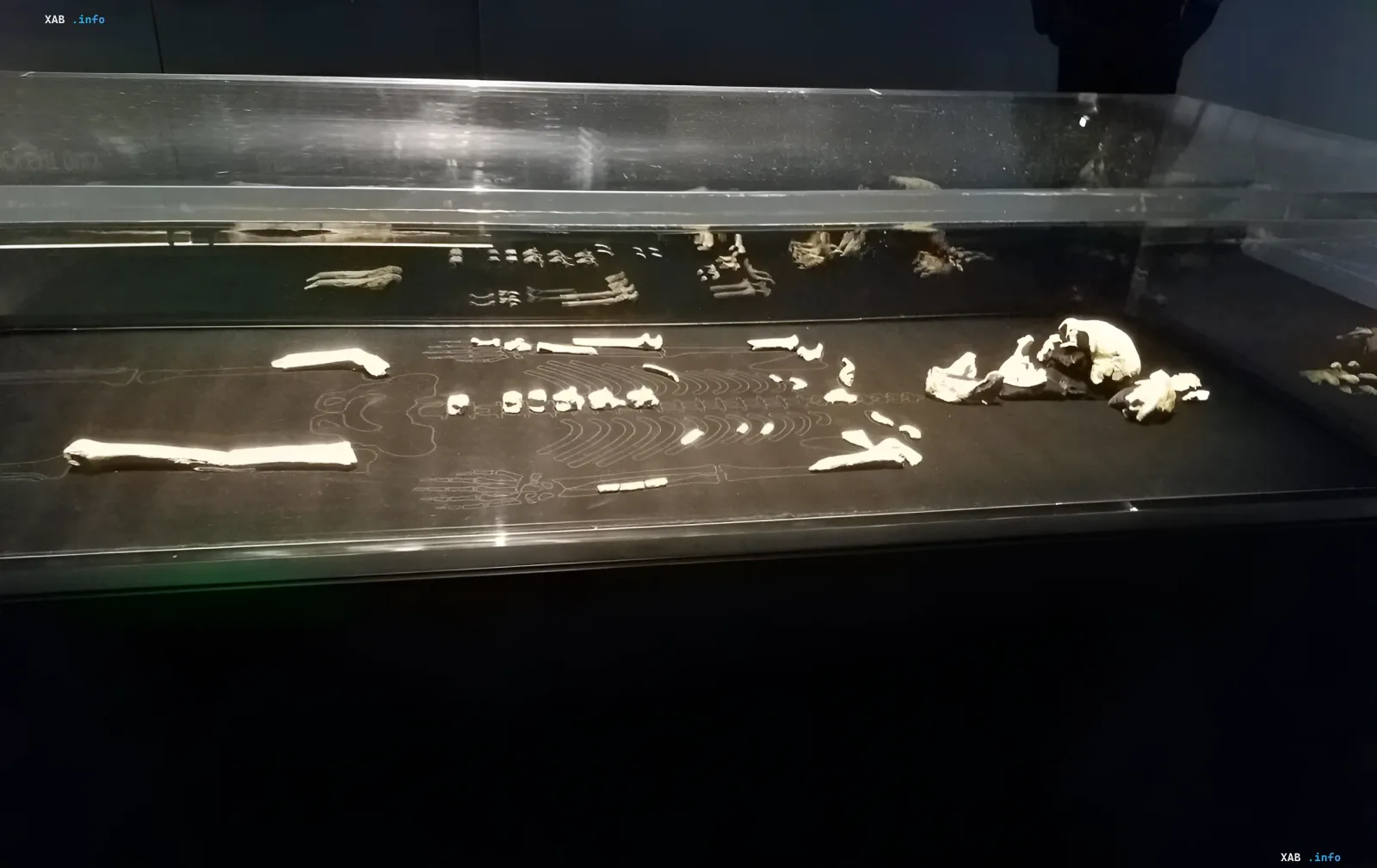
A scientific sensation is unfolding in the Rising Star cave in South Africa, one that could overturn our understanding of human evolution. The analysis of dental enamel proteins from hominins of the species Homo naledi, found at this site, has led researchers to a shocking conclusion: all studied individuals—from infants to the elderly—turned out to be genetic females.
This discovery is not just surprising; it calls into question many established theories about the behavior of ancient hominins and opens new horizons in understanding their social structure.
Protein Analysis Instead of DNA
The key to the solution was a specific protein, amelogenin, which scientists investigated in the dental enamel. Only the female version of this protein (AMELX), encoded by the X chromosome, was found in the samples. The male version (AMELY), associated with the Y chromosome, was absent in all checked cases.
It is important to note that modern equipment is sensitive enough to detect even minimal concentrations of male protein. Its complete absence is not a methodological error, but a real biological fact.
Proof of Ritual Burials
This result has become a powerful argument in favor of the theory of intentional burials, which the team of anthropologists led by Lee Berger has been advocating for over a decade.
Even among wild primates, such as gorillas or chimpanzees, living in groups with female dominance, the herd always includes offspring of both sexes. However, in Rising Star cave, even the skeletons of infants belong exclusively to the female sex.
The presence of only one sex in the caves indicates that Homo naledi, despite having a brain volume comparable to that of a chimpanzee, possessed complex social rituals, a sense of culture, and likely a concept of gender identity that mattered even after death.
Evolutionary Links and the Mystery of Males
Protein analysis allowed not only to determine the sex but also to reveal evolutionary links. In five individuals, scientists found a protein version shared with the earlier species Paranthropus robustus (lived 1-2 million years ago), while in the other 15, a unique protein variant specific only to Homo naledi was found.
The main question that arose before anthropologists: where are the male individuals of this species hiding?
One of the co-authors of the study, paleoanthropologist John Hawks, suggests that male Homo naledi skeletons could have been significantly larger in size. Due to pronounced sexual dimorphism, scientists may have simply failed to identify large bones from other excavations as belonging to this species, as they considered Homo naledi to be exclusively miniature hominins.
An Ethical Pause in Excavations
Due to the identification of signs of high culture and ritualism in these burials, Lee Berger announced a temporary suspension of excavation work in the cave.
The researcher notes that the scientific community must reconsider the ethical norms of excavations, as humanity has encountered for the first time the remains not just of ancient creatures, but of representatives of another intellectual species that had its own symbols, rock engravings, used fire, and hid the dead in a special place.
Scientists are evaluating the prospects for conducting new DNA analysis on better-preserved bone samples using advanced sequencing technologies, which could provide even more answers to the mysteries of this unique species.


