Four and a Half Millennia of Trials
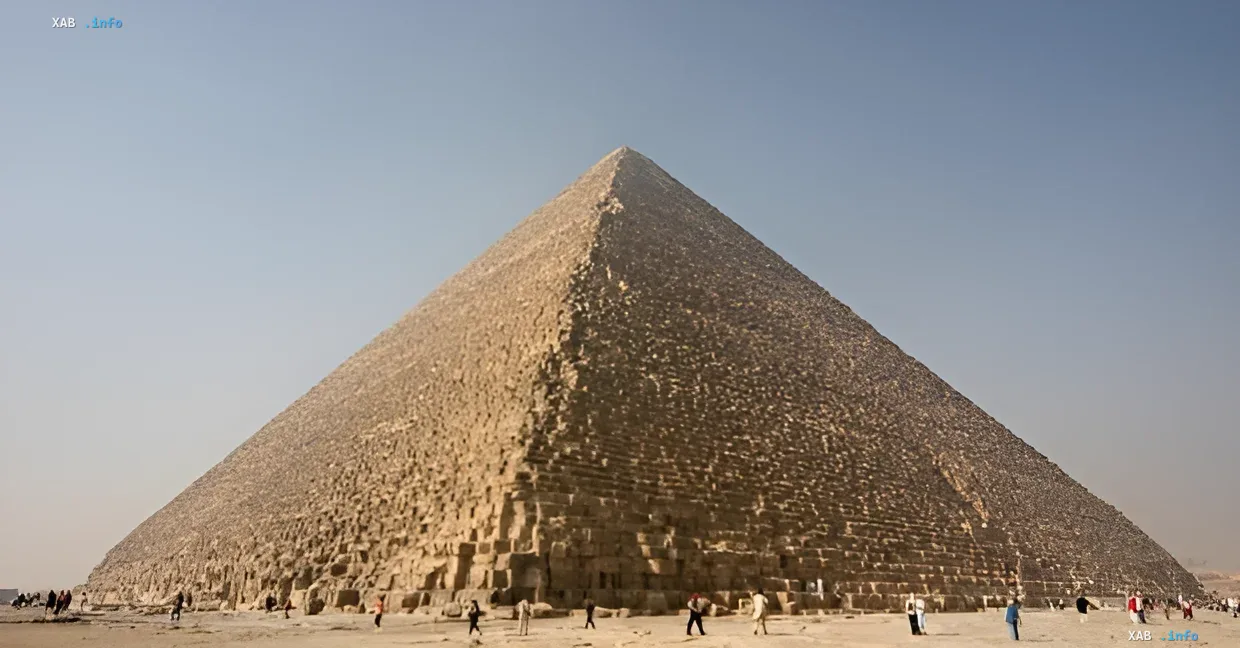
The Great Pyramid of Khufu on the Giza Plateau is one of the most mysterious and resilient structures in human history. For more than 4,500 years, it has withstood not only destructive erosion and harsh desert storms but also powerful seismic shocks. Despite enduring numerous natural disasters over the centuries, the monument has retained its integrity, sustaining only minimal damage.
Now, an international team of researchers from Egypt and Japan, whose findings were published in the journal Scientific Reports, believes they have uncovered one of the main secrets behind this longevity. Scientists hypothesize that the pyramid's unique architecture plays a key role in its ability to withstand earthquakes.
Resonance and Natural Frequencies
To test the hypothesis regarding seismic resistance, researchers conducted a complex geophysical study. They placed special sensors at 37 points—both inside the pyramid itself and in the surrounding area. The goal of the experiment was to measure the fundamental frequency of the structure's vibrations, which indicates how the building naturally vibrates in response to external stimuli, whether weather conditions or human activity.
The measurement results were unexpected. It turned out that the pyramid and the ground beneath it have different natural frequencies of vibration. This physical difference is critical: it reduces the structure's ability to absorb large amounts of seismic energy through resonance. Simply put, the pyramid does not "tune in" to the ground's vibrations, allowing it to dampen impacts rather than accumulate them.
Architecture as Protection
Scientists also analyzed a number of architectural characteristics that contribute to the monument's stability. The pyramid's shape naturally concentrates the main mass at the base, ensuring a low center of gravity. Furthermore, perfect symmetry helps distribute weight evenly across the entire foundation area.
Special attention in the study was paid to the internal voids located above the King's Chamber. Scientists believe that these empty spaces may reduce the pressure created by seismic waves in the upper parts of the structure. The material also plays an important role: the limestone from which the pyramid is built, along with the bedrock beneath it, helps dissipate vibrations as they travel upward, preventing them from destroying the structure.
Historical Evidence
Theoretical calculations are supported by historical facts. The Great Pyramid has survived significant seismic events. A striking example is the 1992 Cairo earthquake with a magnitude of 5.9. Despite the strong tremors felt throughout the country, the Great Pyramid of Khufu stood firm with virtually no damage.
Chance or Genius Calculation?
Although scientists have confirmed the link between architectural features and seismic resistance, the question of whether these decisions were intentional remains open. Researchers emphasize that any assumptions that ancient Egyptian builders consciously designed the monument with seismic resistance in mind remain speculative. Geophysical measurements cannot confirm that ancient masters possessed knowledge of resonance and vibration frequencies.
Nevertheless, the pyramid continues to stand, serving as living proof of ancient engineering genius. Previously, archaeologist Matthew LaCroix hypothesized that the Giza pyramids, as well as monuments in Turkey and South America, hide a complex code created by a lost civilization. However, current scientific data suggests that the secret to the pyramid's survival lies in the realm of physics and geometry, rather than in the secret knowledge of vanished peoples.


