Dmytro Lytvyn, Communications Adviser to the President of Ukraine, stated that the TikTok social network served as the primary platform used to influence the crowd during the incident in Petropavlivska Borshchahivka, Kyiv Oblast. He reported this in a commentary to journalists, as cited by RBC-Ukraine. According to Lytvyn, an analysis of the events on the ground showed that short video clips and live broadcasts on TikTok had the greatest impact on the audience participating in the unrest.
TikTok as the Main Mobilization Tool
“Live streams and activity on TikTok had the biggest impact on the unfolding of events, and this is the main platform for the crowd that was rioting there,” Lytvyn emphasized. In his estimation, it was through this social network that the main incitement of the crowd and dissemination of false information took place. The presidential adviser noted that the platform's format — short, emotionally charged videos and unmoderated live streams — made it particularly effective for rapidly spreading provocative content among a younger audience, which, according to him, formed the core of the incident's participants.
The Role of Anonymous Telegram Channels
Lytvyn also separately commented on the role of anonymous Telegram channels, which actively covered the developments. According to him, the information in these channels was mixed: alongside reports on the actual circumstances of the incident and reliable data about the participants and organizers, disinformation injections also appeared. At the same time, the presidential adviser stressed that TikTok, rather than Telegram, became the main channel for incitement and the spread of false information on the night of the events.
Chronology of the Incident in Petropavlivska Borshchahivka
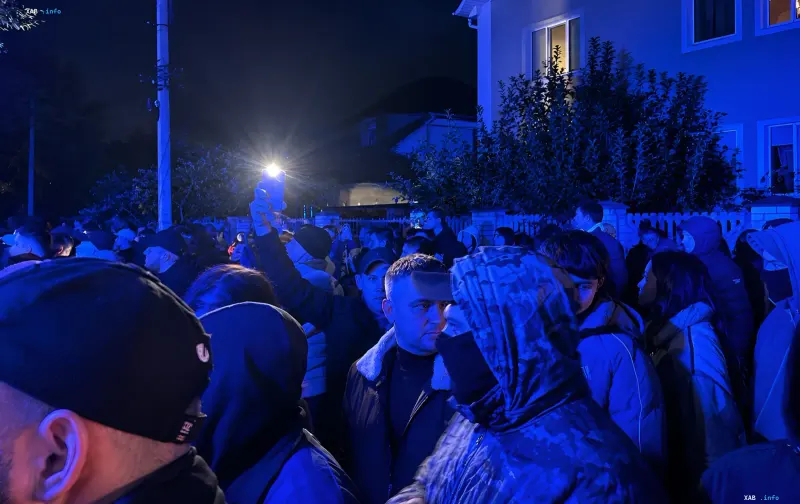
Recall that on the evening of November 2, 2026, local residents of Petropavlivska Borshchahivka gathered near a private house. Preliminarily, information began circulating on social media claiming that men who had voluntarily left military units were allegedly being kept in the basement of this building. The crowd, according to reports, acted aggressively, demanding the "handing over" of the alleged deserters. The situation escalated into mass unrest and required the intervention of law enforcement agencies.
Confirmation by the National Guard and Military Ombudsperson
Commander of the National Guard of Ukraine Oleksandr Pivnenko later confirmed that National Guard servicemen were indeed inside the house. According to him, they were discovered after having left their place of service without authorization. Military Ombudsperson Olha Reshetilova clarified that these servicemen included not only mobilized personnel: some of them had combat experience, participated in the battles for Mariupol and Azovstal, and survived captivity in Russia. These clarifications became an important detail, as social media initially circulated a simplified and, in some cases, distorted version of events.
Context: Digital Ecosystem and Crowd Control
Lytvyn's statement highlights a trend increasingly observed during mass incidents in Ukraine: the shift of the center of gravity from traditional media and even Telegram to short video formats. TikTok, with its algorithmic promotion and lack of full content verification, allows a provocative narrative to reach thousands of people in a specific geographic area within minutes. For law enforcement and communication agencies, this means a necessity to revise approaches to monitoring and countering disinformation in real time.